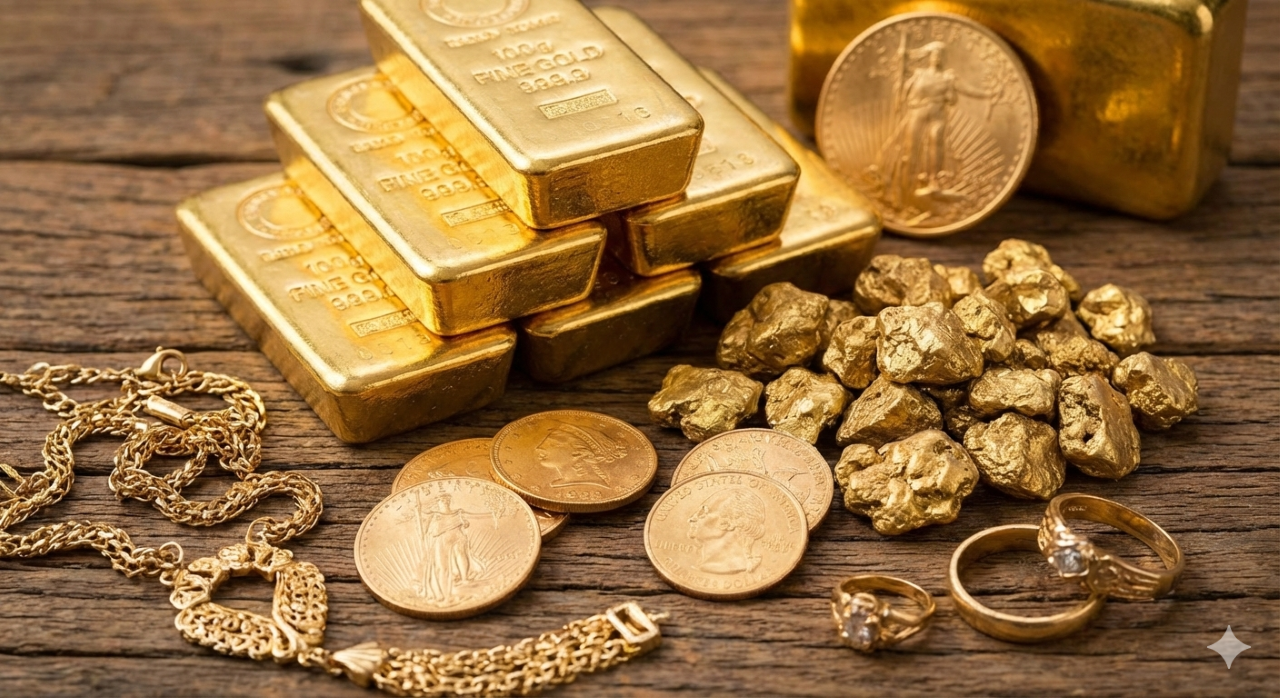
When we look back at the history of human civilisation, it becomes clear that nearly five thousand years ago gold was never merely a shining yellow metal; it was the ultimate symbol of power, prestige, and wealth. From the Egypt of the Pharaohs to modern Wall Street, the value of gold has never diminished. In economic terminology, gold is known as a “store of value.” Any currency in the world—whether the US dollar or the euro—may lose purchasing power over time. History offers countless examples where paper currencies have collapsed to near worthlessness due to inflation or misguided government policies. Gold, however, has never suffered such a fate. Roughly the same quantity of goods that could be purchased with one ounce of gold in the Roman era can still be purchased with it today. This enduring trust and historical stability form the fundamental basis of gold’s value. Whenever people lose confidence in paper currencies or stock markets, they instinctively turn to gold. This psychological confidence distinguishes gold from virtually every other commodity. No government prints gold, it cannot be artificially manufactured, and it is almost impossible to destroy—these three characteristics have kept gold at the centre of the global economic system for millennia.
From the Gold Standard to the Modern Era: The Evolution of Value
To understand the movement of gold prices, one must look back into history, particularly to the era of the Gold Standard. There was a time when the paper currency of each country was issued in proportion to the gold reserves held by its government. In practical terms, a person could deposit paper money at a bank and claim an equivalent value in gold. Under the Bretton Woods Agreement of 1944, the US dollar was established as the principal currency of global trade and was pegged to gold, with one ounce priced at 35 dollars. However, in 1971, when US President Richard Nixon detached the dollar from gold—an event widely known as the “Nixon Shock”—gold prices began to fluctuate freely in the open market. From that point onward, gold started to be traded like any other commodity, influenced by demand and supply. Yet gold differs fundamentally from ordinary commodities because it possesses a dual identity: it is both a physical commodity (used in jewellery and industry) and an investment asset (an alternative to currency). This dual nature makes forecasting gold prices even more difficult than predicting movements in the stock market. At times gold rises alongside equities; at other times, when stock markets collapse, gold prices surge dramatically.
The Geographical and Cultural Equation of Demand: East versus West
The determination of global gold prices is not influenced solely by Western financial markets and banking institutions; the cultural sentiment of Asia plays an equally significant role. More than half of the world’s mined gold is used in jewellery, and the majority of this demand originates from India and China. In these countries, buying gold is not merely an act of luxury—it is deeply embedded in tradition and social customs. In India, adorning the bride with gold during weddings symbolises both social prestige and financial security for women. Similarly, in China, presenting gold as a gift during the Lunar New Year is a long-standing cultural practice. When economic growth in these countries is strong and disposable incomes rise, global demand for gold increases, pushing prices upward. In contrast, in the Western world—such as the United States and Europe—gold is primarily viewed as an investment instrument. Instead of jewellery, investors typically purchase gold in the form of bars or through exchange-traded funds (ETFs). Thus, demand increases in the East during festive seasons, while in the West demand rises during periods of economic uncertainty. The balance between these two poles of demand ultimately shapes international gold prices.
From Mine to Vault: Supply Constraints and the Theory of “Peak Gold”
One of the major reasons behind the long-term rise in gold prices is the limited nature of its supply. A significant portion of the gold that existed beneath the earth’s surface has already been extracted. Many mining experts speak of the “Peak Gold” theory, which suggests that we may already have reached—or soon will reach—a stage where global gold production can no longer increase and may gradually begin to decline. Over the past decade, no massive new gold deposits have been discovered. South Africa, once the world’s largest gold producer, has seen output fall sharply as its mines have become extremely deep, making extraction either economically unviable or dangerously risky. Today, the amount of energy, machinery, and labour required to extract a single ounce of gold is far greater than in previous decades. As the “all-in sustaining cost” (AISC) of production rises, mining companies cannot sell gold below certain price levels, effectively creating a natural price floor in the global market. Additionally, stringent environmental regulations have made the development of new mining projects more difficult and time-consuming.
Geopolitics and Global Instability: The Search for Safe Havens
Economists frequently describe gold as a “crisis commodity.” Whenever major geopolitical tensions, wars, or diplomatic confrontations arise, financial markets—particularly equities and bonds—often experience sharp declines. Investors, fearing the erosion of their wealth, begin searching for assets that are independent of any single government and unlikely to lose value entirely. Historically, gold has served precisely this role. This phenomenon is commonly referred to as the “safe-haven effect.” During times of uncertainty, investors move capital away from risky assets and into gold, a behaviour sometimes called the “fear trade.” When geopolitical tensions escalate—for example, conflicts in the Middle East—both oil prices and gold prices typically rise simultaneously. Gold’s appeal lies in its physical nature: it does not depend on any banking system and can be stored privately or transported if necessary. This deep-rooted psychological trust ensures that demand for gold often surges during global crises.
The Price of War: The Russia–Ukraine Conflict and the Modern Gold Market
A contemporary example of geopolitical influence on gold prices is the Russia–Ukraine war that began in 2022. The outbreak of war created enormous uncertainty in the global economy. Western nations imposed severe economic sanctions on Russia, including freezing large portions of the Russian central bank’s foreign exchange reserves. This unprecedented move sent a powerful signal to investors and central banks worldwide: assets held in foreign currencies such as dollars or euros may not always be secure. As a result, demand for gold surged, pushing prices above 2,000 dollars per ounce. The conflict also disrupted global energy supplies, increasing inflation worldwide. Since inflation erodes the value of currencies, investors increasingly prefer holding gold rather than cash. Additionally, war-induced disruptions to supply chains often destabilise equity markets, prompting hedge funds and institutional investors to increase their gold allocations, further driving prices upward.
Pandemics and Black Swan Events: Lessons from COVID-19
In economics, a “Black Swan event” refers to an unforeseen occurrence with far-reaching consequences. The COVID-19 pandemic of 2020 was one such event. When global lockdowns paralysed economic activity, financial markets initially experienced panic selling, causing a brief dip in gold prices. However, gold quickly rebounded and reached an all-time high of approximately 2,075 dollars per ounce in August 2020. The reason was unprecedented economic uncertainty. People were unsure how long the pandemic would last or whether employment would recover. Both individual investors and institutions began purchasing gold as a protective measure. At the same time, governments introduced massive stimulus programmes worth trillions of dollars, dramatically expanding the supply of paper currency. This raised fears of currency depreciation, encouraging further investment in gold. Thus, the pandemic illustrated how crises of confidence—rather than merely economic downturns—can propel gold prices upward.
Economic Cold Wars and the Impact of Sanctions
Not only military conflicts but also economic confrontations, such as trade wars and sanctions, significantly influence gold markets. In recent years, tariff disputes between the United States and China have created volatility in global trade. When the world’s largest economies impose restrictions on each other, international commerce slows, increasing fears of global recession. During such periods, corporate profits decline, stock markets weaken, and investors often seek refuge in gold. Furthermore, when countries such as Iran or North Korea face international sanctions that limit their access to the dollar-based financial system, they often resort to trading commodities—including oil—through gold transactions. Such indirect gold-based trade helps sustain global demand. Discussions among BRICS nations about creating alternative currency systems potentially backed by gold have also reinforced long-term demand expectations in the gold market.
Political Instability and Government Collapse
While developed countries generally maintain political stability, many developing nations periodically experience political unrest, coups, or civil conflicts. In countries such as Venezuela, Turkey, and Zimbabwe, economic and political crises have caused local currencies to collapse dramatically. In such circumstances, citizens frequently convert their savings into gold in order to preserve purchasing power. Even though individual national demand may appear small relative to the global market, collectively these local shifts create meaningful upward pressure on gold prices. Political uncertainty in large economies—such as Brexit in the United Kingdom or contentious elections in the United States—can also trigger speculative movements in gold markets, as institutional traders place large bets on expected volatility.
The Influence of the US Dollar and Currency Markets
One of the most powerful drivers of gold prices is the strength of the US dollar, because gold is globally traded in dollar terms (XAU/USD). There exists a historically consistent inverse relationship between the two. When the dollar strengthens, gold prices often weaken, since gold becomes more expensive for buyers using other currencies. Conversely, when the dollar weakens, gold becomes cheaper internationally, increasing demand and pushing prices upward. Professional traders therefore monitor the US Dollar Index (DXY) closely, as it measures the dollar’s strength against a basket of major currencies. A strong DXY often coincides with weaker gold demand, while a falling DXY typically supports gold price rallies.
Currency Devaluation and Global Demand
Currency depreciation in individual countries can also influence local gold markets dramatically. When national currencies lose value—either through deliberate devaluation or inflation—gold prices in those countries often rise sharply. For example, in economies such as Turkey or Argentina, currency crises have led citizens to purchase gold in large quantities as a hedge against inflation. Gold, often referred to as the “ultimate currency,” cannot be printed or devalued by governments, which makes it especially attractive during monetary instability. This phenomenon is not limited to developing nations; even in advanced economies, weakening local currencies often translate into rising gold prices in domestic terms.
Interest Rates and the Dollar Interaction
The strength of the US dollar is closely tied to the monetary policy of the Federal Reserve. When interest rates in the United States rise, global investors tend to move capital into dollar-denominated assets such as Treasury bonds, increasing demand for the dollar and exerting downward pressure on gold. Conversely, when interest rates fall or when the Federal Reserve injects liquidity into the economy through quantitative easing, the dollar weakens, often pushing gold prices higher. For this reason, investors seeking to forecast gold price movements closely watch Federal Reserve meetings and interest-rate announcements, as these decisions significantly shape the global investment landscape.
Interest Rates and Central Bank Policies: The True Market Drivers
A common saying in global finance holds that when the United States Federal Reserve sneezes, the entire world catches a cold. The Federal Reserve is arguably the single most influential institution affecting the gold market. Its monetary policy committee, the Federal Open Market Committee (FOMC), meets regularly to determine interest rates, and investors worldwide monitor these decisions closely. When the Federal Reserve adopts a hawkish policy—raising interest rates—holding cash in banks or investing in government bonds becomes more attractive because these instruments generate interest income. Since gold does not produce any yield, investors often sell gold and shift funds into interest-bearing assets, which typically causes gold prices to decline. Conversely, when the Federal Reserve signals a dovish policy by lowering interest rates, the returns on savings and bonds diminish. Investors then become more inclined to hold gold, anticipating that lower rates may eventually weaken currencies and increase inflationary pressures.
The Theory of Opportunity Cost
Understanding the relationship between gold prices and interest rates requires grasping the concept of opportunity cost. Gold is classified as a non-yielding asset, meaning it does not pay dividends or interest. If an investor stores gold in a vault for ten years, the quantity of gold remains unchanged; the only potential profit arises from price appreciation. In contrast, money invested in bonds or fixed deposits generates a predictable stream of income. When interest rates are high—say 5 or 6 per cent—the opportunity cost of holding gold increases significantly because investors forgo guaranteed income by choosing gold. As a result, gold demand often weakens in high-rate environments. However, when interest rates approach zero or remain exceptionally low—as during the 2008 financial crisis or the COVID-19 pandemic—the opportunity cost of holding gold disappears, making it comparatively more attractive and often leading to strong price rallies.
The Importance of Real Interest Rates
Professional investors pay particular attention not merely to nominal interest rates but to real interest rates, which are calculated by subtracting inflation from nominal rates. For instance, if a bank offers a 5 per cent interest rate while inflation runs at 8 per cent, the real interest rate is negative 3 per cent. In such an environment, keeping money in the bank effectively erodes purchasing power, making gold a highly attractive alternative. Historically, periods of negative real interest rates have coincided with major gold bull markets. Conversely, when inflation is low and real interest rates become positive, investors tend to prefer income-generating assets over gold, often resulting in subdued gold prices.
Quantitative Easing and Monetary Liquidity
Central banks influence markets not only through interest-rate decisions but also through control of the money supply. During economic downturns, central banks often implement quantitative easing (QE), purchasing government bonds and injecting large amounts of liquidity into financial systems. This expansion of the money supply typically weakens currencies and increases demand for tangible assets, including gold. The global financial crisis of 2008 and the pandemic-driven stimulus programmes of 2020 both witnessed massive monetary expansion, which contributed significantly to record-high gold prices. Conversely, when central banks attempt to withdraw liquidity through quantitative tightening (QT), financial markets often experience reduced liquidity, which can place downward pressure on gold prices.
Market Psychology: When Economic Fears Override Interest Rates
At times, traditional relationships between interest rates and gold prices temporarily break down. For example, gold may rise even during periods of increasing interest rates if investors fear an approaching recession or believe that central banks are losing control over inflation. Such conditions often lead to stagflation, where economic growth slows while inflation remains high. During the stagflationary environment of the 1970s, gold prices surged dramatically despite rising interest rates. Investors prioritised wealth preservation over yield, illustrating how psychological factors and economic uncertainty can override conventional monetary dynamics.
Inflation and Deflation: Gold as Economic Insurance
Gold is widely regarded as one of the most effective inflation hedges. Inflation reduces the purchasing power of money, meaning that over time, the same amount of currency buys fewer goods. Gold, however, has historically preserved purchasing power across centuries. When inflation rises, investors often shift funds from cash into gold, anticipating that the metal’s scarcity will protect its value. The 1970s oil crisis provides a classic example: rising energy prices triggered severe inflation worldwide, while gold prices increased dramatically, reflecting investors’ efforts to safeguard wealth.
Even during periods of deflation, when prices fall and economic activity contracts, gold can retain strong demand. The Great Depression of the 1930s demonstrated that when banking systems become unstable, individuals often prefer holding physical assets rather than relying on financial institutions. In such situations, gold functions as protection against counterparty risk, ensuring that wealth remains secure even if banks fail.
Hyperinflation: When Currency Loses Meaning
Extreme inflation, or hyperinflation, offers the clearest demonstration of gold’s monetary resilience. Historical episodes in countries such as Zimbabwe and Venezuela illustrate how national currencies can collapse to the point of becoming virtually worthless. During such crises, gold often becomes an alternative medium of exchange, enabling individuals to preserve value and conduct transactions. Although hyperinflation represents an extreme scenario, the possibility of currency collapse remains a powerful psychological factor supporting long-term gold demand.
Inflation Expectations and Market Behaviour
Interestingly, gold prices often respond not only to current inflation but also to inflation expectations. Investors anticipate future monetary conditions and adjust their portfolios accordingly. When central banks lower interest rates or expand the money supply, markets frequently interpret these moves as precursors to future inflation, prompting early investment in gold. Conversely, strong commitments to monetary tightening can reduce inflation expectations, leading to temporary declines in gold prices. Understanding these forward-looking market perceptions is essential for interpreting gold’s price movements.
Central Banks: From Sellers to Strategic Buyers
Only a few decades ago, the role of central banks in the gold market was dramatically different from what it is today. During the 1990s and early 2000s, several European central banks—including those of the United Kingdom, Switzerland, and the Netherlands—sold substantial portions of their gold reserves. At that time, policymakers viewed gold as a non-productive asset that generated no interest income, preferring instead to hold interest-bearing bonds denominated in major currencies such as the US dollar and the euro.
The global financial crisis of 2008 fundamentally changed this perspective. Since around 2010, central banks worldwide have collectively become net buyers of gold, steadily increasing their reserves. According to data from the World Gold Council, purchases by central banks in recent years have reached levels unseen in more than half a century. This shift reflects a growing desire among nations to diversify reserves, reduce dependence on the US dollar, and hold a portion of national wealth in tangible assets that are not subject to foreign political influence. Institutional buying of this scale provides a powerful long-term support base for gold prices, as central banks tend to accumulate gold gradually and hold it for extended periods rather than trading frequently.
The Weaponisation of the Dollar and Strategic Hedging
Recent geopolitical developments have intensified the strategic importance of gold. The freezing of Russia’s foreign currency reserves following the Russia–Ukraine conflict sent a powerful signal to many countries: reserves held in foreign currencies can be vulnerable to geopolitical disputes. This realisation has encouraged several emerging economies to reconsider their reserve strategies and increase gold holdings as a sanctions-resistant asset. Unlike digital currency reserves, physical gold stored within a country’s own vaults cannot easily be frozen or seized by external powers. As a result, gold has re-emerged as a cornerstone of financial sovereignty in an increasingly fragmented geopolitical environment.
China’s Strategic Accumulation of Gold
Among the most closely watched participants in the gold market is China. The People’s Bank of China (PBoC) has steadily increased its gold reserves over recent years, and many analysts believe the actual stockpile may be significantly larger than officially reported figures. China’s gold accumulation strategy appears to serve two primary objectives. First, it seeks to diversify away from heavy dependence on US-dollar-denominated assets, thereby reducing exposure to currency risk and geopolitical pressure. Second, it supports China’s long-term ambition of strengthening the international role of the renminbi (yuan). A currency backed by substantial gold reserves often commands greater confidence in international markets, enhancing its credibility in cross-border trade and financial transactions.
Emerging Economies: Gold as a Financial Buffer
Countries such as India, Turkey, and several Middle Eastern economies have also been active buyers of gold. For nations whose currencies may be more volatile or whose economies are heavily dependent on imports, gold functions as a stabilising reserve asset. During periods of currency depreciation or economic stress, gold reserves can help maintain investor confidence and support financial stability. In some cases, both governments and private citizens accumulate gold simultaneously, reinforcing domestic demand and strengthening the country’s overall resilience against external financial shocks.
Gold as a Sovereign Strategic Asset
In the modern era, gold is no longer viewed solely as a commodity; it has become a sovereign strategic asset closely linked to national security. Several European countries, including Poland and Hungary, have repatriated gold reserves previously stored abroad, bringing them back into domestic vaults. This movement reflects a broader trend toward financial self-reliance in an uncertain global environment. Governments increasingly recognise that physical gold reserves provide a form of economic insurance that is independent of international financial systems and political alliances.
Institutional Demand and Long-Term Price Support
The sustained accumulation of gold by central banks and sovereign institutions has created a structural foundation beneath global gold prices. Unlike speculative investors who frequently buy and sell based on short-term market sentiment, central banks typically hold gold as a long-term reserve asset. Their steady purchasing behaviour absorbs supply from the market and limits the magnitude of prolonged price declines. Consequently, institutional demand has become one of the most important factors shaping the long-term trajectory of gold prices in the twenty-first century.
Paper Gold versus Physical Gold: The Invisible Market
Contrary to popular belief, global gold prices are not determined primarily by jewellery shops, mining output, or even the direct buying and selling of physical gold. Instead, the dominant influence comes from the vast financial marketplace known as “paper gold.” Paper gold refers to financial instruments—such as futures contracts, options, and exchange-traded funds (ETFs)—through which investors speculate on the price of gold without physically owning the metal.
In the major trading centres of London and New York, more than ninety per cent of daily gold trading volume consists of such paper transactions. Estimates suggest that the notional quantity of paper gold circulating in financial markets is many times greater than the actual amount of physical gold available. This immense speculative layer often causes short-term price movements that appear disconnected from physical demand and supply. Sharp price rallies or sudden declines are frequently driven not by jewellery demand or mining production, but by shifts in investor sentiment and leveraged trading positions within these financial markets.
Gold ETFs: Bringing Gold to the Stock Exchange
One of the most influential innovations in modern gold investment is the Gold Exchange-Traded Fund (ETF). ETFs allow investors to gain exposure to gold through stock exchanges, much like buying ordinary shares. Each unit of a gold ETF represents a proportional claim on physical gold held in secure vaults by the fund. When investor demand for ETF shares increases, the fund managers must purchase additional physical gold to back the new units issued. Conversely, when investors sell their ETF holdings, the fund may need to liquidate part of its gold reserves.
Because institutional investors, pension funds, and hedge funds frequently use ETFs to adjust their gold exposure, large inflows or outflows can have a significant impact on global gold prices. Periods of strong ETF demand often coincide with rising gold prices, while heavy liquidation of ETF holdings can trigger sharp declines even when physical jewellery demand remains stable.
Futures Markets and the Role of COMEX
The principal arena for global gold price discovery is the futures market, particularly the Commodity Exchange (COMEX) in New York. In futures trading, buyers and sellers agree to transact gold at a predetermined price on a future date. Most participants do not intend to take physical delivery of gold; instead, they close their positions before the contract expires, settling gains or losses in cash. This system allows investors to trade large volumes of gold with relatively small amounts of capital, using leverage provided by brokers.
Leverage amplifies both profits and losses. Consequently, relatively modest flows of speculative capital can generate significant price volatility. When large institutional traders simultaneously adopt bullish or bearish positions, the resulting futures activity can rapidly push global gold prices upward or downward, often within a matter of hours.
Short Selling and Market Manipulation Concerns
The ability to short-sell gold—betting on falling prices—adds another layer of complexity to the market. Traders who expect prices to decline can sell borrowed gold contracts and later repurchase them at lower prices, profiting from the difference. While short selling is a legitimate market practice, it can also contribute to sudden downward price movements when executed on a large scale.
There have also been documented cases of market manipulation techniques, such as placing large spoof orders to influence market sentiment temporarily. Regulatory authorities in several jurisdictions have investigated and penalised financial institutions for such practices. Although these activities generally affect prices only in the short term, they highlight the extent to which modern gold pricing is shaped by financial market behaviour rather than purely by physical supply and demand.
Spot Price versus Physical Premiums
During periods of intense economic stress, a noticeable divergence sometimes appears between the spot price of gold quoted in financial markets and the price paid for physical gold bars or coins. When financial traders rush to liquidate assets for cash, paper gold prices may temporarily decline. At the same time, retail demand for physical gold often surges, leading to shortages and higher retail premiums. This disconnect demonstrates that financial market prices do not always reflect immediate physical availability. Over time, however, arbitrage mechanisms usually bring the two markets back into alignment.
Financialisation of Gold: Opportunity and Risk
The increasing financialisation of gold—its transformation from a purely physical commodity into a highly traded financial asset—has dramatically enhanced market liquidity and accessibility. Investors can now gain exposure to gold instantly through digital trading platforms without the logistical challenges of storage and transport. At the same time, the heavy presence of leveraged speculative trading has introduced higher short-term volatility. Understanding the interaction between paper markets and physical demand is therefore essential for analysing modern gold price movements.
Cultural and Seasonal Demand: The Eastern Axis of the Gold Market
While Western investment flows often drive short-term movements in gold prices, the long-term structural foundation of global gold demand lies largely in Asia—particularly India and China, which together account for a significant share of the world’s annual physical gold consumption. In these societies, gold is not merely an investment instrument but a deeply embedded cultural asset associated with prosperity, tradition, and social security.
Unlike Western markets, where gold is frequently purchased in the form of financial instruments or bullion for portfolio diversification, much of Asian demand comes from jewellery consumption. This demand tends to be highly seasonal, closely aligned with wedding calendars, agricultural income cycles, and major religious festivals. As a result, global gold prices often exhibit recurring annual patterns shaped by cultural consumption rather than purely financial considerations.
Indian Weddings: A Massive Annual Demand Engine
India hosts millions of weddings each year, and gold jewellery remains an essential component of traditional wedding ceremonies across social classes. Families typically purchase gold ornaments not only for ceremonial purposes but also as a long-term form of wealth transfer, particularly in the form of “stridhan”, the gold assets traditionally given to brides as personal financial security.
Because wedding seasons are concentrated in particular months—often following the harvest season when rural incomes rise—gold demand in India tends to increase sharply during those periods. Jewellery manufacturers and wholesalers begin accumulating gold inventory months in advance, creating anticipatory demand in global markets. This recurring cycle ensures that even when international prices weaken temporarily, physical buying from India often provides a stabilising floor.
Festival Demand: Diwali, Dhanteras, and Akshaya Tritiya
India’s gold consumption peaks during major festivals such as Diwali, Dhanteras, and Akshaya Tritiya, all of which are traditionally regarded as auspicious occasions for purchasing precious metals. On these days, millions of households simultaneously enter the market to buy gold coins, bars, or jewellery, producing a surge in retail demand that frequently influences international prices.
Market participants are well aware of this seasonal behaviour. Traders often position themselves ahead of the festive season, purchasing gold futures and physical inventory months in advance. Consequently, global gold prices often begin to strengthen before the actual festivals occur, reflecting expectations rather than merely immediate demand.
China’s Contribution: Lunar New Year and Rising Middle-Class Wealth
China represents the second major pillar of physical gold demand. The country’s expanding middle class, increasing disposable income, and cultural preference for gold savings have transformed it into one of the world’s largest gold consumers. Demand typically intensifies during the Lunar New Year, when gold jewellery, bars, and commemorative coins are widely exchanged as gifts symbolising prosperity and good fortune.
Chinese consumers have also shown growing interest in small, affordable gold investment products—such as miniature bullion pieces and digitally tradable gold units—making gold ownership more accessible to younger generations. This shift has strengthened the structural demand base of the global gold market, ensuring sustained consumption even during periods of economic slowdown.
Rural Economies and Agricultural Cycles
In many developing economies, particularly in South Asia, gold functions as a quasi-financial instrument in regions where banking access remains limited. Farmers often convert surplus agricultural income into gold, viewing it as a reliable store of value that can be liquidated in times of need. Consequently, favourable monsoon seasons or strong harvest outcomes frequently lead to increased rural gold purchases, indirectly influencing global demand patterns.
Conversely, poor harvests or agricultural disruptions can reduce rural purchasing power and temporarily weaken gold demand in these regions. Analysts therefore monitor not only financial indicators but also agricultural forecasts when assessing potential gold price trends.
Seasonal Price Patterns in the Global Market
The combination of festival buying, wedding seasons, and agricultural income cycles creates recognisable seasonal price tendencies. Historically, gold markets often experience relatively subdued demand during mid-year months, followed by strengthening prices toward the final quarter of the year as Asian physical buying intensifies. While macroeconomic factors such as interest rates and currency movements may override seasonal patterns in certain years, the cultural demand cycle remains a persistent structural element of the gold market.
Love Trade versus Fear Trade
Economists sometimes describe global gold demand in terms of two complementary forces: the “fear trade”, driven by Western investment flows during economic crises, and the “love trade,” driven by cultural consumption in Asia. The interplay between these two forces creates the dynamic equilibrium of the global gold market. When financial panic pushes investors toward gold, prices rise rapidly; when cultural demand provides steady baseline consumption, prices maintain long-term stability.
Bitcoin versus Gold: The Debate Over “Digital Gold”
In the past decade, one of the most significant debates in global finance has revolved around whether cryptocurrencies—particularly Bitcoin—can replace gold as the ultimate store of value. Advocates of Bitcoin often refer to it as “digital gold,” arguing that its limited supply, decentralised structure, and independence from government control make it comparable to gold in terms of scarcity and monetary discipline.
Indeed, some younger investors, especially those from the millennial and Gen-Z generations, increasingly prefer holding digital assets rather than physical bullion. The ease of online transactions, global accessibility, and the possibility of rapid capital appreciation have drawn substantial capital flows into cryptocurrency markets—capital that might otherwise have been allocated to gold. This shift has introduced a new competitive dynamic into the traditional safe-haven asset space.
Stability versus Volatility: Why Gold Still Holds Ground
Despite the rise of cryptocurrencies, gold continues to maintain its dominance as a global reserve asset for one fundamental reason: stability. While Bitcoin and other digital assets have experienced dramatic price swings—sometimes rising or falling by tens of percentage points within months—gold has historically displayed relatively moderate volatility, particularly during periods of systemic crisis.
During episodes of global financial uncertainty, institutional investors and central banks still overwhelmingly prefer gold over cryptocurrencies. The absence of regulatory clarity, cybersecurity risks, and technological dependence means that digital assets cannot yet fully substitute for the reliability of physical gold. Consequently, although cryptocurrencies may compete with gold for speculative investment capital, they have not replaced gold’s role as a strategic reserve asset.
Blockchain Innovation and Tokenised Gold
Rather than displacing gold, technological innovation is increasingly reshaping how gold is owned and traded. The emergence of tokenised gold—digital tokens backed by physical bullion stored in audited vaults—has created a hybrid asset that combines the security of physical gold with the liquidity of digital markets. Investors can now purchase fractional ownership of gold through blockchain platforms, enabling broader participation in the gold market without the logistical challenges of physical storage.
This development is expanding gold’s accessibility to a new generation of investors while preserving its intrinsic value as a tangible asset. As tokenisation infrastructure improves, the integration of traditional precious metals into digital financial ecosystems may further strengthen gold’s long-term relevance.
Central Bank Digital Currencies and the Prospect of Gold-Backed Systems
Another transformative development is the global movement toward Central Bank Digital Currencies (CBDCs). Several major economies are experimenting with sovereign digital currencies that could reshape international monetary systems. Some policymakers and economic blocs have even discussed the possibility of partially gold-backed digital settlement systems designed to reduce reliance on dominant reserve currencies.
Should such systems materialise, gold’s strategic importance in the international financial architecture could increase significantly. Governments seeking to enhance currency credibility may accumulate larger gold reserves, reinforcing structural demand in the long term.
Generational Wealth Transfer and the Future Investment Landscape
The coming decades will witness a massive intergenerational transfer of wealth as older generations pass trillions of dollars in assets to younger investors. The investment preferences of these new asset holders will play a decisive role in shaping gold demand. While younger investors may allocate a portion of their portfolios to digital assets, historical experience suggests that diversified portfolios—combining traditional safe-haven assets such as gold with growth-oriented investments—are likely to remain the dominant strategy.
As economic uncertainty, geopolitical tensions, and technological transformation continue to redefine global markets, gold is unlikely to disappear from investment portfolios. Instead, it is expected to coexist with emerging digital assets, serving as a stabilising component within increasingly diversified financial systems.
Strategic Investment Perspective: When to Buy and When to Sell
Successful gold investment requires patience and strategic timing rather than emotional decision-making. Historically, the most effective approach has been contrarian investing—accumulating gold during periods of market indifference or price consolidation and reducing exposure during phases of widespread speculative enthusiasm. Because gold primarily functions as a hedge rather than a high-growth asset, it is most valuable as a long-term stabilising component within a diversified portfolio.
Financial planners often recommend maintaining a modest allocation—typically between 5 and 15 percent of total investable assets—in gold. Such allocation provides protection against inflation, currency depreciation, and systemic financial shocks without excessively sacrificing the growth potential offered by equities or other productive assets.
Gold as the Constant in an Uncertain World
Across millennia, gold has evolved from a decorative metal to a universal symbol of monetary stability, surviving the rise and fall of empires, currencies, and economic systems. Today’s global gold market reflects a complex interaction of geopolitical tensions, central-bank strategies, technological innovation, cultural traditions, and investor psychology. Although new financial instruments and digital assets continue to reshape global markets, gold’s fundamental attributes—scarcity, durability, and universal acceptability—ensure its enduring relevance.
In an era marked by rapid technological change, shifting geopolitical alliances, and unprecedented monetary experimentation, gold remains not merely a commodity but a timeless financial anchor. It may not always deliver spectacular short-term returns, but it continues to serve as a guardian of purchasing power and a stabilising force in times of uncertainty—an asset whose significance extends far beyond its metallic form.