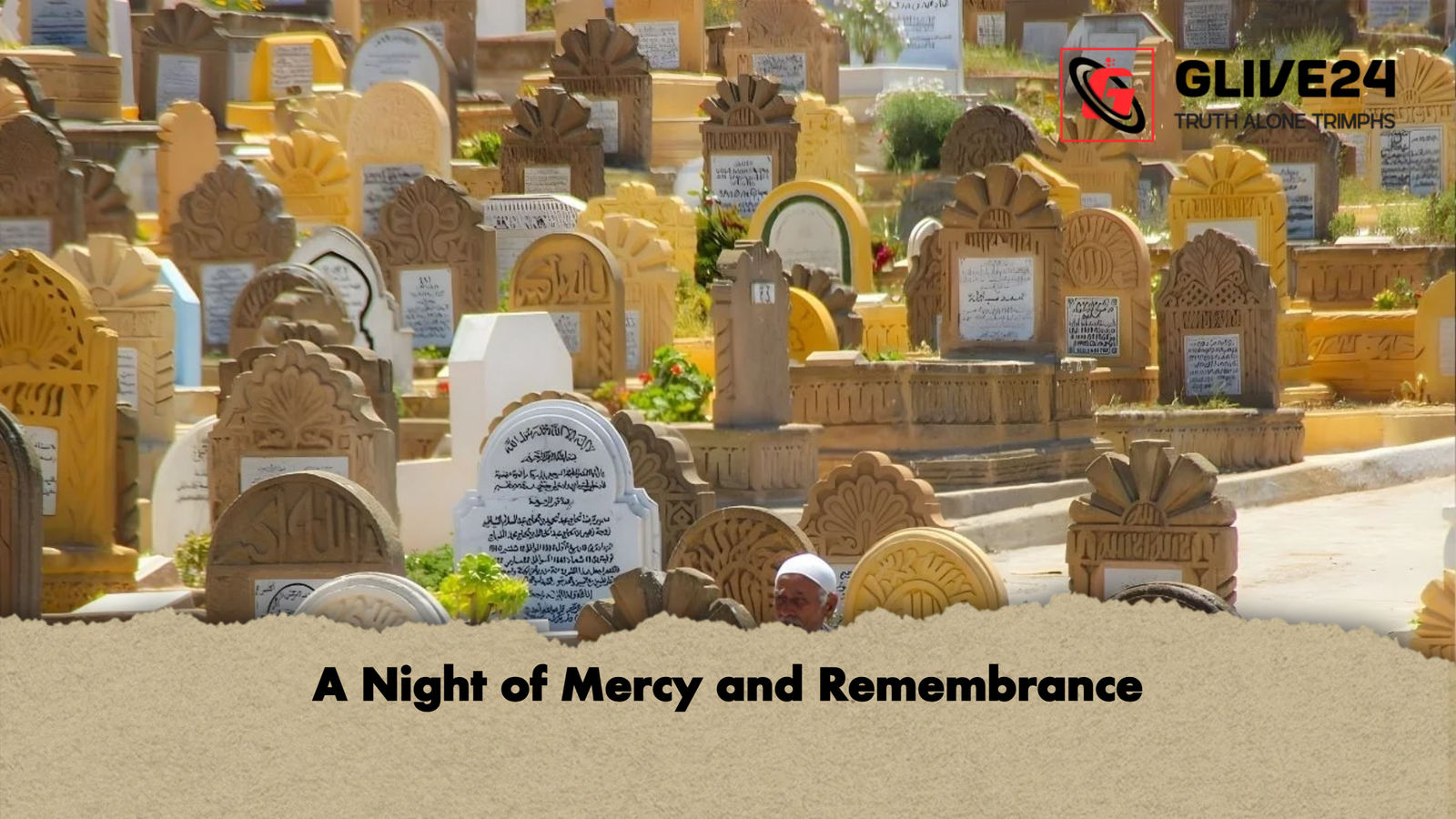
Shab-e-Barat holds a deeply significant and virtuous place in the hearts of the Muslim ummah. Falling on the mid-night of the month of Sha‘ban, it is widely regarded as a time when the mercy, forgiveness and nearness of Almighty Allah are especially abundant. On this sacred night, believers are encouraged to engage in acts of worship that were practised by the Prophet Muhammad (peace be upon him) himself and recommended to his Companions. Among these acts, the visitation of graves (ziyarat al-qubur) occupies a particularly important position as a well-established Sunnah.
The essence of grave visitation lies in its power to remind human beings of the certainty of death and the transient nature of worldly life. By standing before the resting places of the departed, one is gently detached from material attachment and guided towards an outlook centred on the Hereafter. In Islam, visiting graves is not restricted to any specific day; it may be performed at any time. However, its spiritual significance is heightened on Shab-e-Barat, as authentic narrations indicate that the Prophet (peace be upon him) went to Jannatul Baqi‘ on this night to supplicate for those buried there.
The Messenger of Allah (peace be upon him) is reported to have said: “Visit the graves, for they reduce attachment to the world and remind you of the Hereafter.” This profound statement clarifies that grave visitation is not solely for the benefit of the deceased. Rather, it serves as a powerful means of self-purification and moral reflection for the living.
A narration from Hazrat Aisha (may Allah be pleased with her) further reinforces the Sunnah basis of this practice on Shab-e-Barat. She relates that on one such night, upon not finding the Prophet at home, she went out in search of him and found him at Jannatul Baqi‘, praying for the forgiveness of the deceased. He informed her of the special virtue of this night, during which Allah grants forgiveness to countless servants. This narration provides strong spiritual grounding for grave visitation on Shab-e-Barat.
Despite its simplicity, grave visitation is sometimes surrounded by excesses or incorrect practices in society. Islam, however, prescribes a dignified and restrained approach. Upon entering the graveyard, offering salutations to the inhabitants of the graves is Sunnah. This may be followed by recitation of salutations upon the Prophet, brief Qur’anic verses or short surahs, and sincere supplication for the forgiveness and elevation of the deceased.
Proper etiquette in supplication is also essential. It is discouraged to face the grave directly while raising one’s hands in prayer. Instead, one should stand respectfully nearby, facing the qiblah, or supplicate quietly from the heart. Even silent prayer, if sincere, is sufficient for acceptance.
The table below summarises key acts associated with grave visitation and their objectives:
| Type of Act | Brief Description | Purpose |
|---|---|---|
| Offering salutations | Greeting the inhabitants of the graves upon entry | Upholding Sunnah and honouring the deceased |
| Qur’anic recitation | Reciting al-Fatiha, Ayat al-Kursi or short surahs | Conveying spiritual reward (isal-e-sawab) |
| Sending blessings | Reciting salutations upon the Prophet (peace be upon him) | Enhancing acceptance of supplication |
| Supplication | Praying for forgiveness of the deceased and oneself | Seeking benefit in the Hereafter |
The supplications taught by the Prophet (peace be upon him), such as “Assalamu ‘alaykum ya ahlal qubur” and “Assalamu ‘alaykum dara qawmin mu’minin,” are especially meritorious. Through these words, peace is conveyed to the departed, while the living are reminded that they too will one day join them.
Ultimately, grave visitation on Shab-e-Barat is far more than a ritual gesture. It is an opportunity to awaken the heart, repent from sin, and draw closer to Allah through humility and sincerity. When performed in accordance with the Sunnah and with pure intention, it becomes a source of benefit for both the living and the dead, embodying the true spirit of this blessed night.