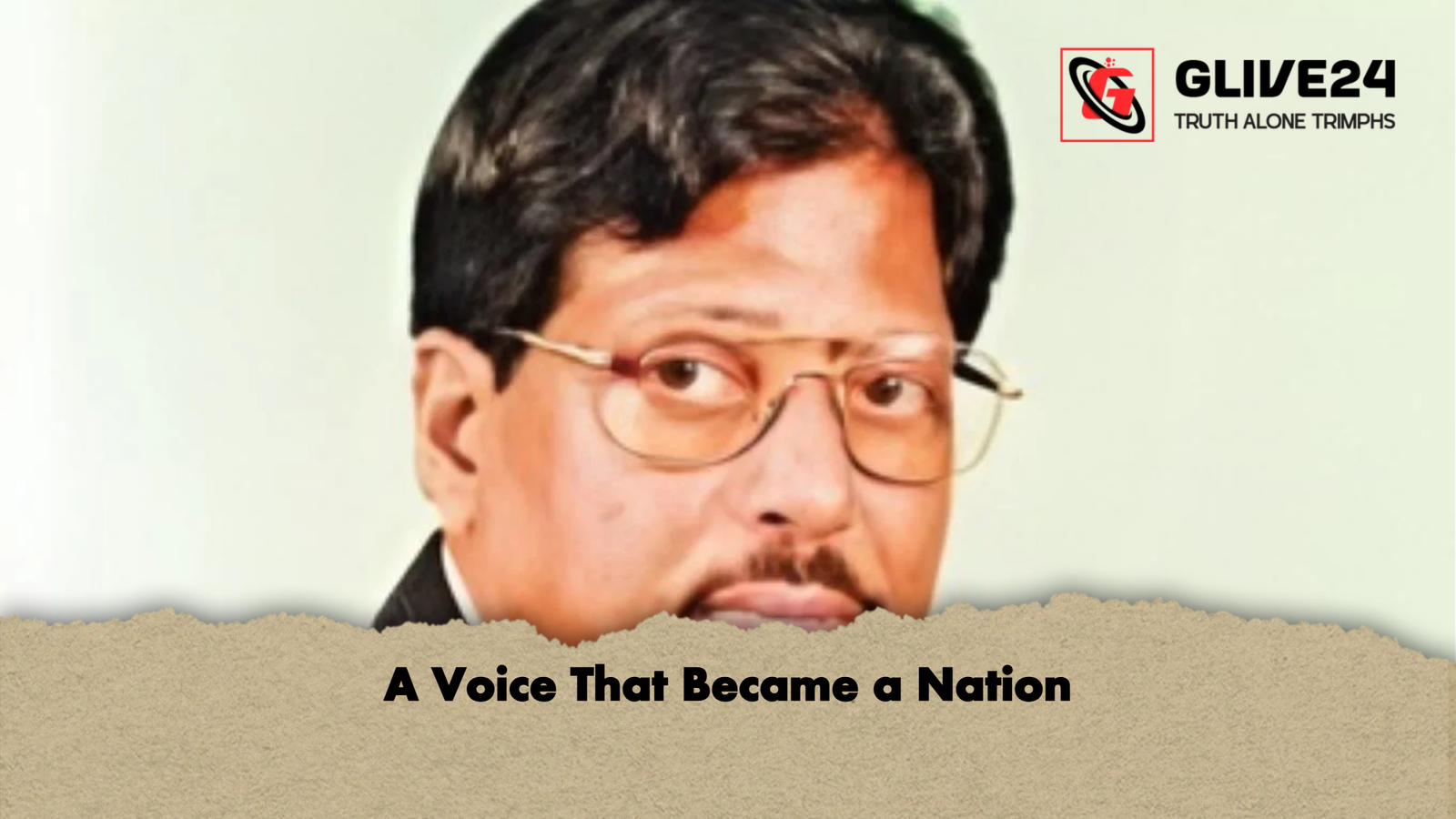
On a starlit night, his songs still return—bearing pain, courage and consolation. Mohammad Abdul Jabbar was not merely a singer; he was an era, a living chapter of history, and a voice woven into the emotional fabric of Bengal. More than sound, his singing embodied time itself: the longing of separation, the dignity of struggle, and the quiet resilience of a wounded people.
For generations of listeners, Abdul Jabbar’s rich, resonant voice offered solace to bruised hearts. In Bengali cinema, scenes of sorrow, sacrifice and inner conflict felt incomplete without his presence. One song—sometimes two—would elevate an entire film, adding depth and gravity through his commanding yet tender delivery. His voice did not simply accompany images; it interpreted them.
During the Liberation War of 1971, Abdul Jabbar rose beyond cinema to become the voice of a nation in resistance. From the Swadhin Bangla Betar Kendra, his stirring renditions of “Salam Salam Hazar Salam” and “Joy Bangla Banglar Joy” galvanised millions. These songs became anthems of courage, earning him a permanent place in Bangladesh’s collective memory and an outpouring of love and reverence that endures to this day.
His artistic excellence received international acknowledgement when, in March 2006, BBC Bangla listeners voted three of his songs—“Tumi Ki Dekhechho Kobhu Jiboner Porajoy”, “Salam Salam Hazar Salam” and “Joy Bangla Banglar Joy”—into the list of the greatest Bengali songs of all time. National honours followed earlier: the Ekushey Padak in 1980 and the Independence Award in 1996, recognising his extraordinary contribution to Bengali music.
Born on 10 February 1938 in Kushtia, Abdul Jabbar completed his matriculation in 1956 and trained under Ustad Osman Gani and Ustad Lutful Haque. He joined Pakistan Radio as a listed artiste in 1958, entered film playback singing in 1962, and became a regular performer on Bangladesh Television from 1964. That same year, he lent his voice to Sangam, the first colour film of then East Pakistan, directed by Zahir Raihan.
From “Tumi Ki Dekhechho Kobhu” in Ettuku Asha (1968) to “Ore Neel Doriya” in Sareng Bou (1978), his songs remain cornerstones of Bengali film music. The latter, composed by Alam Khan, introduced him to a new generation and sealed his immortality.
Beyond music, his patriotism was practical and profound. Alongside Hemanta Mukhopadhyay, he toured cities in Mumbai to rally international support for Bangladesh’s independence. He sang at freedom fighters’ camps in Kolkata, accompanying himself on the harmonium, and donated the entire 1.2 million rupees he earned during this period to the relief fund of the provisional government—an enduring testament to his devotion.
Abdul Jabbar passed away on 30 August 2017. Yet his voice, his songs and his love for the nation remain alive—echoing in millions of hearts.
Key Milestones in Abdul Jabbar’s Life and Career
| Year | Event |
|---|---|
| 1938 | Born in Kushtia district |
| 1958 | Joined Pakistan Radio as listed singer |
| 1962 | Began playback singing in films |
| 1964 | Sang for Sangam, first colour film of East Pakistan |
| 1971 | Sang iconic Liberation War anthems |
| 1980 | Awarded Ekushey Padak |
| 1996 | Received Independence Award |
| 2017 | Passed away on 30 August |
Tribute to a star that set—but never faded.