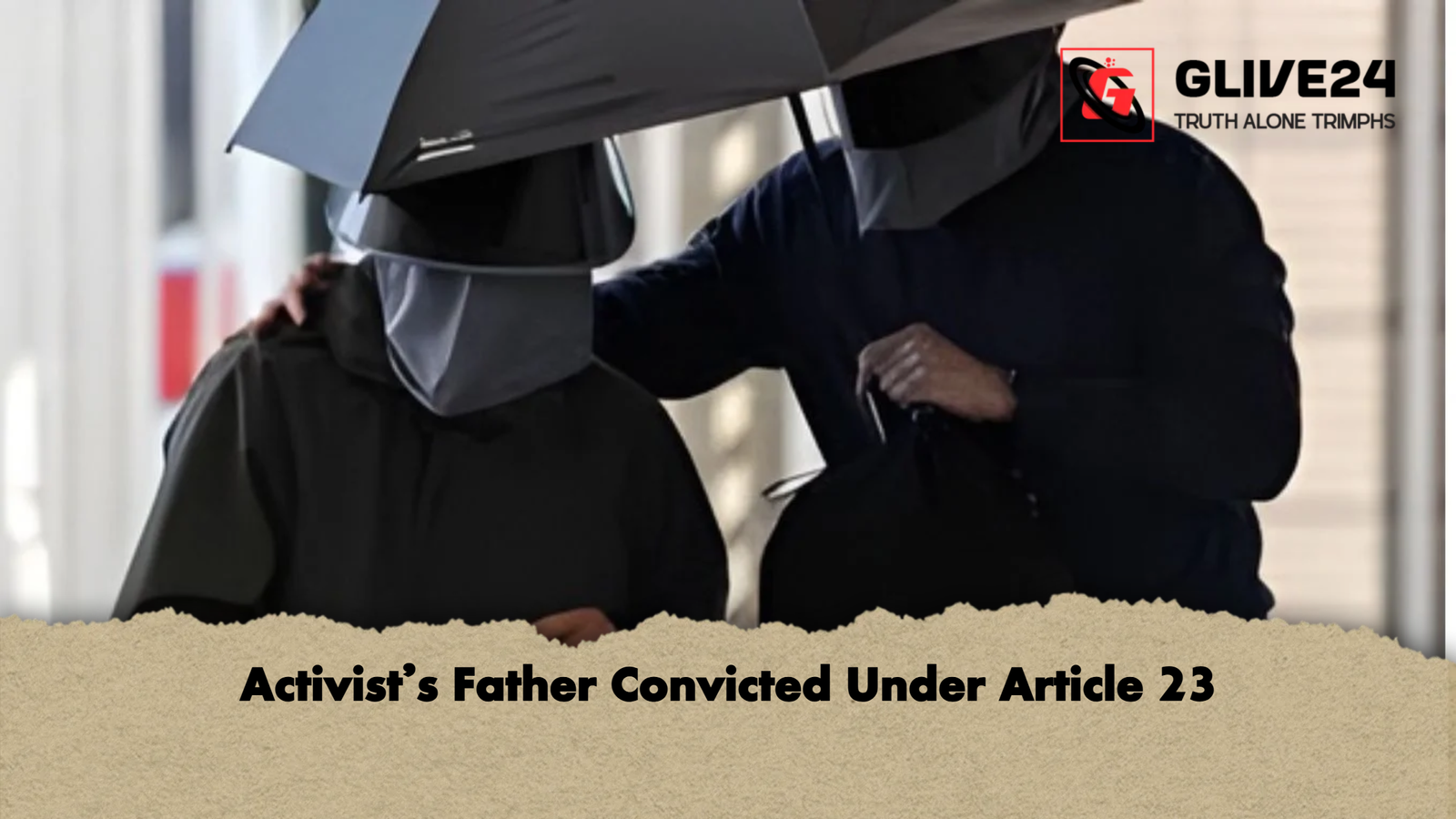
A Hong Kong magistrate has convicted the father of a prominent overseas pro-democracy activist under the city’s newly enacted national security legislation, marking the first prosecution under the expanded domestic security regime known as Article 23. The ruling has intensified concerns among international observers that the authorities are extending punitive measures to the families of political dissidents abroad.
Kwok Yin-sang, 69, was found guilty on Wednesday of attempting to deal with financial assets belonging to an “absconder”. Prosecutors alleged that he sought to terminate an insurance policy and withdraw HK$88,609 (approximately £9,000 or US$11,342) from a policy he had purchased for his daughter, Anna Kwok, when she was a toddler.
Anna Kwok is executive director of the Washington-based Hong Kong Democracy Council and is among 34 overseas activists wanted by Hong Kong’s national security police. She is accused of colluding with foreign forces — an offence under the Beijing-imposed National Security Law (NSL) of 2020 — and is subject to a HK$1 million bounty.
The charge against Mr Kwok was brought under sections 89 and 90 of Article 23, legislation enacted in 2024 to broaden the city’s national security framework. The relevant provision criminalises attempts to deal “directly or indirectly” with the funds or economic resources of individuals designated as absconders. Conviction carries a maximum sentence of seven years’ imprisonment, although penalties imposed at magistrates’ courts are capped at two years.
Case at a Glance
| Item | Details |
|---|---|
| Defendant | Kwok Yin-sang, 69 |
| Relationship | Father of Anna Kwok |
| Alleged offence | Attempting to withdraw funds from daughter’s insurance policy |
| Amount involved | HK$88,609 (approx. US$11,342) |
| Law invoked | Article 23 (Sections 89 & 90) |
| Maximum sentence | 7 years (2-year cap at magistrates’ court) |
| Sentencing date | 26 February |
During the trial, Mr Kwok pleaded not guilty and declined to testify. According to the prosecution, he acknowledged under caution that he was aware his daughter was wanted by the Security Bureau and stated he had decided to cancel the policy because she was no longer in Hong Kong.
In her judgement, Acting Principal Magistrate Cheng Lim-chi held that, as Anna Kwok had been declared a fugitive, any attempt to manage or access assets linked to her constituted an offence, irrespective of whether the funds would ultimately benefit her.
Defence counsel Steven Kwan argued that his client merely sought to recover funds he had personally contributed over many years, and that there was no evidence the proceeds would have been transferred to his daughter. He urged the court to consider a custodial term of 14 days, contending that the case amounted to prosecution “based on family ties”.
Following the verdict, Mr Kwok’s bail was revoked. Observers noted that he appeared composed, waving to relatives before being led away.
Anna Kwok, writing on social media, denied ever owning or benefiting from the insurance policy and described the conviction as retaliation for her advocacy. “Today, my father was convicted and remanded in custody simply for being my father,” she wrote.
Human rights organisations have criticised the case. Elaine Pearson, Asia director at Human Rights Watch, described the prosecution as “an alarming act of collective punishment” inconsistent with international human rights norms.
Mr Kwok is due to be sentenced on 26 February. Meanwhile, Anna Kwok’s brother has also been arrested under the same provision and remains on bail pending further proceedings.