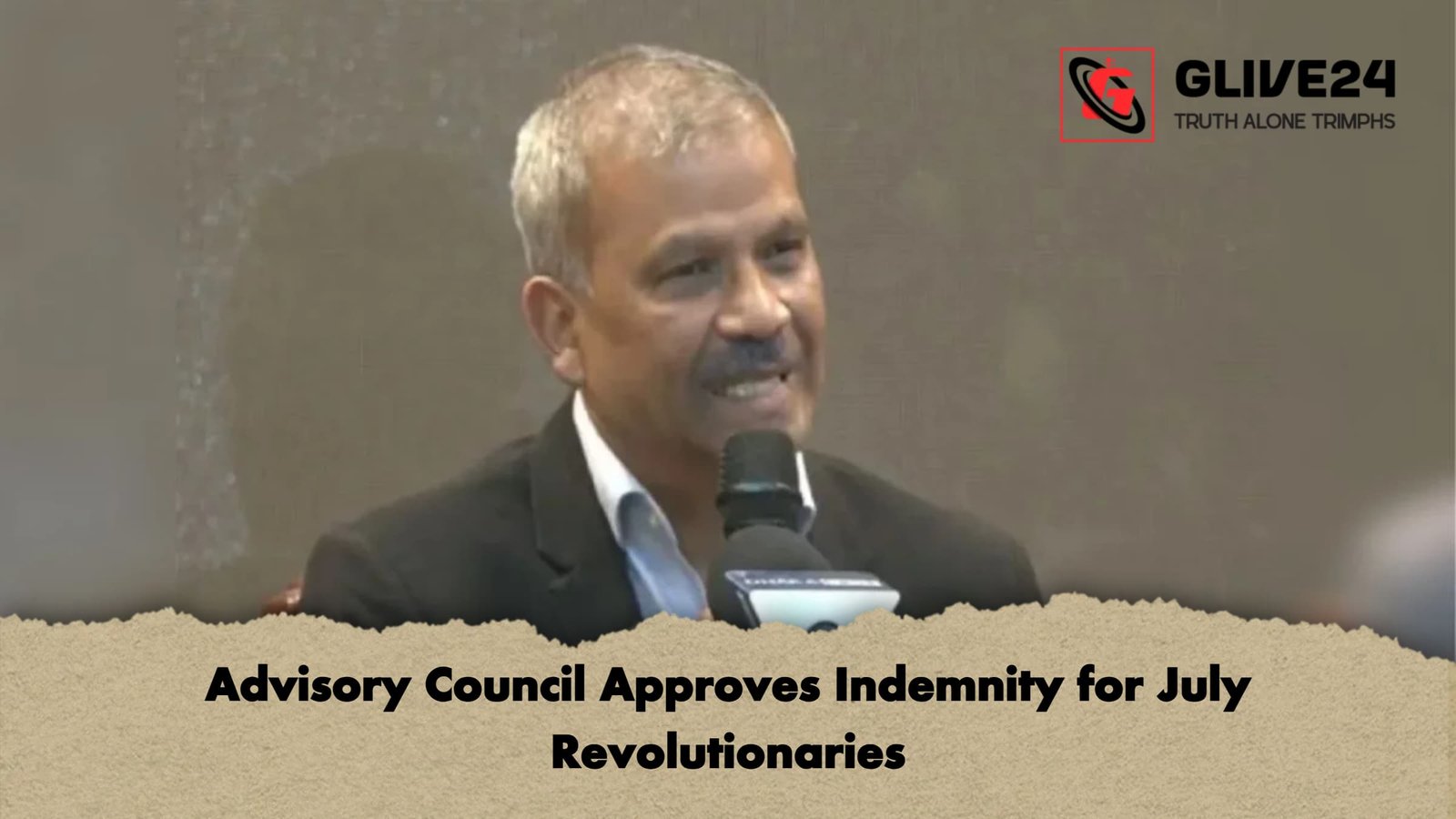
In a move designed to secure the legal standing of those who spearheaded the recent mass movement, the Interim Government’s Advisory Council has officially sanctioned the July Warriors’ Indemnity Act. The Law Adviser, Professor Asif Nazrul, confirmed the approval during a press briefing at the Foreign Service Academy on Thursday, 15 January 2026. This legislation aims to provide a robust legal shield for individuals who participated in the uprising that transformed the nation’s political landscape.
Comprehensive Legal Immunity
Professor Nazrul stated that the government is committed to ensuring that participants in the July-August resistance are not subjected to judicial harassment. As part of this initiative, the state will move to withdraw any existing criminal cases filed against these individuals in relation to their political activities during the demonstrations. Furthermore, the authorities have issued a directive ensuring that no new charges can be brought against them for their roles in the movement.
The Ministry of Law is currently overseeing a thorough investigation to identify any active lawsuits against uprising participants across various districts. The adviser noted that the actions taken by these citizens were necessary measures to challenge an autocratic system and must be recognised as protected acts of civil resistance.
A Constitutional Framework for Protection
Addressing potential legal queries, Professor Nazrul highlighted that the ordinance is grounded in the country’s supreme law. He specifically cited Article 46 of the Bangladesh Constitution, which empowers the state to enact indemnity laws to protect individuals for acts done in connection with the maintenance or restoration of order.
Legal and Global Context of the Indemnity Act:
| Feature | Details |
| Statutory Authority | Article 46 of the Bangladesh Constitution |
| Primary Target | Participants of the July-August mass uprising |
| Case Status | Existing cases to be withdrawn; new cases prohibited |
| Global Precedents | Arab Spring and similar contemporary revolutions |
| Draft Completion | Finalised on 8 January 2026 |
Institutionalising the Legacy of the Uprising
The Law Adviser had previously indicated via social media that this “Indemnity Ordinance” was essential to honour the bravery of those who risked their lives for democratic reform. He argued that the state has a fundamental duty to protect its citizens from retaliatory legal strikes orchestrated by associates of the previous administration.
By referencing international examples, such as the Arab Spring, Dr Nazrul illustrated that transitional periods often require specific legislative safeguards to protect activists from being penalised by the very judicial systems they sought to reform. This act is seen as a vital step in the interim government’s broader mission to provide justice for the “July Warriors” while fostering national stability.