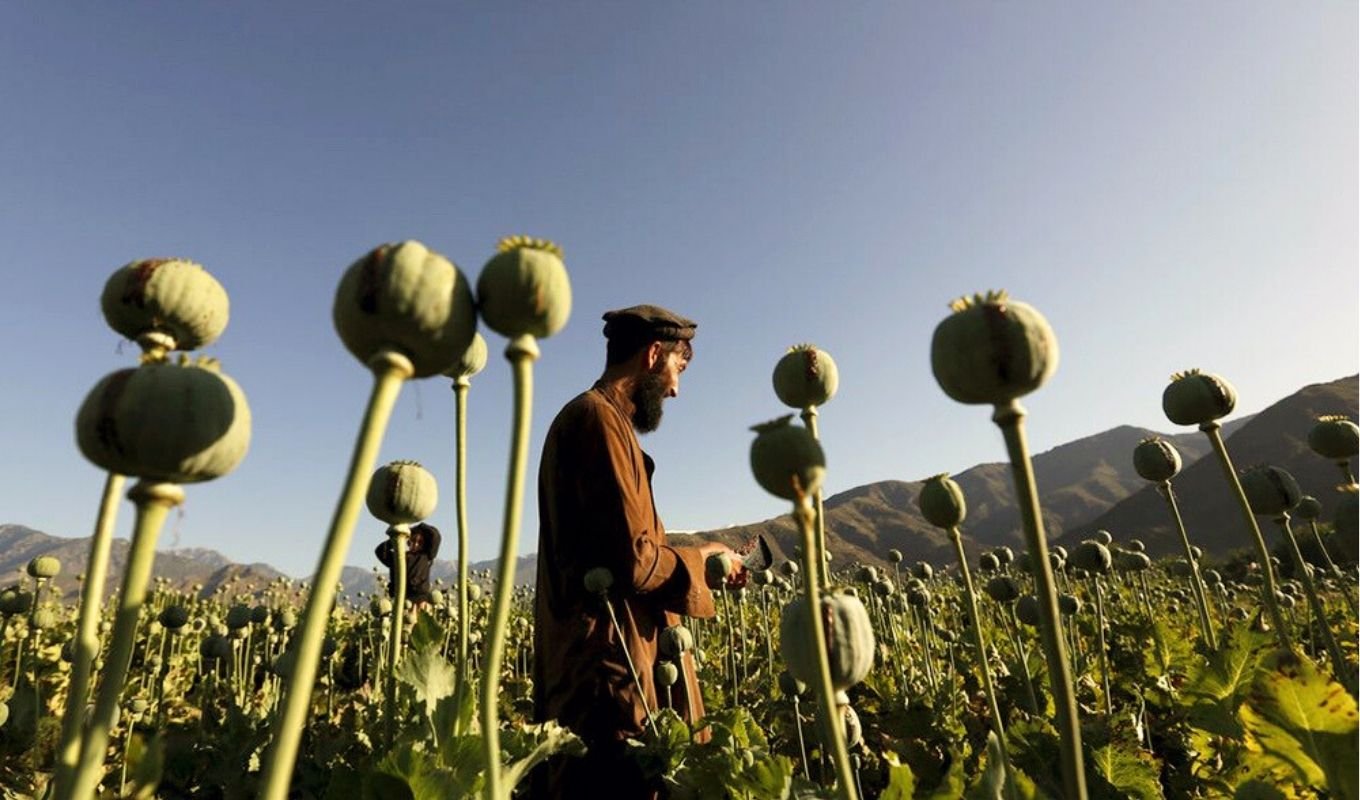
Opium cultivation in Afghanistan fell by 20 percent in 2025, according to a United Nations report released on Thursday, which also cautioned that the decline has coincided with a troubling rise in synthetic drug production and trafficking.
The Taliban administration, which re-seized power in Kabul in 2021, imposed a nationwide ban on opium poppy cultivation in 2022. Since then, the country has witnessed a dramatic reduction in poppy farming areas. The United Nations Office on Drugs and Crime (UNODC) reported that the total land used for poppy cultivation shrank from 12,800 hectares (around 31,600 acres) in 2024 to 10,200 hectares in 2025. In comparison, opium farming in 2022 covered roughly 232,000 hectares.
The report estimated Afghanistan’s opium output at 296 tonnes in 2025 — a decline of 32 percent from the previous year. Consequently, farmers’ income from opium sales nearly halved, falling from $260 million in 2024 to $134 million in 2025. Despite the drop, the price of dry opium remains five times higher than the pre-ban average, the UNODC noted.
However, the agency expressed grave concern about the rapid growth of synthetic drug operations, especially methamphetamine. “Synthetic drugs appear to have become the new business model for organised crime groups due to the relative ease of production, the greater difficulty in detection, and their resilience to climate impacts,” the report stated.
The UN has consistently urged the global community to assist Afghan farmers in transitioning from opium cultivation to alternative crops and sustainable livelihoods — a call echoed by the Taliban government.
“Following the ban, many farmers turned to cereal crops and other agricultural produce. Yet worsening weather conditions, including drought and low rainfall, have left more than 40 percent of farmland barren,” the UNODC report added.
The ban also prompted a geographical shift in cultivation patterns, moving poppy production from Taliban strongholds in the south to the country’s northeast. In May 2024, several people were killed during violent confrontations between farmers and law enforcement officers sent to eradicate poppy fields in Badakhshan province, one of the few regions that continues to resist the opium ban.