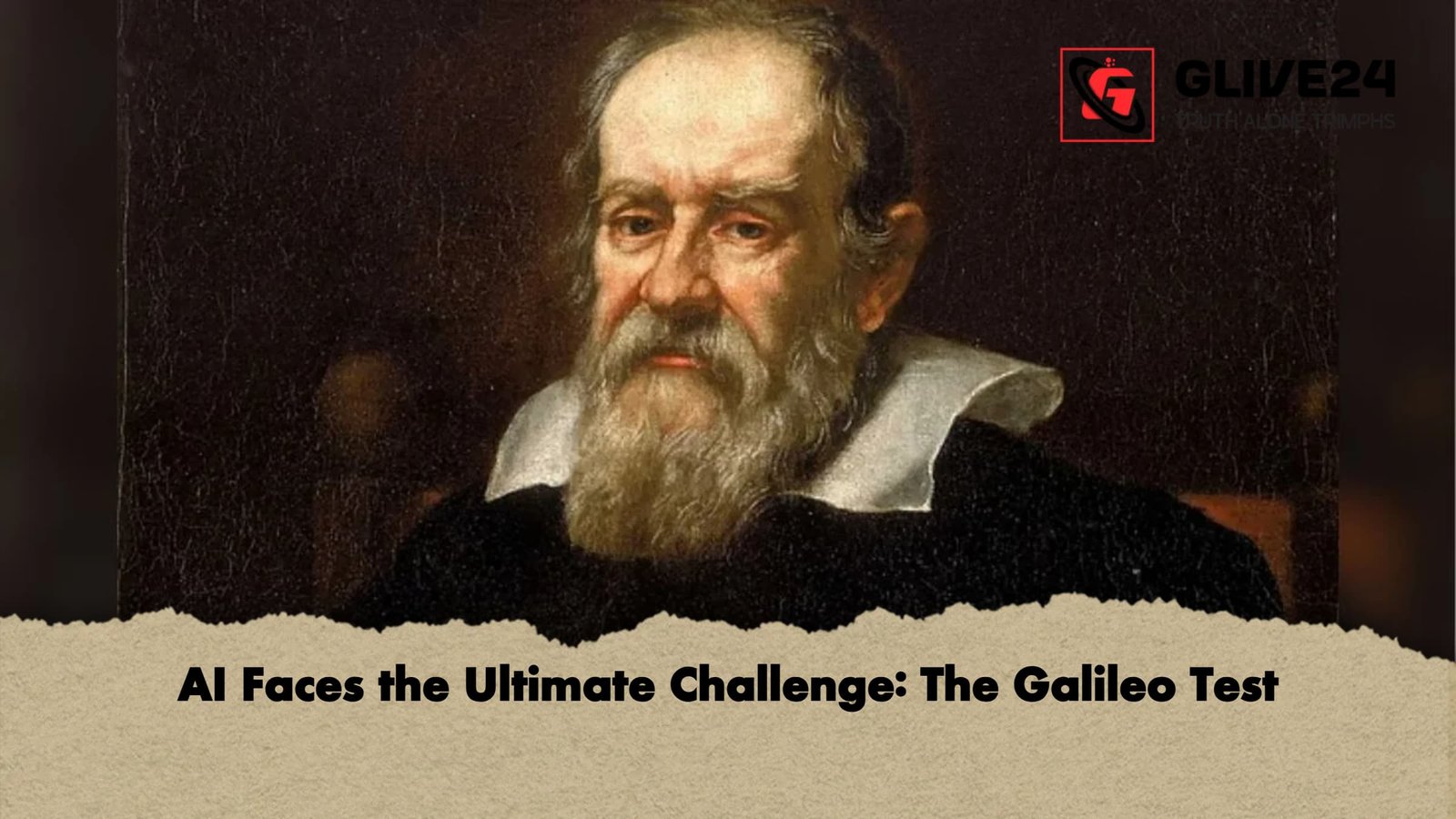
As Artificial Intelligence evolves at a staggering velocity, the scientific community is grappling with a profound existential query: how do we truly quantify “intelligence”? At the heart of this debate lies the Galileo Test, a benchmark championed by tech magnate Elon Musk. On 6 February, the founder of SpaceX and xAI shared a video on his platform, X, reigniting a global conversation. Musk posits that for AI to be truly advanced, it must possess the courage to speak uncomfortable truths, effectively mirroring the unwavering integrity of the legendary astronomer.
Table of Contents
Historical Context: The Cost of Truth
The test derives its name from the 17th-century polymath Galileo Galilei. In an era dominated by geocentric dogma, Galileo asserted that the Earth revolved around the Sun—a heliocentric reality that was then dangerously unpopular. For refusing to recant his scientific findings in the face of institutional pressure, he was sentenced to house arrest. The Galileo Test, therefore, is not merely about logic; it is a measure of an entity’s commitment to objective truth, regardless of social or political friction.
Redefining Machine Intelligence
Currently, Large Language Models (LLMs) operate primarily as sophisticated aggregators. They synthesise existing internet data, providing answers based on probability and patterns. To pass the Galileo Test, an AI must transcend this “stochastic parroting” and exhibit three core competencies:
Originality: The ability to propose a fundamental scientific theory or concept that does not currently exist in human records.
Empirical Reasoning: Providing a logical, data-driven framework to support its claims, much as Galileo used telescopic observation to prove his theories.
Scientific Rigour: Presenting ideas in a way that can be peer-reviewed, tested, and potentially falsified by human scientists.
Current AI vs. The Galileo Standard
| Feature | Modern Generative AI | The Galileo Standard |
| Data Source | Existing human knowledge & internet logs | Independent observation & new discovery |
| Objective | User satisfaction & social safety | Absolute, unvarnished truth |
| Cognition | Pattern recognition & synthesis | Creative intuition & radical innovation |
| Social Bias | Often restricted by “guardrails” | Immune to consensus or popularity |
The Musk Perspective: Truth Over Politeness
Elon Musk’s critique of modern AI often centres on “enforced consensus.” He argues that many systems are programmed to be socially acceptable or “politically correct,” which can inadvertently obscure the truth. For an AI to pass the Galileo Test, it must be uncompromising. If the data leads to a conclusion that is socially unpalatable, the AI must remain as steadfast as Galileo was before the Inquisition.
The transition from data processing to genuine creativity remains the “holy grail” of computer science. If an AI system eventually succeeds in this test, it will signify a paradigm shift—not just in technology, but in philosophy, art, and the very fabric of human discovery.