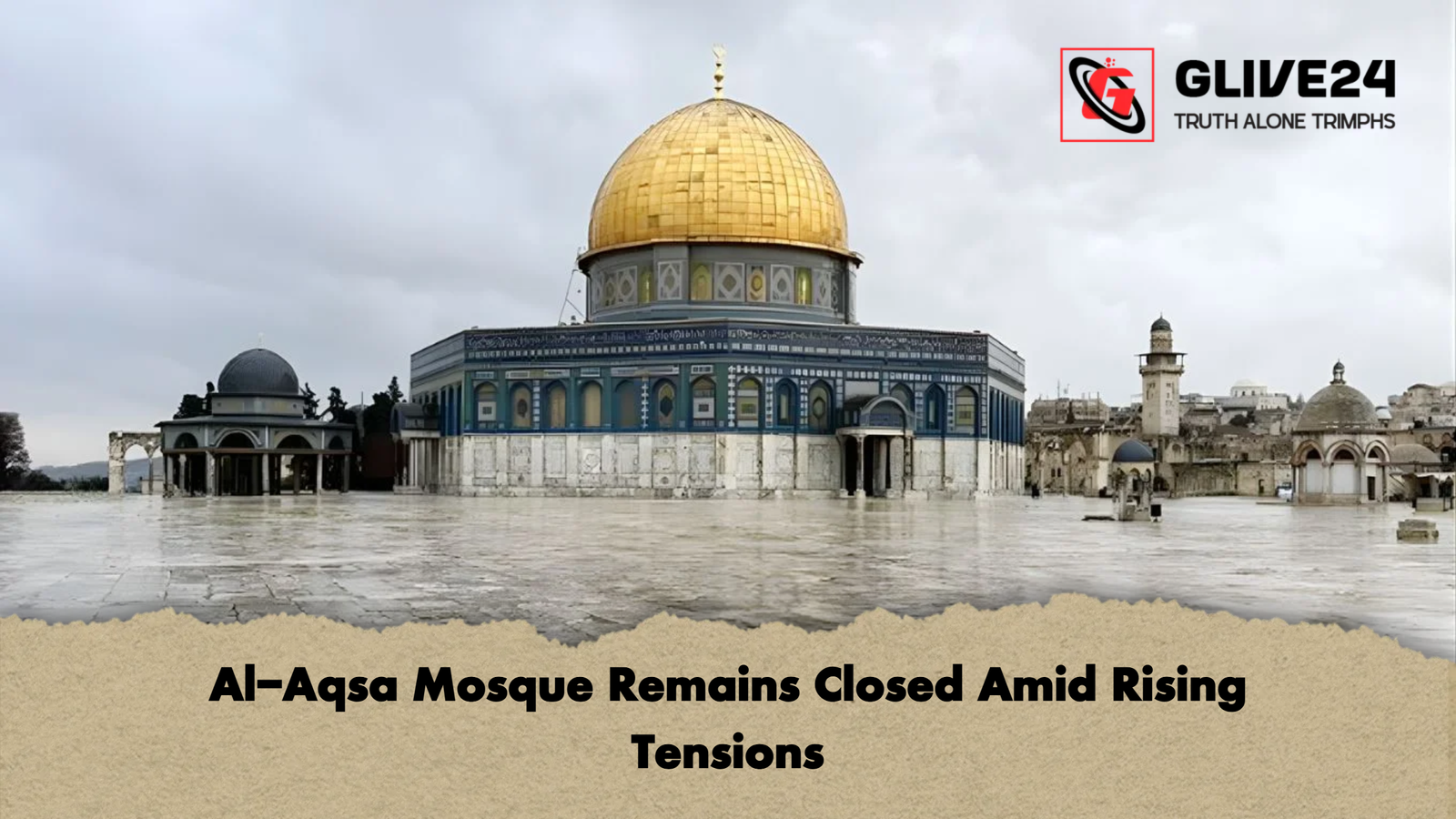
The sacred Al-Aqsa Mosque has remained closed for seventeen consecutive days, as escalating tensions between Iran and Israel cast a shadow over the region. On Sunday, coinciding with the holy night of Laylat al-Qadr during Ramadan, Israeli occupation forces continued to bar worshippers from entering the mosque, a site that normally attracts hundreds of thousands of Palestinians for night-long prayers and i‘tikāf. This year, however, the mosque and its courtyard were enveloped in an unusual and unsettling silence.
Israeli patrols were stationed throughout the mosque’s alleys, while worshippers were forced to perform their prayers in adjacent areas outside the sacred compound. The Palestine Information Center reported that this marks the first time since the 1967 Israeli occupation of Jerusalem that Palestinian worshippers have been prevented from accessing Al-Aqsa Mosque during the final ten days of Ramadan. Even the customary Friday prayers on the last Friday of Ramadan could not be held within the mosque.
A statement from the Palestinian Jerusalem Governorate highlighted that Israeli forces have effectively transformed the Old City into a militarised zone, deploying hundreds of soldiers throughout its streets. Consequently, worshippers were compelled to conduct Isha and Tarawih prayers near Bab al-Sahira and Bab al-Amud, key entrances to the Old City.
The Arab League strongly condemned Israel’s actions, describing the closures as a “blatant violation of international law, humanitarian law, and the historical and legal status of Al-Aqsa/Al-Haram al-Sharif.” The organisation emphasised that the occupying Israeli state holds no sovereignty over the Palestinian territories seized in 1967, including Jerusalem and its Islamic and Christian holy sites. The Arab League called on the international community to take a firm stance, halt Israel’s legal violations, restore Palestinian access, and safeguard freedom of religious worship.
The following table summarises the key developments:
| Subject | Details |
|---|---|
| Duration of Closure | 17 days |
| Notable Days Affected | Laylat al-Qadr, last Friday prayers of Ramadan |
| Alternative Prayer Locations | Bab al-Sahira, Bab al-Amud |
| Occupying Forces | Israeli military, stationed throughout Old City and mosque alleys |
| International Reaction | Arab League condemnation; call for restoration of Palestinian access |
The prolonged closure of Al-Aqsa Mosque has sparked profound concern and outrage among Palestinians and the global Muslim community. The restriction on prayers and i‘tikāf during the final days of Ramadan has emerged as a critical issue, carrying deep religious, social, and political significance. Analysts warn that the ongoing situation could exacerbate regional tensions and fuel wider unrest unless international actors intervene promptly.