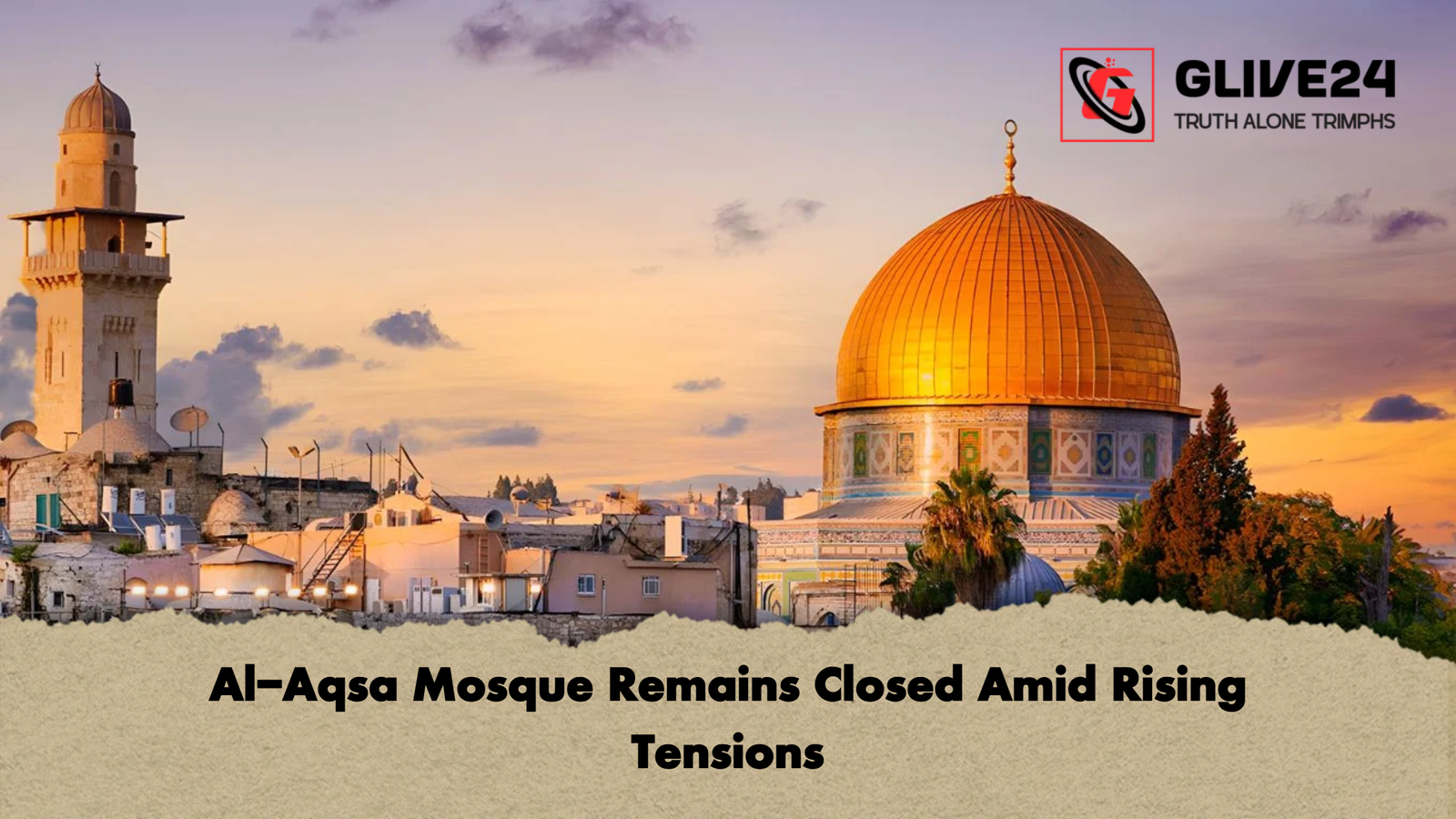
The forthcoming Eid al-Fitr celebrations will see the continued closure of the Al-Aqsa Mosque to worshippers, following a decision imposed by Israeli authorities. Sources familiar with the administration of the mosque in occupied East Jerusalem have confirmed that the Israeli government has officially informed the Islamic Waqf Committee, which oversees the mosque, of the extended restrictions.
Officials cite ongoing security concerns, particularly in the context of heightened tensions between Israel and the United States, as justification for the closure. However, Palestinians describe the measures as unprecedented, accusing the authorities of attempting to establish full control over the sacred site under the pretext of security. This marks the first Ramadan since Israel’s 1967 occupation of East Jerusalem during which Palestinians have been unable to perform Friday prayers at Al-Aqsa, a situation that has sparked widespread indignation across the Muslim world.
Access to the mosque has been severely limited. Only 25 Waqf staff members are permitted to enter per shift, and requests to allow even a single additional worker have been denied by the Israeli police. Waqf officials have expressed concerns that increasing staff numbers could provide extremist Israeli settlers with opportunities to enter the mosque. There are also fears that secret surveillance cameras could be installed inside the mosque’s main prayer hall and the Dome of the Rock.
The Old City of Jerusalem remains virtually sealed off, with entry largely restricted to local residents. While daily life continues relatively normally just outside the city, the streets within are eerily quiet, creating a stark contrast between the enclosed city and its surroundings.
On the night of Laylat al-Qadr last Sunday, Israeli police deployed hundreds of officers across all access points, preventing worshippers from entering. Thousands were forced to pray in the streets. Dr Mustafa Abu Sway, a professor at Al-Aqsa, criticised the restrictions, arguing that if security were genuinely the priority, the mosque’s underground areas could have been safely used instead.
Internationally, concerns are growing. Awni Bazybazy, Director of International Relations for the Waqf Committee, warned that temporary restrictions could become permanent. Under international law, occupying powers are prohibited from implementing permanent changes in occupied territories. Nevertheless, Israel has repeatedly violated Al-Aqsa’s historic “status quo,” signalling the potential for a more serious crisis in the future.
Current Situation at Al-Aqsa Mosque
| Aspect | Details |
|---|---|
| Mosque Closure Duration | From the beginning of this month until Eid |
| Permitted Staff per Shift | 25 Waqf workers |
| Prayer Access | Local worshippers prohibited |
| Security Measures | Secret surveillance cameras, heavy police deployment |
| Old City Status | Practically sealed off, largely deserted |
| International Reaction | Muslim world outrage; Waqf officials issue warnings |
The sustained closure of Al-Aqsa, combined with Israel’s ongoing actions, has heightened anxiety among Palestinians. While international law prohibits permanent alterations to historic religious sites, the continued restrictions at Al-Aqsa indicate a looming escalation of political and religious tensions.