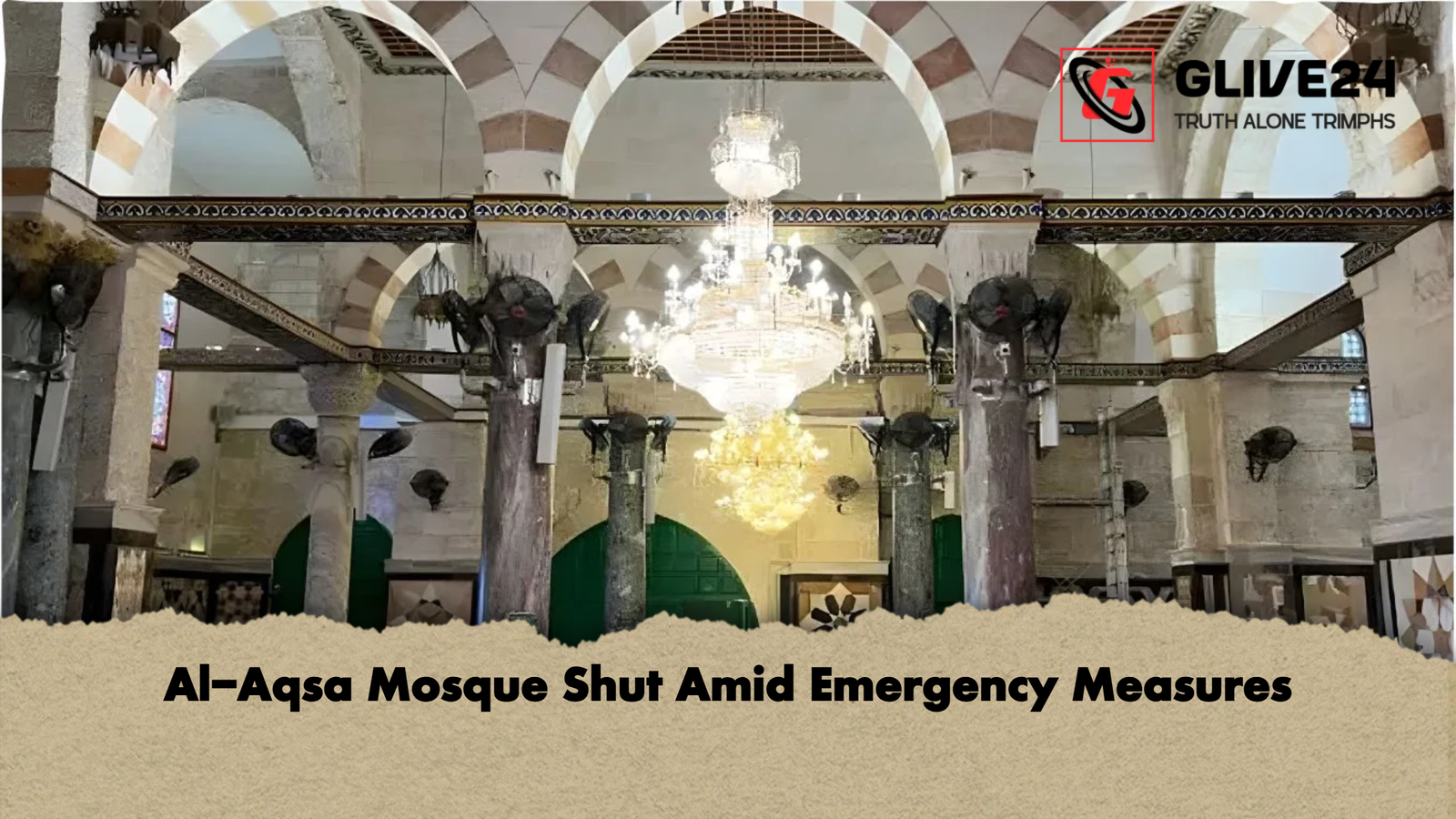
On Saturday night, worshippers were barred from performing the Isha and Taraweeh prayers at the historic Al-Aqsa Mosque in occupied Jerusalem. The decision was taken by Israeli police, citing a state of emergency following the recent joint military strikes by Israel and the United States on Iranian targets.
Table of Contents
Restrictions on Worshippers
According to sources from the Islamic Waqf Department, only a handful of officials were permitted inside the mosque. These included Imam Sheikh Yusuf Abu Asnaina, the Director Sheikh Omar al-Kiswani, and a small number of Waqf personnel, who were able to conduct the Isha prayer. Access for ordinary worshippers was completely prohibited.
Data from the Jerusalem Governorate indicates that since the beginning of Ramadan, daily attendance for the Taraweeh prayers has ranged between 35,000 and 100,000 worshippers. However, due to Saturday’s emergency measures, all prayers—including Isha and Taraweeh—were suspended.
Israel’s Channel 12 reported that, citing the purported security situation, the Home Front Command has issued orders to keep Al-Aqsa closed throughout Ramadan.
Impact of the State of Emergency
The emergency declaration imposed strict nationwide restrictions, limiting activities to essential services only. Measures include:
Suspension of educational institutions
Ban on public gatherings
Closure of non-essential workplaces
These directives were applied to Al-Aqsa Mosque as well, despite the site being administered by the Jordanian Waqf under its custodianship.
Effect on Worshippers and Waqf Staff
Before Friday prayers, worshippers from Jerusalem and Palestinian territories were removed from the mosque compound. Waqf staff were also compelled to leave, with only security personnel allowed to remain. The mosque gates were subsequently closed under police orders.
Ramadan and Historical Context
The sight of an empty Al-Aqsa on the 11th day of Ramadan evoked memories of 2020, when the mosque was closed due to the COVID-19 pandemic.
Ziad Iwhais, a Jerusalem-based researcher, commented on social media: “Closing Al-Aqsa during Ramadan represents an unprecedented move to assert unilateral control and reinforce claims of Israeli sovereignty over the mosque. It cannot be silently accepted and must be resisted by all possible means.”
Significance for Muslims
Al-Aqsa Mosque holds profound religious importance as the first Qibla and Islam’s third holiest site. The sudden prohibition of access has sparked widespread concern and protest across the Muslim world, raising critical questions regarding religious freedom at sacred sites during Ramadan.
Summary of Saturday’s Prayer Restrictions
| Subject | Details |
|---|---|
| Suspended Prayers | Isha and Taraweeh |
| Permitted Individuals | Imam, Director, select Waqf personnel |
| General Worshippers | Entry completely prohibited |
| Daily Attendance During Ramadan | 35,000 – 100,000 |
| Emergency Measures Imposed | Education suspended, public gatherings banned, restricted mosque access |
| Mosque Administration | Jordanian Waqf Department under custodianship |
This measure has reverberated across the Muslim world, highlighting ongoing tensions over access to Islam’s sacred sites amid regional and international political developments.