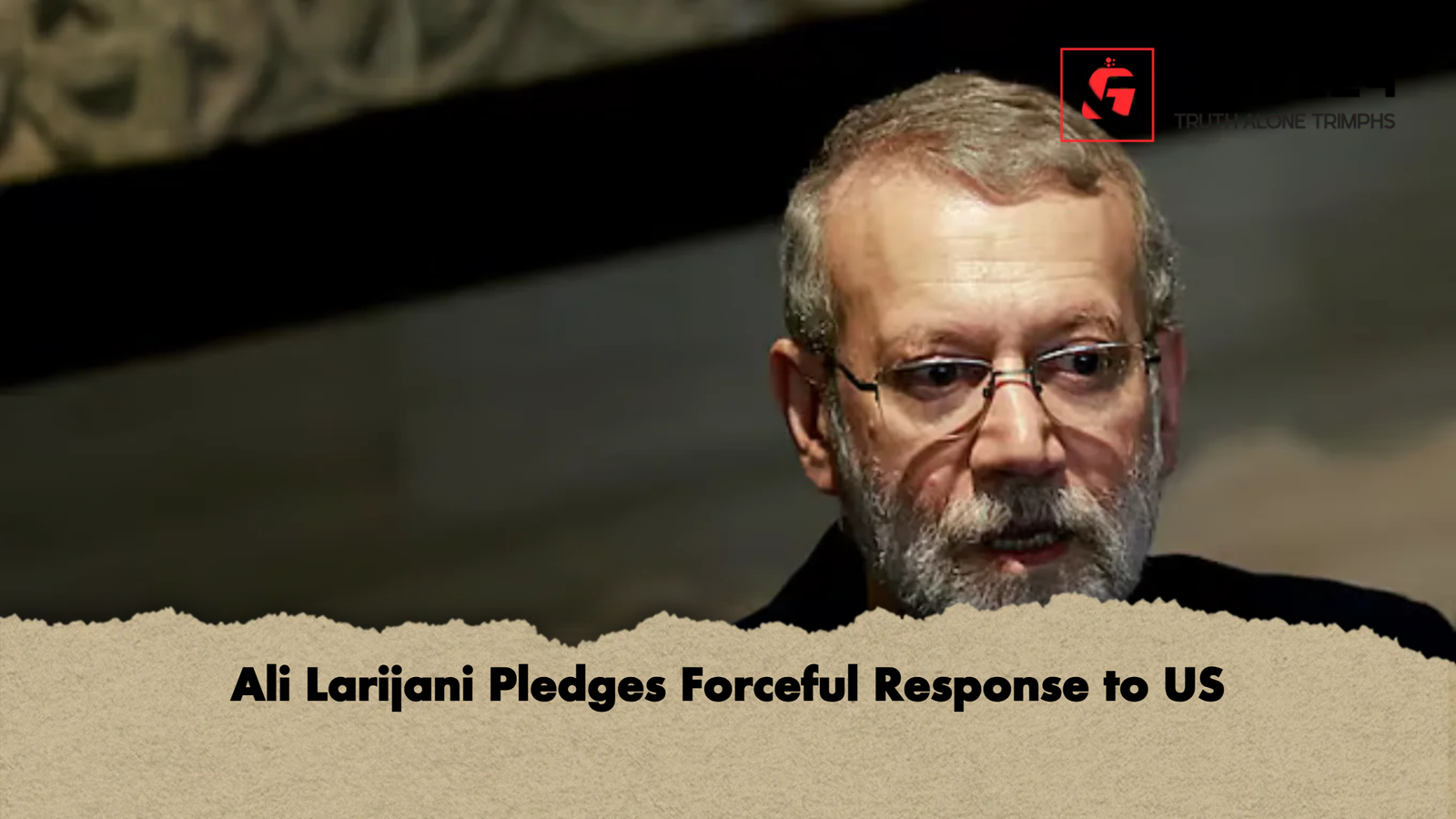
Ali Larijani, long regarded as the calm and pragmatic face of Iran’s political establishment, has combined scholarly erudition with decades of political influence. A mathematician and philosopher, Larijani authored a thesis on 18th-century German thinker Immanuel Kant and has played a central role in negotiating Iran’s nuclear programme with Western powers.
However, on 1 March, the 67-year-old Secretary of Iran’s Supreme National Security Council dramatically shifted his tone. In the immediate aftermath of a US and Israeli airstrike that killed Supreme Leader Ayatollah Ali Khamenei and IRGC commander Mohammad Pakpur, Larijani appeared on state television delivering fiery remarks.
Table of Contents
Defiant Warnings
On social media, Larijani wrote:
“The United States and the Zionist regime (Israel) have set fire to the heart of the Iranian nation. We will burn their hearts in return. Zionist criminals and shameless Americans will be forced to answer for their deeds.”
He added, “Iran’s brave armed forces and great nation will teach notorious international oppressors a lesson they will never forget.” Larijani accused US President Donald Trump of falling into an ‘Israeli trap’ and assumed a central role in navigating Iran’s most critical post-1979 revolutionary crisis. Analysts suggest he will play a key part in the interim three-member leadership council formed after Khamenei’s death, overseeing Tehran’s security strategy amid ongoing conflict with the US and Israel.
Iran’s “Kennedy Family”
Born on 3 June 1958 in a wealthy family in Najaf, Iraq, Larijani hails from one of Iran’s most influential lineages, dubbed the “Iranian Kennedy family” by Time magazine in 2009. His father, Mirza Hashem Amoli, was a prominent religious scholar, and his brothers have held critical positions in Iran’s governance, including seats in the Assembly of Experts responsible for supervising the Supreme Leader.
Larijani married Farideh Motahari, daughter of Morteza Motahari, a close aide to the founder of the Islamic Republic, Ruhollah Khomeini. Despite conservative religious roots, his children have pursued secular paths. His daughter Fatemeh studied medicine at Tehran University and earned a specialised degree in the United States.
Academic and Political Career
Larijani graduated in Mathematics and Computer Engineering from Sharif University of Technology in 1979 and later obtained a master’s and doctorate in Western philosophy from Tehran University. His career, however, has been defined by politics:
| Year(s) | Position | Notes |
|---|---|---|
| 1994–1997 | Minister of Culture | Under President Rafsanjani |
| 1994–2004 | Head of IRIB | Criticised for conservative media policies |
| 2008–2020 | Speaker of Parliament (Majlis) | Three terms, oversaw domestic and foreign policy |
| 2025–present | Secretary, Supreme National Security Council | Oversees security and nuclear diplomacy |
Security and Diplomacy
Despite his hardline reputation, Larijani is considered pragmatic. In February, he engaged in indirect talks with the US mediated through Oman, noting Tehran received no concrete proposals. He accused Israel of attempting to sabotage diplomacy, describing the negotiations as positive before the 28 February airstrikes nullified any diplomatic progress.
In his latest address, Larijani reassured citizens that constitutional procedures for leadership succession are in place. He warned Washington that attempts to destabilise Iran by targeting leaders would fail, adding, “We do not intend to strike regional countries, but any US bases are potential targets.”
With Khamenei gone, Larijani has pledged Iran will respond with unprecedented strength to the US and Israel, asserting his position as the nation’s decisive voice in the current regional crisis.