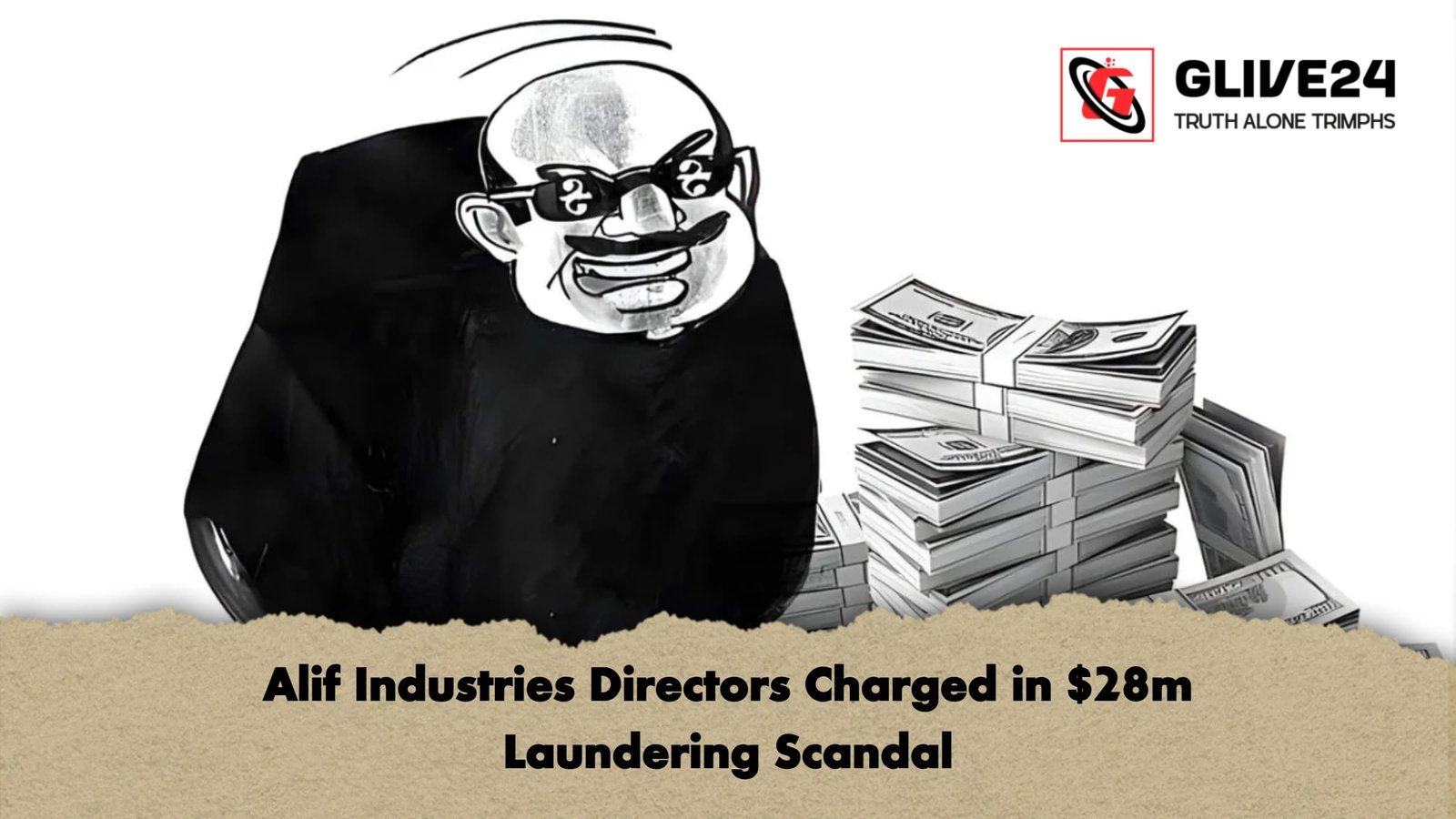
The Criminal Investigation Department (CID) of the Bangladesh Police has launched a formidable legal strike against the top brass of Alif Industries Limited, accusing the firm of orchestrating a trade-based money laundering syndicate. On Wednesday, 7 January 2026, a formal case was lodged at Gulshan Police Station, naming the Chairman, Managing Director, and three Independent Directors as primary suspects in a scheme that reportedly siphoned $28.4 million out of the national economy.
Mechanics of the Alleged Fraud
Following an intensive preliminary investigation, the CID’s Financial Crime Unit uncovered a dual-layered strategy of financial deception. The accused allegedly utilised the corporate branch of the Export Import Bank of Bangladesh (EXIM Bank) on Gulshan Avenue to facilitate their illicit activities.
Firstly, the company obtained 56 Export Permits (EXPs) through six specific Letters of Credit (LCs) for the shipment of ready-made garments. However, investigators discovered that the corresponding export proceeds were never repatriated to Bangladesh, directly violating the foreign exchange regulations mandated by the central bank. Secondly, the firm is accused of manipulating import data by declaring higher values for goods than were actually delivered, effectively moving vast sums of US dollars abroad under the guise of legitimate trade.
Table: Profile of the Accused and Forensic Findings
| Name of the Accused | Position within Alif Industries | Alleged Role |
| Azizul Islam | Chairman | Strategic oversight of fraudulent LCs |
| Md. Azimul Islam | Managing Director | Execution of non-repatriated exports |
| Rafiqul Islam | Independent Director | Failure to report financial discrepancies |
| Tanim Noman Satter | Independent Director | Complicity in documentation fraud |
| Azharul Islam | Independent Director | Involvement in offshore fund transfers |
| Sum Involved | $28,408,814.14 | Estimated total illicit outflow |
Institutional Violations and Evidence
The CID press release issued on Thursday detailed that the investigation involved a meticulous review of the company’s registered office files, factory production logs, and bank statement histories. The evidence suggests that Alif Industries knowingly bypassed Bangladesh Bank’s Foreign Exchange Management Policy, causing a significant “financial haemorrhage” to the state.
The discrepancies between the declared quantity of imported raw materials and the actual stock found at the factory served as a “smoking gun” for investigators. This “over-invoicing” of imports is a classic hallmark of trade-based money laundering, used to circumvent capital controls and park wealth in offshore jurisdictions.
National Crackdown on Financial Crime
This prosecution falls under the Money Laundering Prevention Act and marks a significant escalation in the government’s crackdown on corporate malfeasance. The CID has affirmed that its investigation is ongoing, with a focus on identifying “unnamed accomplices” within the banking sector or logistics firms who may have facilitated the forged documentation.
“The CID is giving the highest priority to suppressing money laundering and financial crimes,” the statement read. “We will continue to bring anyone involved in such economic sabotage to justice, regardless of their corporate stature.”