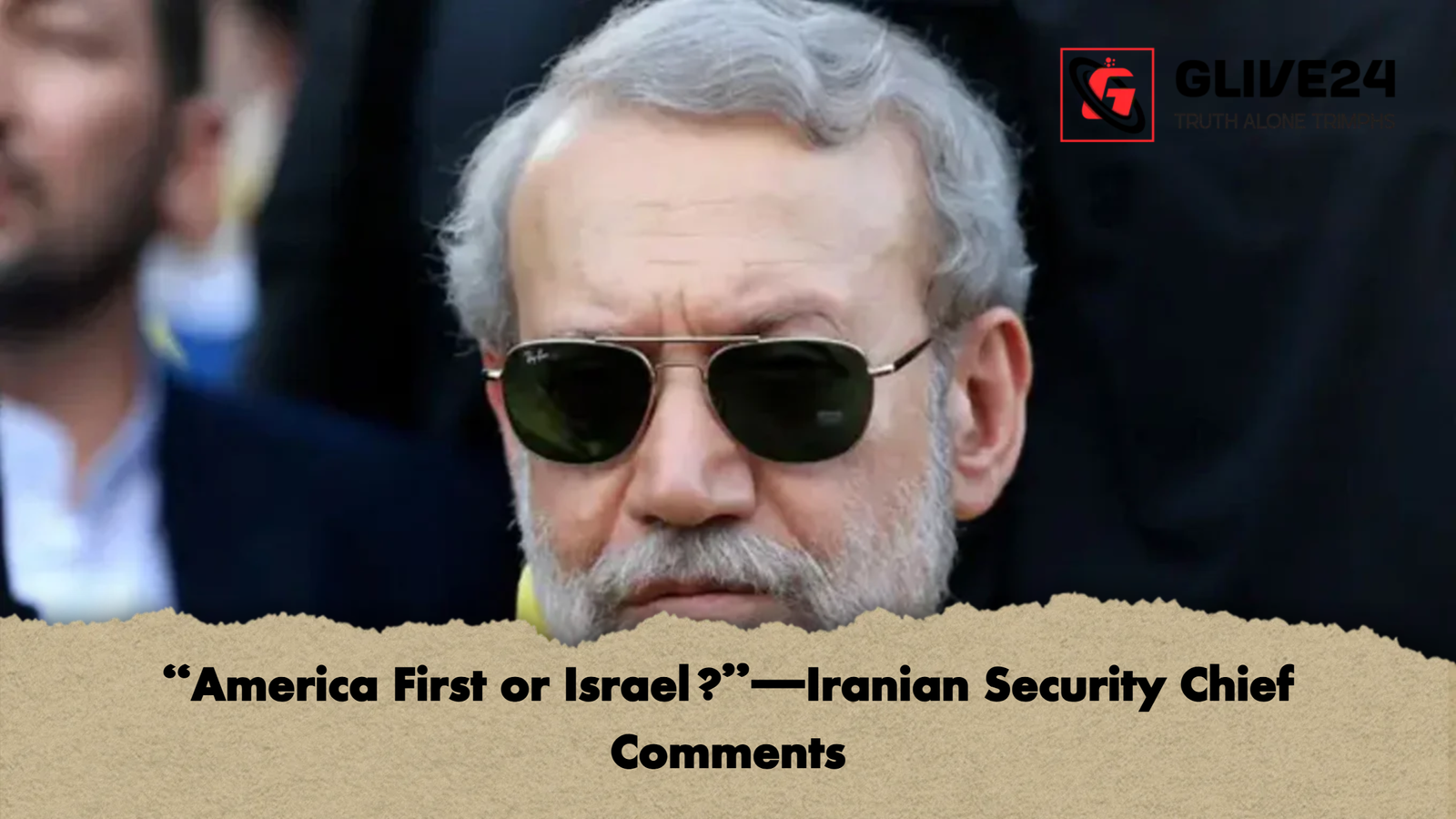
Following the death of Iran’s Supreme Leader Ayatollah Ali Khamenei and the commencement of targeted attacks in Tehran, allegedly incited by Israel, Iran’s security chief has issued a stern warning to the United States. Ali Larijani, the head of Iran’s security council, directly questioned President Donald Trump, asking: “Is America still first, or is it Israel?”
The report said, Larijani criticised the United States for its role in Khamenei’s death on 28 February, describing it as a provocation that would carry a “high price.” He stated that both the United States and Israel bear responsibility for orchestrating attacks that culminated in the demise of Iran’s highest-ranking leader.
In a post shared on social media platform X, Larijani wrote: “President Trump, you have dragged the American people into an unjust war against Iran.” He further suggested that Israeli Prime Minister Benjamin Netanyahu’s “mercenary behaviour” influenced Washington’s decisions. Larijani’s pointed question remained: “Is America still first—or is it Israel?”
The attacks on Iran on 28 February were described as extensive, targeting multiple strategic locations. Since then, Iranian authorities report ongoing strikes at various sensitive sites, escalating tensions across the nation.
Speaking on the matter, United States Secretary of State Marco Rubio asserted that Washington had prior knowledge of Israel’s actions. He defended the strikes as pre-emptive measures, stating: “Given the potential threat posed by Iran, the U.S. was obliged to take proactive steps to protect its forces.”
To provide a clearer overview of recent events, the following table summarises key developments:
| Date | Event | Responsible Parties | Outcome/Impact |
|---|---|---|---|
| 28 February | Death of Ayatollah Ali Khamenei | USA & Israel | Nationwide security alert in Iran |
| 28 Feb – 5 Mar | Attacks on strategic sites in Iran | Unknown | Heightened security, military deployment |
| 5 March | Statement by Marco Rubio | USA | Justification for pre-emptive measures |
| Ongoing | Monitoring and retaliatory threats | Iran | Increased regional tensions |
Analysts warn that these tensions are not merely regional but could have broader implications for Middle Eastern geopolitics. Iran’s security chief has emphasised that while Israel is directly implicated, the United States remains a principal target of scrutiny.
The unfolding situation underscores the delicate balance of diplomacy and military strategy in the region, with both Washington and Tehran under international scrutiny. Experts suggest that without careful diplomatic engagement, the risk of escalation remains high, potentially drawing neighbouring countries into a larger conflict.