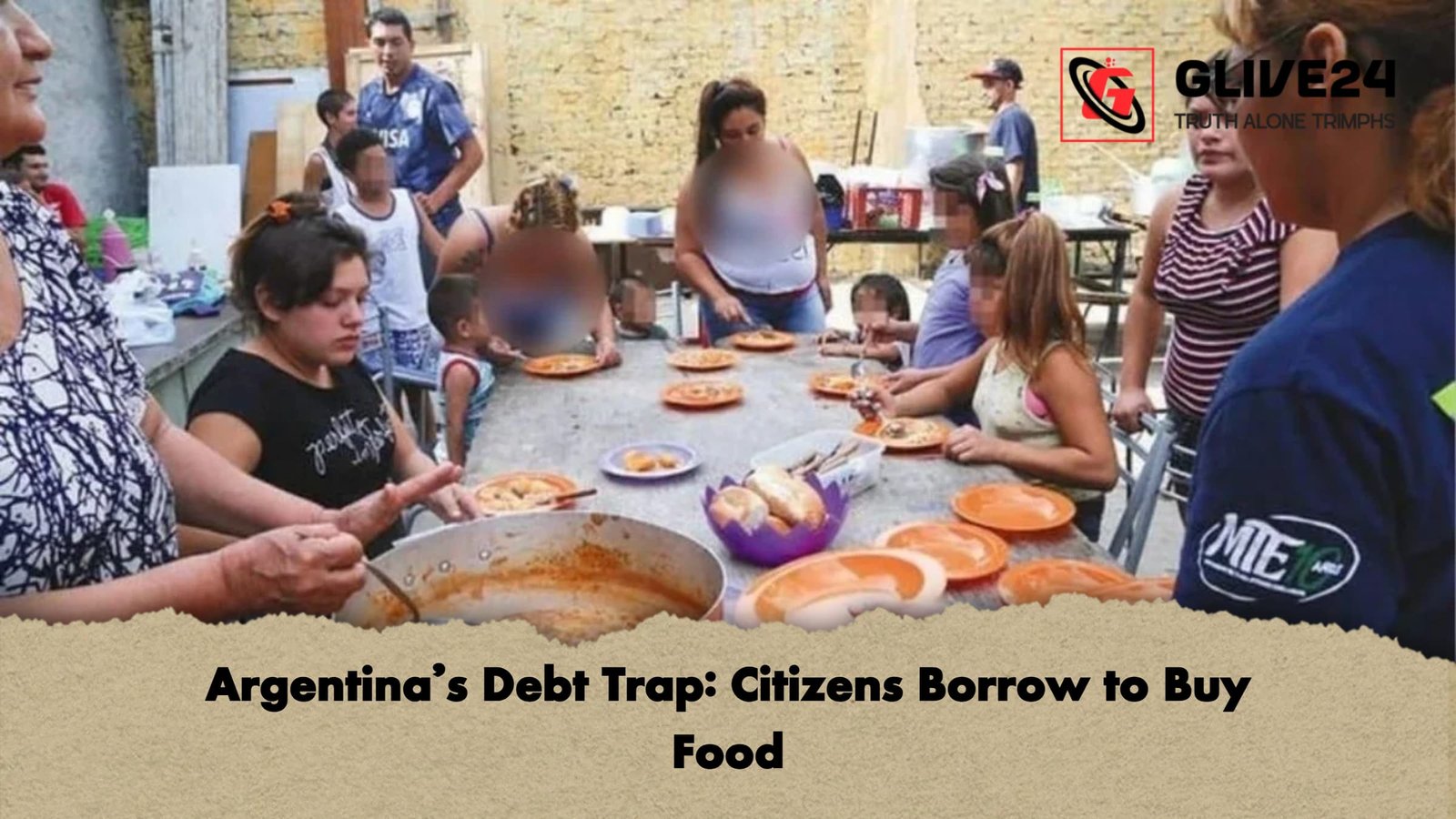
In the homeland of footballing legend Lionel Messi, a far grimmer reality is unfolding away from the stadium lights. Argentina is currently gripped by a profound economic malaise that has forced millions of citizens into a desperate cycle of debt just to afford basic sustenance. What was once one of South America’s most prosperous nations is now witnessing a catastrophic erosion of purchasing power, leaving families to choose between electricity and evening meals.
A Nation Living on Credit
A recent study by the Grande Institute in Buenos Aires reveals a harrowing statistic: nearly half of the Argentine population is now surviving by depleting life savings or accumulating high-interest debt. For the average worker, the monthly salary is often exhausted by the midpoint of the month. Diego Nakashio, a 43-year-old vendor, reflects the national mood, noting that after the 15th of each month, his family relies entirely on micro-loans and credit cards to stock their pantry.
Since President Javier Milei assumed office in December 2023, his administration has pursued an aggressive “chainsaw” policy of fiscal austerity to curb hyperinflation. However, while macro-indicators such as banking and agricultural exports show signs of life, the retail and manufacturing sectors have collapsed. Independent retailers report a 12.5% decline in food sales, as the soaring costs of utilities and fuel—rising far faster than wages—have decimated the real value of the Peso.
Argentina’s Economic Indicators (2024–2026 Forecast)
| Economic Metric | Status/Current Value | Historical Context |
| Personal Loan Default Rate | 11% | Highest level since 2010 |
| Retail Food Sales | -12.5% (Year-on-Year) | Significant decline in basic consumption |
| Credit Card Dependency | Record High | Over 50% of supermarket spend |
| Inflation Projection | Stabilising (Slowly) | Remains among the world’s highest |
| IMF Growth Forecast | Positive for 2026/27 | Contingent on structural reforms |
The Dangerous Cycle of Informal Debt
The desperation has pushed many Argentines toward a perilous debt trap. With formal bank loans becoming harder to secure due to stringent credit checks, approximately 11% of personal loans have fallen into default. This has driven a segment of the population into the arms of informal, high-interest lenders.
Social adaptation has become a necessity for survival. School teachers and civil servants have begun forming “buying collectives,” purchasing essential goods in bulk to mitigate costs. Furthermore, many citizens are paying only the “minimum balance” on their credit cards—a strategy that offers short-term relief but leads to long-term financial ruin as interest compounds.
Economist Lucia Cavallero warns that this is not merely a liquidity crisis but a structural breakdown. “Providing more credit is like treating a wound with a bandage that doesn’t stop the bleeding,” she argues. According to Cavallero, without significant wage adjustments that outpace the cost of living, Argentina risks becoming a nation where the “working poor” are permanently shackled to lenders. As political parties debate new bills to alleviate the debt burden, the citizens of Argentina wait for a sign that their economic nightmare might finally end.