
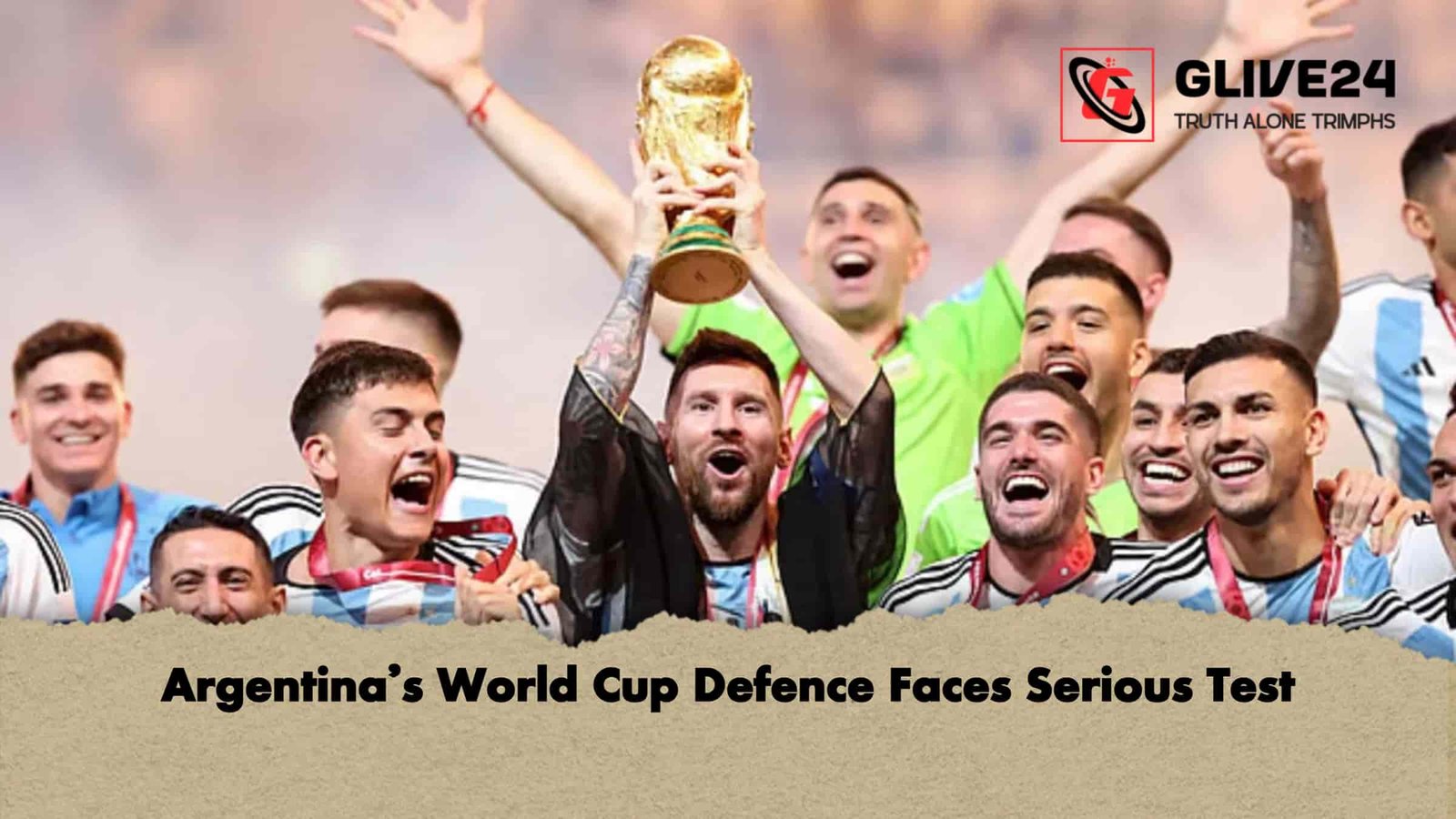
Three and a half years have passed since that unforgettable night in Lusail, when Lionel Messi hoisted the World Cup trophy. His seven goals in seven matches, including two in the final, and three assists, crowned him as the tournament’s standout performer. Messi was more than captain; he was the pulse of Argentina, the embodiment of their collective spirit.
Yet, Argentina was never only Messi’s team. Julián Álvarez announced himself as a forward of global calibre, Alexis Mac Allister showcased composure beyond his years, and Enzo Fernández earned the tournament’s Best Young Player award. Defensively, Nicolás Otamendi commanded the backline with unwavering determination, Ángel Di María provided flashes of brilliance, and Emiliano Martínez turned penalty shootouts into nightmares for opponents.
The mental strength Argentina displayed after the shock opening defeat to Saudi Arabia—rebounds that few other nations could match—was a defining feature of their 2022 triumph.
Table of Contents
Current Situation: Heading Into 2026
Now, with the 2026 World Cup looming, the landscape is markedly different. Scaloni’s squad no longer exudes the same dominance. Preparations have been inconsistent, and the weight of expectation once again falls heavily on Messi, now 37. Maintaining peak performance at this age, especially across potentially eight World Cup matches, is no small task.
Argentina’s Qualifying Campaign
On paper, the qualifiers were strong: Argentina topped the CONMEBOL table, nine points clear of Ecuador, and Messi led with eight goals—the first time he has topped the South American scoring charts.
| Metric | Performance | Notes |
|---|---|---|
| Qualifying Position | 1st | Nine points ahead of Ecuador |
| Top Scorer | Lionel Messi | 8 goals |
| Total Goals Scored | Highest in CONMEBOL | — |
| Notable Losses | Uruguay, Paraguay | Warning signs of vulnerability |
| Draws | Colombia (1–1) | Home draw revealed inconsistency |
Yet, statistics mask underlying concerns. Uruguay and Paraguay finished fourth and lower, and losses or draws against them highlight fragility. Even Copa América success did not reflect the team’s peak potential—they won, but without the fluid dominance seen in 2022.
Pre-World Cup Friendlies
Preparatory matches against Venezuela (1–0), Puerto Rico (6–0), Angola (2–0), Mauritania (2–1), and Zambia have exposed weaknesses. The friendly against Mauritania, despite the victory, revealed lethargy and a lack of cohesion. Messi entered only after halftime, and the match quickly became a showcase for his personal brilliance rather than a team test.
| Friendly | Result | Key Observations |
|---|---|---|
| Venezuela | 1–0 W | Slow, unconvincing performance |
| Puerto Rico | 6–0 W | Dominant but low opposition |
| Angola | 2–0 W | Minimal challenge |
| Mauritania | 2–1 W | Team disjointed; Messi needed to inspire |
| Zambia | 3–0 W | Little intensity; questions remain |
Ageing Squad and Tactical Concerns
Defence shows signs of decline. Otamendi, 38, is slower and prone to errors; Cristian Romero has struggled at club level, while Lisandro Martínez and Gonzalo Montiel have been injury-prone. Midfield options such as Rodrigo De Paul and Mac Allister offer class, but consistency is lacking. Forward options are brighter, with Álvarez in form, Lautaro Martínez strong at Inter Milan, and Nico Paz a promising young talent, though inexperienced.
Messi’s participation remains uncertain. If absent, Argentina will rely on these younger players to shoulder immense responsibility in a World Cup featuring 48 teams and a demanding schedule.
In short, defending the World Cup will require extraordinary resilience. Argentina still carries talent and flashes of brilliance, but the depth, cohesion, and physical readiness of the squad pose real questions. The magic of Messi may once again be decisive—but it may not be enough.