
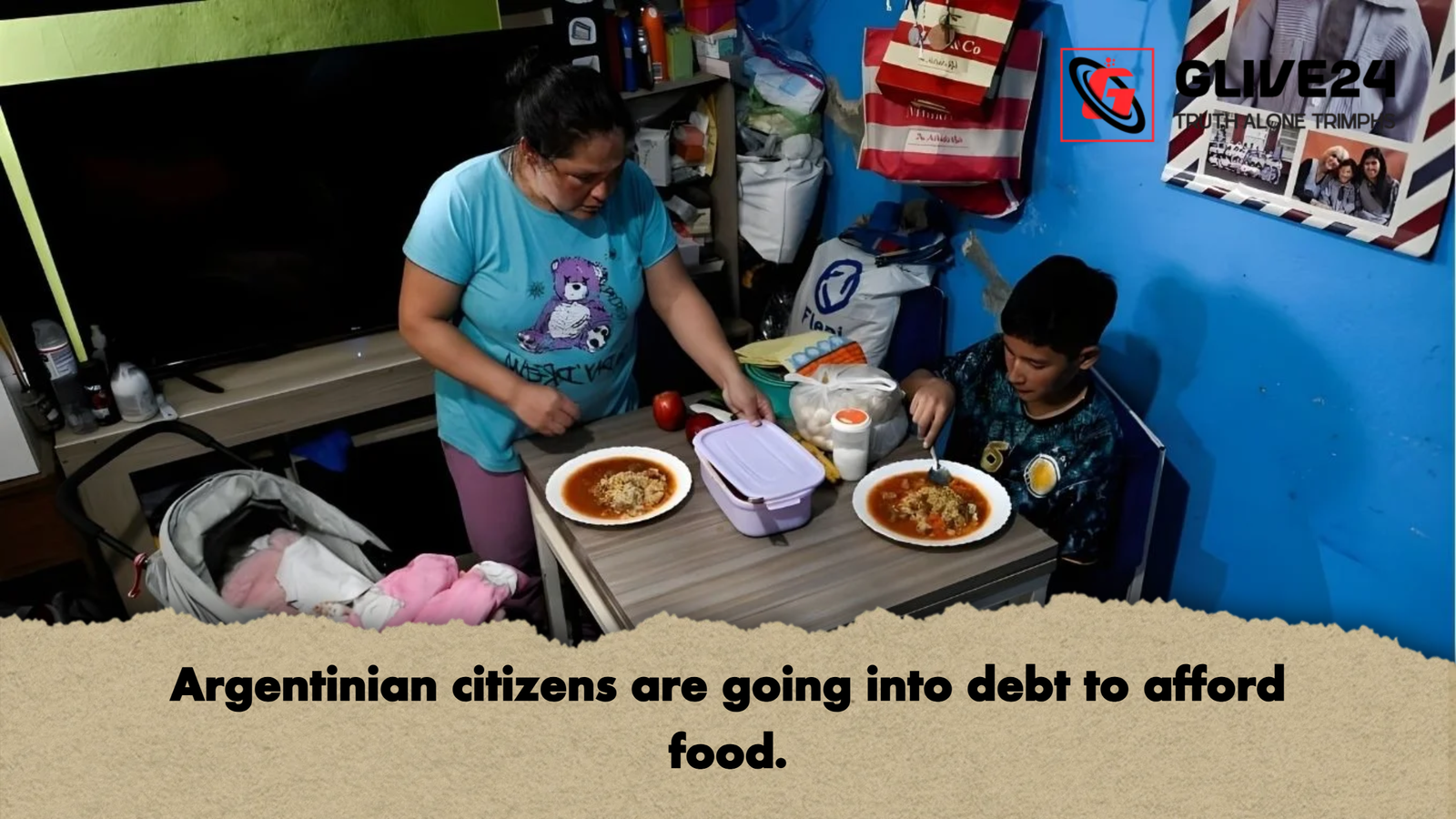
Argentina, one of South America’s largest economies, is grappling with a severe economic downturn. The crisis has reached such an alarming level that many citizens are forced to take on debt merely to purchase basic necessities such as food.
Diego Nacascio, 43, works full-time at a large hardware store in the Buenos Aires suburb of Florencio Varela. He explained, “By around the 15th of each month, my wife and I have already spent our salaries. After that, the struggle begins—looking for extra work, pawning household items, using credit cards, or taking out small loans.”
Diego continued, “We have worked diligently for 25 years. Our jobs allowed us to build a home, buy a car, and raise our 17-year-old son. Yet now, even with a better-paying job than before, we cannot afford a month’s worth of food.”
A recent survey indicates that nearly half of Argentinians are drawing on savings, selling personal belongings, or borrowing from banks and relatives to cover daily expenses. Another report shows that 63% of households have cut back on spending simply to make ends meet by the month’s end.
Violeta Carrera Pereyra, a sociologist at the Argentina Grand Institute, warned, “The current situation is deeply troubling. Even those working multiple jobs are borrowing not to buy homes or vehicles, but merely to feed themselves.”
Since assuming office in 2023, President Javier Milei has claimed that his economic policies have revived growth and reduced poverty, earning the support of the International Monetary Fund. However, the reality on the ground is markedly different. While overall economic activity has increased, growth has been uneven. In November 2025, banking and agriculture showed modest gains, but production and trade sectors suffered significant declines. Basic food demand has fallen, and household expenses for electricity and fuel have soared.
Milei’s administration has implemented controversial measures to curb inflation, including keeping wages below inflation rates and opening markets to cheap imports. These policies have left many families with less disposable income, leading to widespread closures of small businesses and factories.
Official data indicate that nearly half of supermarket purchases in Argentina are now made using credit cards, while defaults on personal loans have surged. Approximately 11% of personal debt remains unpaid—the highest level since 2010.
Griselda Quipildor, 49, who lives with her husband, two daughters, and two grandchildren, described the cycle of debt her family endures. “Even though several family members work, our money runs out by the 18th of each month, and we have to start borrowing again. We pay debts and bills at the beginning of the month, then the cycle repeats. It is extremely difficult to break.”
Key Economic Indicators – Argentina (2025)
| Indicator | Value / Change | Notes |
|---|---|---|
| People using savings/loans for essentials | ~50% | Includes borrowing from banks or relatives |
| Households cutting expenses | 63% | To manage monthly budgets |
| Supermarket purchases via credit card | ~50% | Rising reliance on credit |
| Personal loan default rate | 11% | Highest since 2010 |
| Sector growth (Nov 2025) | Banking: +2%, Agriculture: +3% | Production & trade declined |
| Household energy/fuel cost increase | +200–300% | Relative to previous year |
The ongoing economic hardships highlight the fragility of Argentina’s recovery. For many families, the struggle is no longer about improving living standards—it is simply about surviving the month.