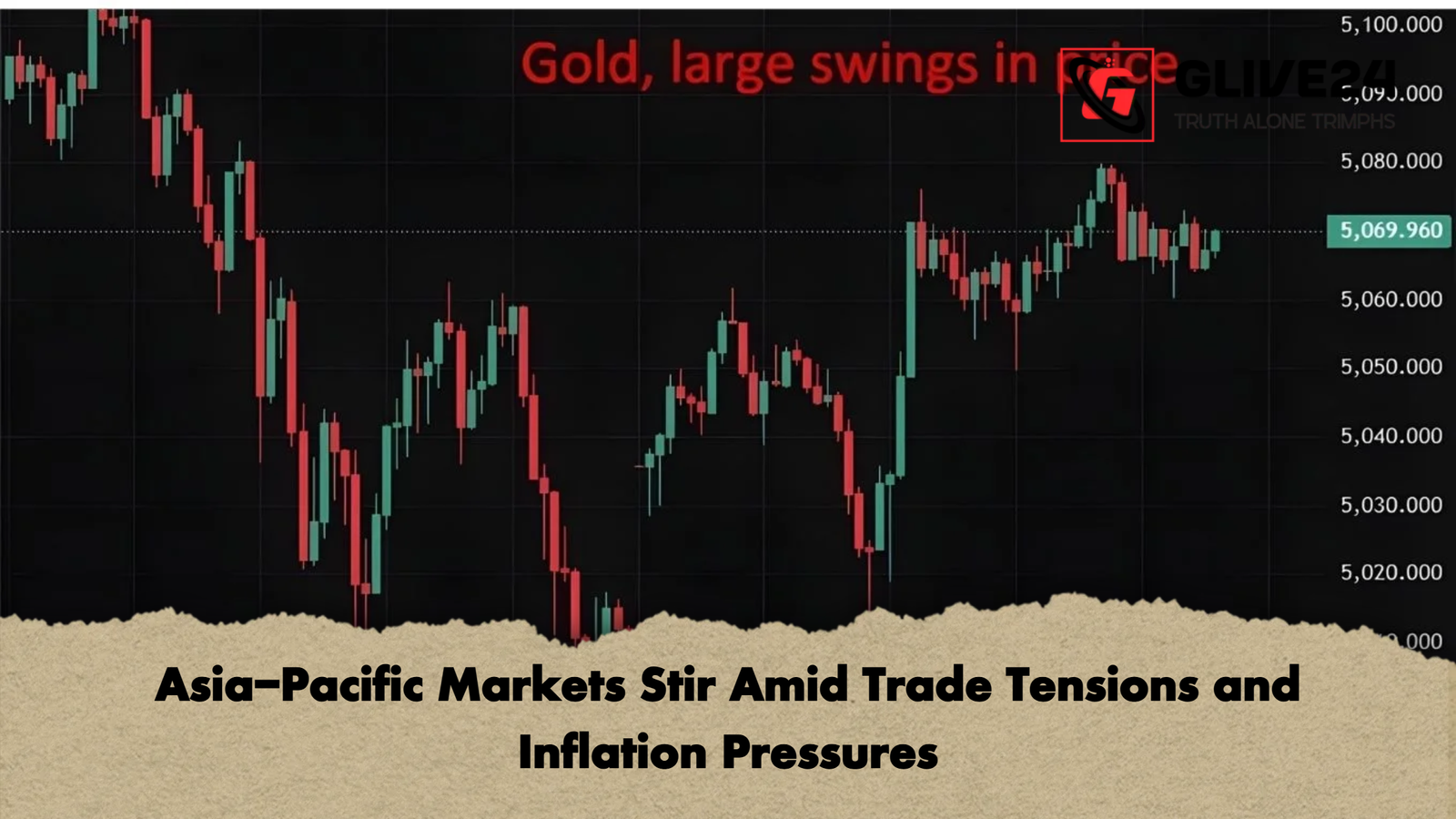
Hong Kong, 27 January 2026 — Financial markets across the Asia-Pacific region experienced notable volatility on Tuesday, with gold and silver prices climbing amid rising geopolitical and economic tensions. The turbulence follows an announcement by U.S. President Donald Trump, who declared a 25% tariff increase on certain South Korean goods, igniting renewed trade friction in the region. The move primarily impacts South Korea’s automotive, timber, and pharmaceutical sectors.
In response, Seoul is moving swiftly to pass relevant legislation. A senior political official confirmed that a parliamentary bill has been tabled to implement the U.S. investment committee’s recommendations. Furthermore, South Korea’s trade envoy is scheduled to hold high-level discussions in Washington with the United States Trade Representative (USTR) in the coming days.
Meanwhile, Japan continues to grapple with persistent inflationary pressures in the service sector. December 2025 data revealed that the Services Producer Price Index (PPI) rose by 2.6%, reflecting labour shortages and mounting wage pressures. The Bank of Japan views this as a signal that labour-driven inflation could remain a sustained concern.
In the United Kingdom, retail price inflation has surged to its highest level in two years. According to the British Retail Consortium, shop price inflation for January 2026 increased by 1.5%, driven by elevated energy costs and higher National Insurance contributions.
Australia’s business environment shows modest improvement. The National Australia Bank (NAB) survey reported a business conditions index of +9 and a confidence index of +3. However, capacity utilisation remains at 83.2%, suggesting only limited spare capacity.
China’s industrial sector demonstrated a recovery in profits, with December 2025 industrial earnings up 5.3% following a sharp 13% decline in November. Analysts noted, however, that this growth was almost entirely driven by foreign enterprises, while state-owned enterprises’ profits fell by 3.9%.
Geopolitical risks remain salient. Internal pressures in Iran are intensifying, leaving its leadership arguably in the weakest position since the Islamic Revolution of 1979.
Key Asia-Pacific Indices:
| Index | Country | Change |
|---|---|---|
| Nikkei 225 | Japan | +0.4% |
| Hang Seng | Hong Kong | +1.2% |
| Shanghai Composite | China | -0.01% |
| S&P/ASX 200 | Australia | +0.82% |
In currency markets, the yen and other regional currencies traded within narrow ranges against the U.S. dollar. Gold prices are projected to rebound to approximately $5,700 following recent declines.
Overall, the Asia-Pacific region remains in a state of market flux. Trade tensions, labour-driven inflation, industrial profit disparities, and geopolitical uncertainties are creating an environment of heightened investor vigilance and market sensitivity.