
Asian markets sink as rate hike woes return to the fore, Trading was quiet in Asia on Thursday as data indicating US consumer resilience gave the Federal Reserve permission to keep raising interest rates dealt a blow to the euphoria that had characterized recent sessions. The globe markets gained momentum during much of the last week as a result of two reports that indicated inflation was decreasing in the largest economy in the world. Investors interpreted the findings as a sign that nearly a year of monetary tightening was finally taking effect.
Asian markets sink as rate hike woes return to the fore
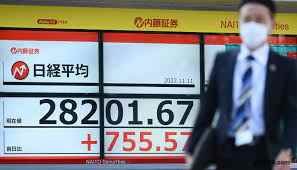
However, the commerce department said on Wednesday that retail sales increased significantly more than anticipated last month, demonstrating that Americans are still able to withstand the climate of increasing inflation and interest rates. This was made worse by remarks made by a top Fed official who said she did not see the bank stopping its rate hikes and that she was prepared to raise borrowing costs from the current range of 3.75 to 4.0 percent to above five percent. According to Mary Daly, president of the San Francisco Fed, “a reasonable place to think about as we head into the next meeting is between 4.75 and 5.25.”
“And so that does put it in the line of sight that we would get to a point where we would raise and hold.”
“Pausing is off the table right now, it’s not even part of the discussion. Right now the discussion is, rightly, in slowing the pace,” she added.
Market participants have been growing more concerned for months that the central bank’s hawkish tilt will bring about a recession, and policymakers have made it clear they are willing to keep tightening even if doing so harms the economy. As a result of the rate hikes, JPMorgan Chase predicted that the United States would enter a “mild” recession in 2023. It also predicted that the Fed would ease policy the following year, in 2024.
“Every time equity and bond markets are thinking the Fed is done and start taking off in a rally, the Fed gets out and starts talking that back down again,” Cheryl Smith, of Trillium Asset Management, told Bloomberg Television. In early trade, Hong Kong lost more than two percent, hit by profit-taking after a 14 percent surge between Friday and Tuesday, while there were also losses in Shanghai.
Nevertheless, after Beijing took action to relax some of its tight Covid controls and provide the property sector much-needed support, experts claimed there were signs of optimism in Chinese markets. Tokyo, Seoul, Taipei, Manila, and Jakarta all experienced declines, despite slight gains in Singapore, Sydney, and Manila. As the UK gets ready for what is anticipated to be a somber budget later in the day by finance minister Jeremy Hunt, who has hinted at an increase in taxes and spending cuts, the pound fell versus the dollar. The revelation comes a day after statistics revealed that UK inflation soared to 11.1 percent in October, the highest level since 1981, as the nation is being severely affected by a cost-of-living problem.
– Key figures around 0230 GMT –
Tokyo – Nikkei 225: DOWN 0.4 percent at 27,915.58 (break)
Hong Kong – Hang Seng Index: DOWN 2.5 percent at 17,811.86
Shanghai – Composite: DOWN 0.9 percent at 3,092.40
Pound/dollar: DOWN at $1.1876 from $1.1914 on Wednesday
Euro/dollar: DOWN at $1.0367 from $1.0395
Dollar/yen: UP at 139.56 yen from 139.54 yen
Euro/pound: UP at 87.31 pence from 87.21 pence
West Texas Intermediate: DOWN 1.0 percent at $84.71 per barrel
Brent North Sea crude: DOWN 0.9 percent at $92.07 per barrel
New York – Dow: DOWN 0.1 percent at 33,553.83 points (close)
London – FTSE 100: DOWN 0.3 percent at 7,351.19 (close)