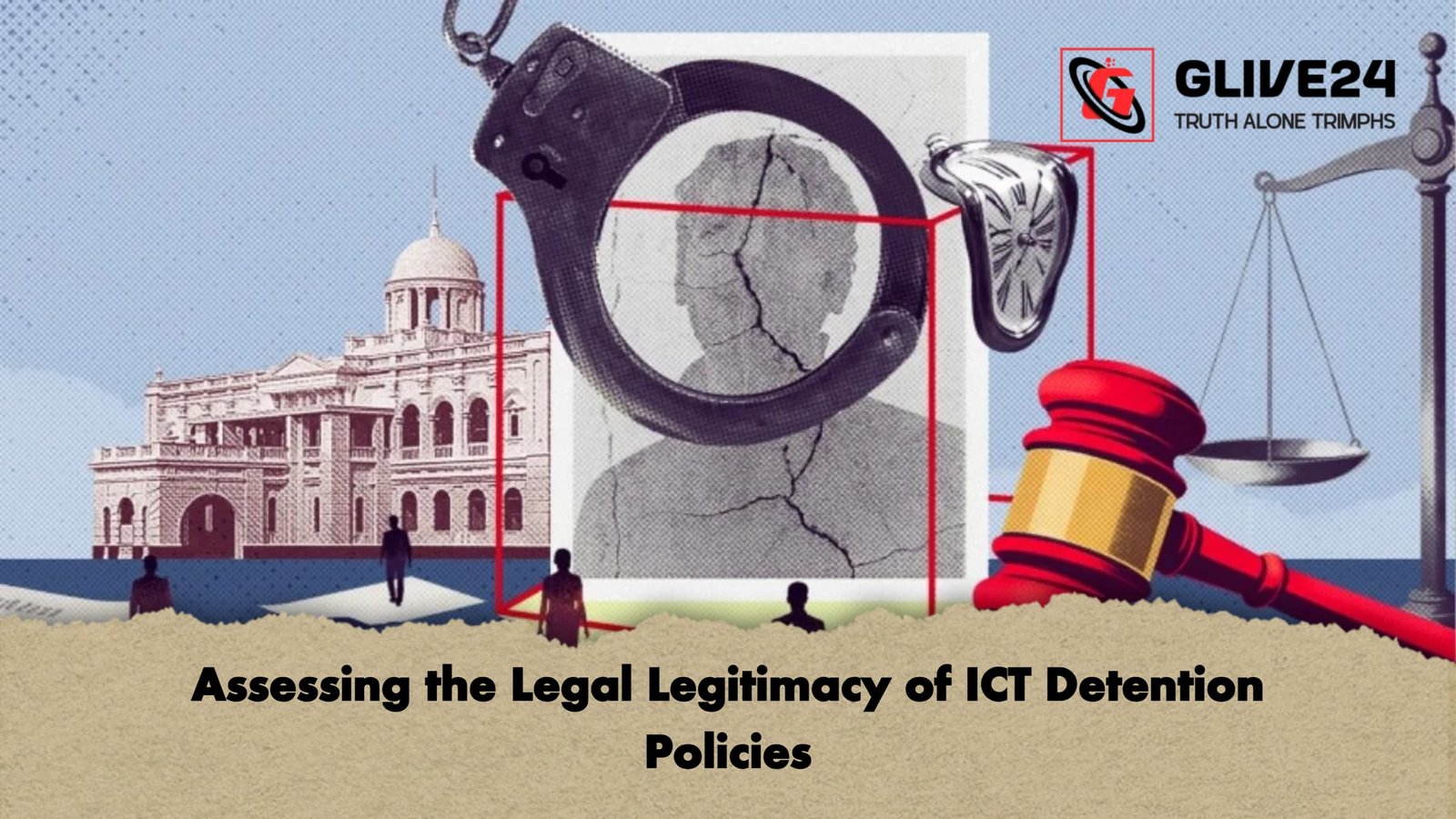
The International Crimes Tribunal (ICT) of Bangladesh finds itself at a critical legal crossroads. While the institution claims to adhere to international judicial standards, its current practice regarding the prolonged detention of high-profile suspects suggests a troubling departure from its own established rules of procedure.
Table of Contents
The Breach of Rule 9(5)
Under the ICT’s own Rules of Procedure, specifically Rule 9(5), a clear legal framework exists for the detention of suspects during an investigation. The mandate is unambiguous: an investigating officer must complete their inquiry within one year of an arrest. If this deadline is not met, the suspect is entitled to conditional bail.
The only caveat is the existence of “exceptional circumstances.” The Tribunal may extend detention for an additional six months, but only if it provides a written explanation justifying such an extraordinary measure.
| Suspect Name | Duration of Detention (Approx.) | Current Legal Status |
| Dr Tawfiq-e-Elahi Chowdhury | 15 Months | Detained without formal charges |
| Dr Dipu Moni | >12 Months | Detained without formal charges |
| Faruk Khan | >12 Months | Detained without formal charges |
| Kamal Ahmed Majumdar | >12 Months | Detained without formal charges |
| Shahjahan Khan | >12 Months | Detained without formal charges |
| Justice Shamsuddin Choudhury Manik | >12 Months | Detained without formal charges |
Arbitrary Detention and International Standards
The case of Dr Tawfiq-e-Elahi Chowdhury, the 81-year-old former energy adviser, serves as a poignant example. Having been held for 15 months without a formal charge, his continued incarceration appears not only arbitrary but legally indefensible under the current rules. No “exceptional circumstances” have been publicly documented to justify his ongoing detention.
This pattern extends to several other former ministers and members of parliament. While many of these individuals face separate charges under the Penal Code, their detention specifically under the ICT’s jurisdiction—beyond the one-year mark without a charge—violates the Tribunal’s statutory architecture.
Global Legal Criticism
The international legal community has begun to take note. Lord Carlile of Berriew CBE KC, a distinguished British jurist, has voiced significant concerns regarding these processes. Representing the family of Fazle Karim Chowdhury, Lord Carlile argues that the current methodology lacks legal validity.
“You cannot keep someone in custody for a year on the basis that there is evidence; you have to produce it,” Lord Carlile remarked. He warned that if the Bangladeshi legal system does not “put its house in order,” it risks becoming a pariah within the Commonwealth.
The Path Forward: Rule of Law vs. Retribution
For the ICT to maintain its credibility, it must resist the populist urge for retribution and strictly adhere to due process. The 1973 Act was recently amended to align the definition of crimes with international law, yet the application of detention rules remains stagnant and regressive.
The administration must ensure that Rule 9(5) is faithfully applied. Justice is not served through the circumvention of the law, but through its steadfast application—even, and especially, in politically sensitive cases. As Prime Minister Tarique Rahman recently noted, peace in Bangladesh can only be established through the “Rule of Law.” It is time for the Tribunal to reflect that sentiment in its own courtrooms.