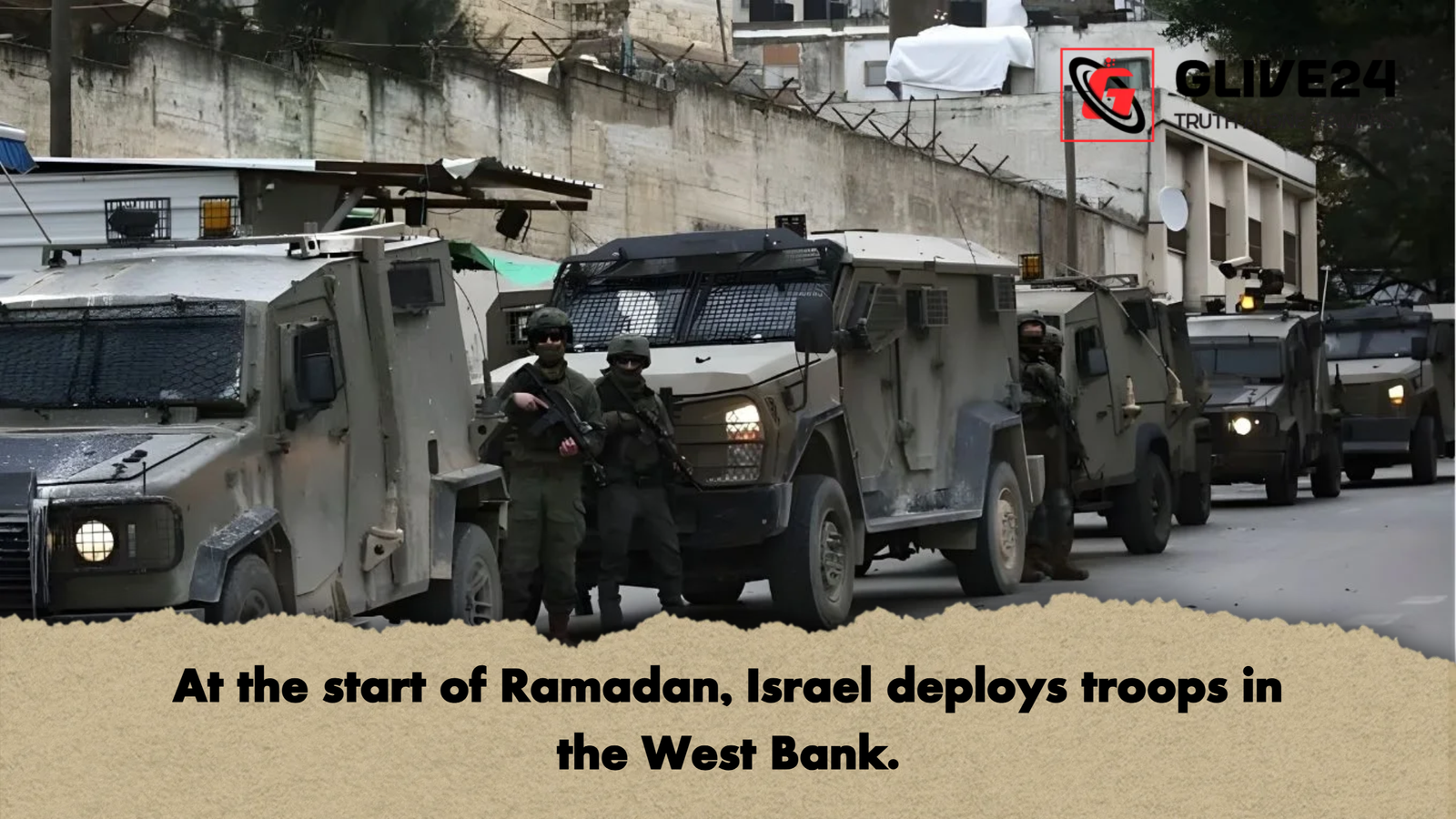
As the holy month of Ramadan commenced, Israel escalated its security presence across the occupied West Bank, including East Jerusalem, in a move aimed at pre-empting potential clashes and maintaining order amid rising regional tensions.
According to the Israeli state broadcaster KAN, heightened security measures were implemented from Wednesday morning, marking the first day of Ramadan. The broadcaster reported that Israeli security forces increased their alert levels across several key areas, particularly in East Jerusalem, parts of the West Bank, and along the seam line separating Israeli and Palestinian-controlled areas.
The decision comes amid concerns over possible confrontations with Palestinians and broader regional issues, including tensions related to Iran. KAN noted that the deployment plan specifically involves bolstering police and border police presence in East Jerusalem, with particular focus on the Old City and the precincts surrounding the Al-Aqsa Mosque.
“Preparations are underway for extreme scenarios. Thousands of security personnel have been deployed on the ground during the initial days of Ramadan,” KAN reported.
Israeli authorities have also begun discussions regarding the movement of Palestinian worshippers from the West Bank into East Jerusalem for religious observances. Subsequently, Israel announced that approximately 10,000 Palestinian worshippers would be permitted to attend the weekly Friday Jumu’ah prayers.
Palestinian rights organisations, however, have raised concerns over a marked increase in arrests and administrative detention orders in East Jerusalem in recent weeks as Ramadan approached. The Wadi Hilweh Information Center reported that the enforcement actions have particularly targeted employees of the Islamic Waqf, recently released prisoners, and Palestinian workers from occupied East Jerusalem. The centre warned that these measures appear part of a deliberate strategy to limit Palestinian presence at the Al-Aqsa Mosque.
Since the outbreak of the war in Gaza, Israeli authorities have imposed stringent restrictions on Palestinian movement between the West Bank and East Jerusalem. Military checkpoints have been established, with passage permitted only for those holding authorisations issued by Israeli military authorities.
Palestinians consider East Jerusalem to be the capital of their future state and cite international resolutions rejecting Israel’s 1967 occupation of the city and its subsequent annexation in 1980. Since the escalation of conflict on 8 October 2023 in Gaza, Israel has intensified military operations and settlement activity in the West Bank, including East Jerusalem, resulting in killings, home demolitions, forced evictions, and expansion of settlements.
Key Security Measures Implemented
| Area | Measures | Purpose |
|---|---|---|
| East Jerusalem – Old City | Increased police and border police deployment | Protect holy sites, prevent clashes |
| Al-Aqsa Mosque precincts | Additional security personnel | Control crowds, ensure order during prayers |
| West Bank & seam line | Heightened alert levels, military presence | Monitor movement, prevent potential unrest |
| Palestinian worshipper access | Limited to 10,000 for Friday prayers | Manage flow of worshippers safely |
The increased militarisation underscores the sensitivity surrounding East Jerusalem during Ramadan, as well as the wider geopolitical tensions influencing Israel’s security strategy. Both Palestinians and international observers continue to monitor the situation closely, warning that heavy-handed measures may further escalate tensions in the region.