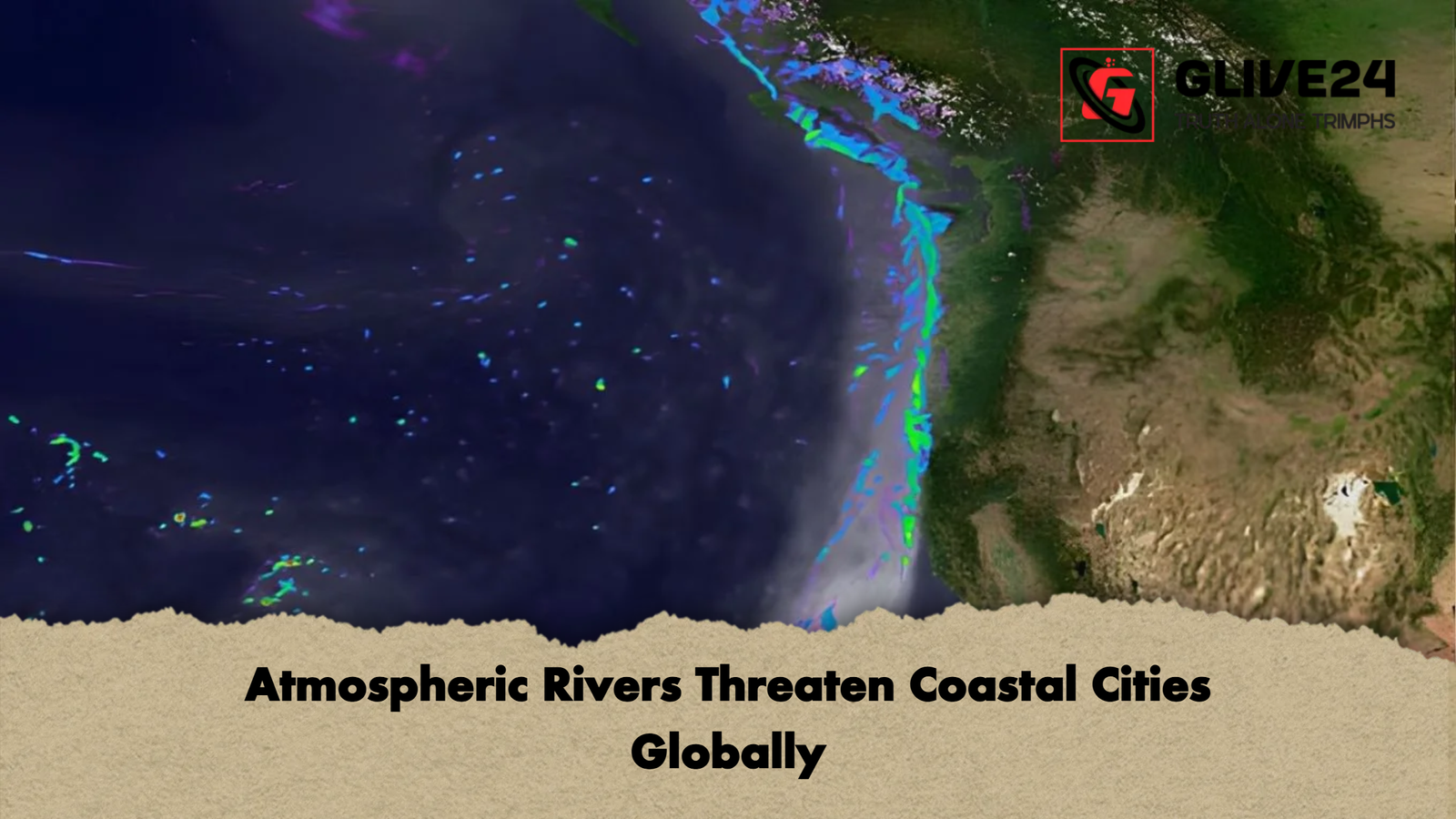
Global atmospheric conditions are undergoing a profound transformation, with the expansion and intensification of “atmospheric rivers”—vast corridors of moisture in the sky—now posing an escalating threat to rainfall patterns, storm intensity, and coastal infrastructure. Experts warn that traditional flood management systems and legacy infrastructure are increasingly inadequate, leaving coastal cities more vulnerable to tsunamis, hurricanes, and extreme precipitation events.
Atmospheric rivers are essentially floating highways of water vapour that transport moisture from oceans toward landmasses. Lexi Henny, a scientist at NASA’s Goddard Space Flight Center, explains: “Warming temperatures are increasing the moisture content within storms. Compared to 1980, these atmospheric corridors now cover 6–9 percent more area.”
This trend is grounded in fundamental physics, specifically the Clausius-Clapeyron relation, which states that for every 1°C rise in air temperature, the capacity of air to hold moisture increases by roughly 7 percent. As a result, a warmer atmosphere can carry more water vapour, which, when it encounters mountains or colder air masses, is released as heavy rainfall.
However, it is not only moisture content that matters; wind patterns play an equally critical role. Global warming is reducing the temperature gradient between polar and equatorial regions, altering airflows. This can cause moisture-laden corridors to linger over oceans for longer periods or strike land from new angles, intensifying rainfall and storm impacts.
Scientists caution that averages of humidity and rainfall often fail to reveal the true hazard. Within the cores of extreme storms, moisture transport rates have increased by 3–4 percent, while water vapour accumulation has risen by 4–6 percent. Approximately 40 percent of the world’s coastal regions now experience 40–75 percent of their extreme storms and heavy rainfall events linked directly to atmospheric rivers.
The table below summarises the key changes:
| Parameter | 1980 | Present | Increase (%) |
|---|---|---|---|
| Area covered by moisture corridors | 1,000,000 km² | 1,060,000–1,090,000 km² | 6–9% |
| Moisture transport in storm cores | – | 3–4% | – |
| Water vapour accumulation in storm cores | – | 4–6% | – |
Meteorological agencies worldwide are closely monitoring these atmospheric corridors, yet scientists emphasise that data alone is insufficient for safeguarding communities. Coastal cities require infrastructure capable of withstanding sudden surges in moisture and intensified storms. Without robust protections for power grids, ports, and transportation networks, millions of lives and livelihoods remain at risk.
The growing prevalence of atmospheric rivers underscores a critical urgency: adapting infrastructure and urban planning to a warmer, wetter world is no longer optional but essential.