
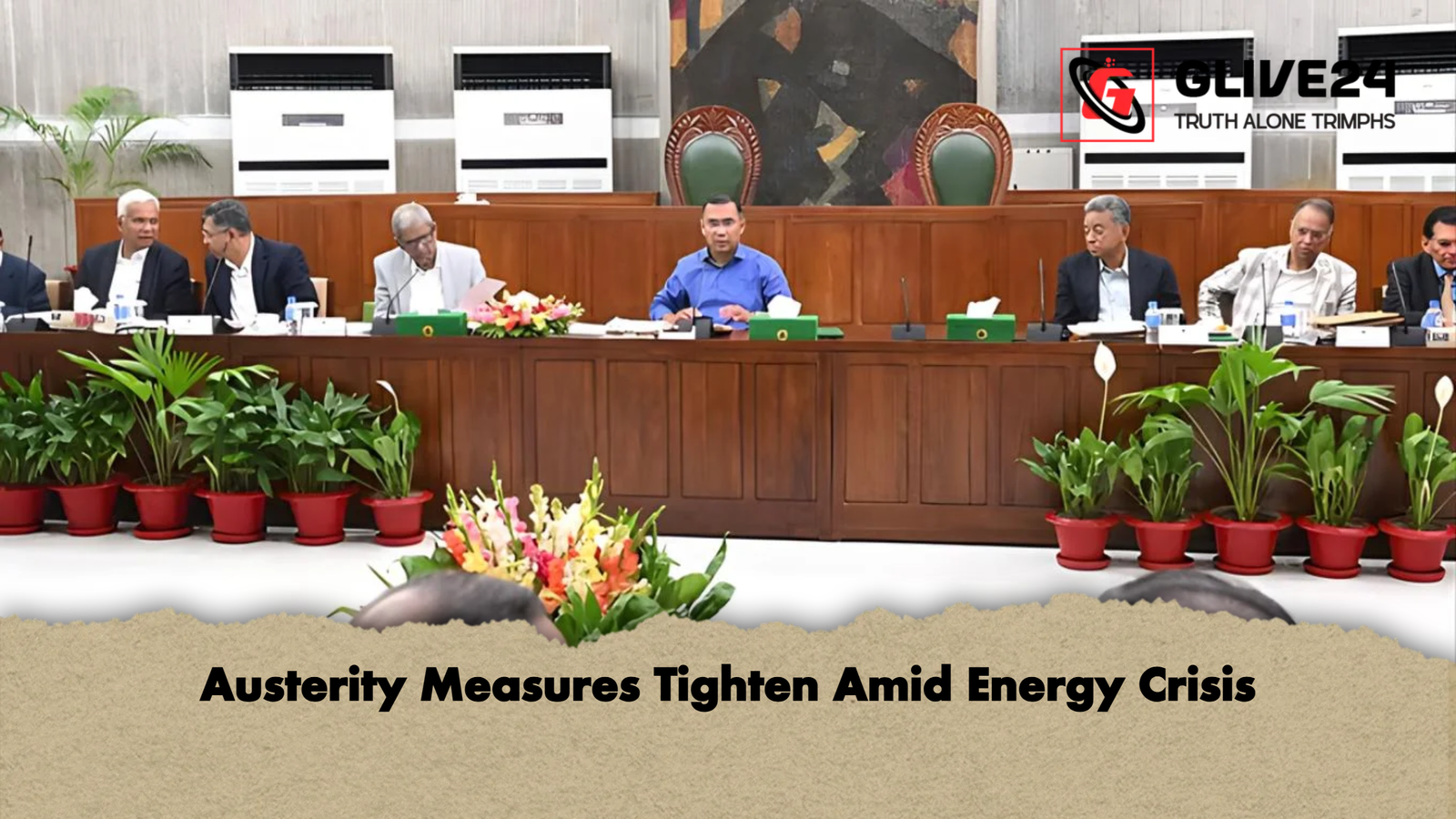
In response to the intensifying global energy crisis triggered by the ongoing conflict in the Middle East, the government has unveiled a comprehensive package of austerity measures and revised working hours aimed at conserving energy and maintaining economic stability. The initiatives affect public and private offices, banking operations, retail activity, and government expenditure, reflecting a coordinated attempt to mitigate pressure on national resources.
Under the new directives, both government and private offices will operate from 9:00 a.m. to 4:00 p.m., shortening the previous workday by one hour. Banking hours have also been curtailed, with customer transactions now permitted between 9:00 a.m. and 3:00 p.m., while banks must close by 4:00 p.m. Retail establishments, including shopping centres, are required to shut by 6:00 p.m., a measure that has taken immediate effect nationwide.
However, essential services such as hotels, pharmacies, and fresh produce markets are exempt from these restrictions to ensure uninterrupted access to daily necessities. Officials believe this balance will help sustain supply chains while still achieving meaningful reductions in energy consumption.
Revised Operating Hours
| Sector | Previous Schedule | New Schedule |
|---|---|---|
| Offices | 9:00 a.m. – 5:00 p.m. | 9:00 a.m. – 4:00 p.m. |
| Bank Transactions | 9:00 a.m. – 4:00 p.m. | 9:00 a.m. – 3:00 p.m. |
| Bank Closing Time | By 5:00 p.m. | By 4:00 p.m. |
| Shops and Markets | Until 8:00 p.m. | By 6:00 p.m. |
Beyond scheduling changes, the government has introduced strict expenditure controls for an initial period of three months. During this time, the purchase of new vehicles—including cars, vessels, and aircraft—has been suspended. Procurement of computers and other technological equipment has also been restricted.
Training-related expenses will be reduced by 50 per cent, and all government-funded overseas training programmes have been temporarily halted. Similarly, hospitality budgets for meetings and seminars have been cut in half.
In a broader push to curb consumption, authorities have mandated a 30 per cent reduction in government spending on fuel, electricity, and gas, alongside an equivalent decrease in official travel expenses. Social events, particularly weddings and large celebrations, are also subject to limits on decorative lighting to reduce electricity usage.
The education sector is set to undergo adaptive changes, with plans to introduce a hybrid learning model combining in-person and online classes. The Ministry of Education has emphasised that continuity of learning will remain a top priority.
Additionally, institutions are being encouraged to adopt electric buses for student transport, with duty-free import facilities offered to support this transition. Commercial imports, however, will remain subject to standard tariffs.
Experts have broadly welcomed the measures as timely and necessary, though they caution that effective implementation and public cooperation will be critical. If properly enforced, the government believes these steps will not only ease the current strain but also strengthen resilience against future energy shocks.