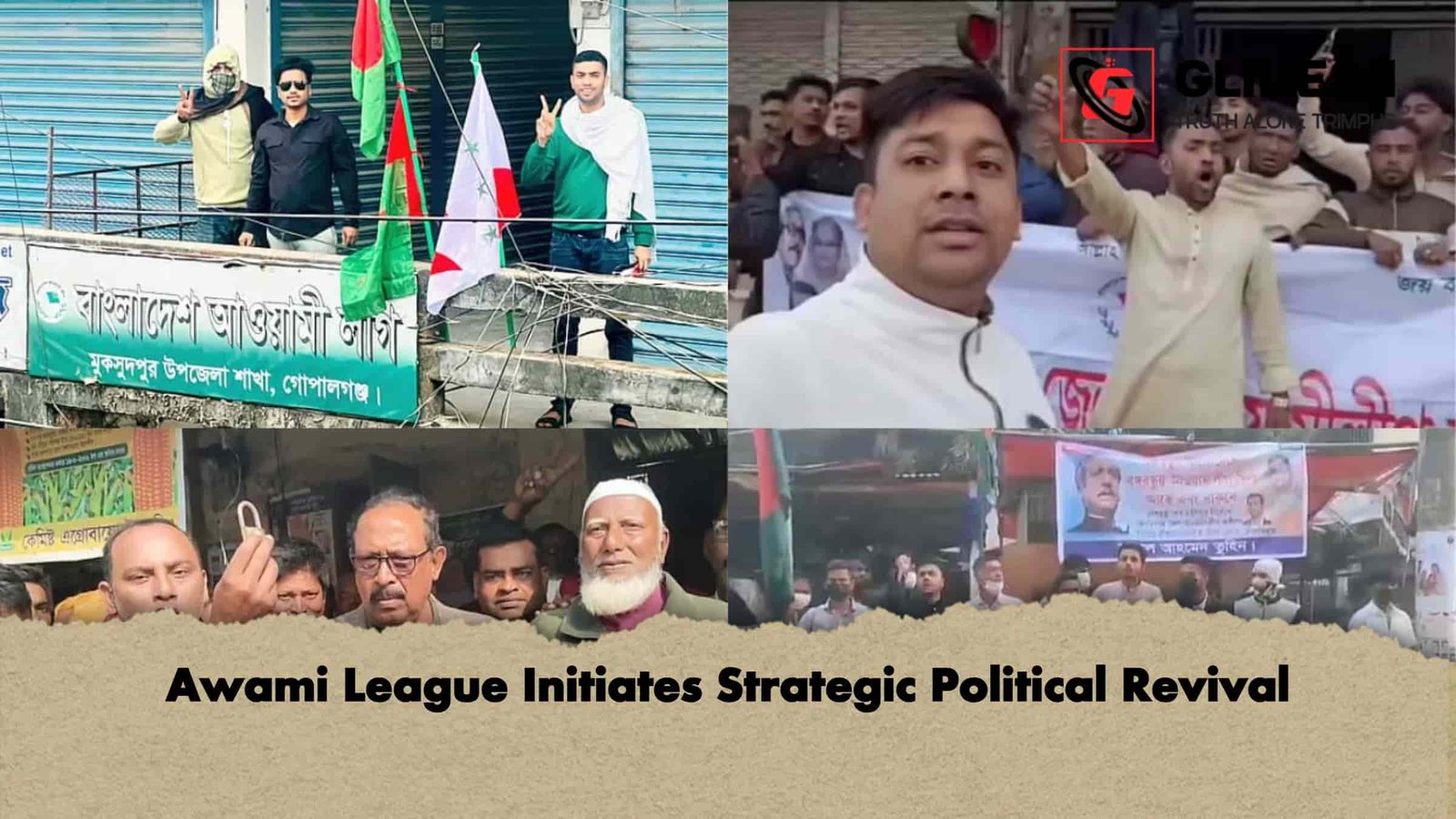
In the two weeks following the national parliamentary elections, at least twelve previously sealed Awami League offices across Bangladesh have been reopened, signalling a deliberate political resurgence. While some offices remain closed, the party has ensured a visible presence through banners and slogans, marking a symbolic return to active engagement. According to internal party sources, the primary objective of this initiative is to assess the government’s stance and identify potential obstacles in the process of securing the release of detained leaders and workers.
Table of Contents
Central Directives and Local Initiatives
Party President Sheikh Hasina, currently on an official visit to India, has instructed party leadership in Bangladesh to gradually resume political operations. District and metropolitan leaders, particularly those at the third and fourth tiers, are spearheading these efforts. Observers have also noted subtle indications of tacit cooperation—or at least non-interference—from local BNP figures. It is anticipated that voters who supported the party in the recent election may show empathy towards these initiatives.
Party officials emphasise that securing bail for mid- and senior-level leaders not only revitalises organisational activity but may also pave the way for the safe return of exiled leaders.
Recent Bail and Release Overview
The table below summarises recent developments in leader and activist releases:
| Date | Leader / Activist | Position / Status | Bail / Release Status | Remarks |
|---|---|---|---|---|
| 18 February | Jebunnesa Afroze | Barisal Metropolitan Awami League VP; Former MP | Bail | Released on health grounds |
| 19 February | Dabirul Islam | Former MP, Thakurgaon-2 | 1.5-year prison sentence | Released due to serious illness |
| 23 February | Talukdar Mohammad Yunus | Barisal District General Secretary; Former MP | Surrender & Bail | Senior leader |
These releases have infused renewed energy within party ranks.
Symbolic Office Reopenings
The party has staged public demonstrations of activity by reopening key offices nationwide:
Gopalganj, Muksudpur: Sub-district office, national and party flags raised
Maijdi, Noakhali: District office, student league slogans displayed
Dhaka, Dhanmondi: President’s office, national flag and portrait of Bangabandhu Sheikh Mujibur Rahman displayed
Panchagarh, Choklaha Union: Local BNP leader present at office reopening
Currently, three major Dhaka offices—Gulistan, Dhanmondi, and Tejgaon—have resumed operations after 18 months of inactivity following the 2024 elections.
Strategic and Political Considerations
Analysts suggest that the Awami League’s strategy has two key dimensions: maintaining a limited but visible field presence and closely monitoring government reactions. Understanding the administration’s stance is critical, while support from BNP voters could provide a strategic advantage. Long-term political sustainability depends on strengthening local leadership, as influence from abroad remains constrained.
Political analyst Mohiuddin Ahmed remarked, “For the Awami League to re-enter normal political processes effectively, robust internal leadership is essential. Coordination with leaders abroad matters, but ultimate success hinges on local political realities.”
Through carefully phased actions, influenced by government restrictions, bail outcomes, and supporter reactions, the party is gradually re-establishing its presence. While current activities remain modest, they signal a clear intent for political revival.