
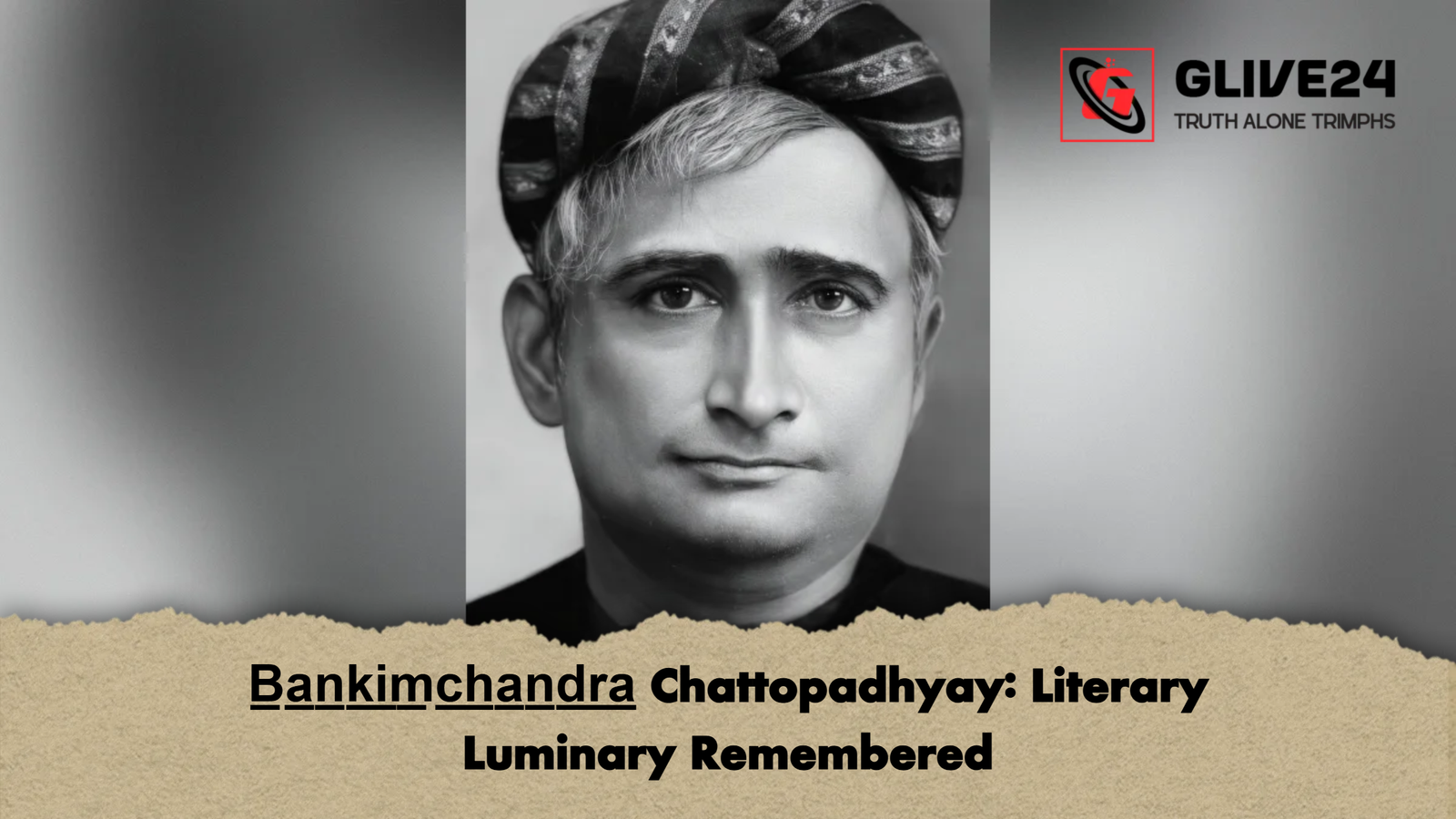
The nineteenth century in Bengali literature is inseparable from the luminous presence of Bankimchandra Chattopadhyay, a figure whose influence transcends mere storytelling. Not only was he a pioneering novelist, but he was also a visionary thinker, a social and religious reformer, and the architect of modern Bengali prose. Through his writings, Bankimchandra ignited a cultural renaissance that continues to resonate in contemporary Bengal.
His debut novel, Durgeshnandini, is celebrated as the first truly successful Bengali novel, marking the genesis of modern Bengali fiction. It is through this work that the flame of literary modernity was first kindled, earning him the enduring title of the “Father of the Bengali Novel.” Yet his contributions were far broader than literature alone: he explored the depths of history, spirituality, and national identity, intertwining them in prose that was both erudite and accessible.
Early Life and Education
Born on 26 June 1838 in Kāṭhālpāra, Chinsurah, in the district of Twenty-four Parganas, Bankimchandra was the son of Yadab Chandra Chattopadhyay, a British government official. From an early age, he displayed remarkable intellect, pursuing higher studies at Hooghly College, Presidency College, and the University of Calcutta. Upon graduating in law in 1858, he embarked on a civil service career as a Deputy Magistrate under the British administration.
| Aspect | Details |
|---|---|
| Date of Birth | 26 June 1838 |
| Place of Birth | Kāt̤hālpāra, Chinsurah, Twenty-four Parganas |
| Education | Hooghly College, Presidency College, University of Calcutta |
| Career | Deputy Magistrate, British Government (from 1858) |
| Date of Death | 8 April 1894 |
| Age at Death | 56 |
| Cause of Death | Diabetes |
Literary Achievements
Bankimchandra drew inspiration from poet Ishwar Chandra Gupta, yet his prose was distinctively his own, blending the cultural influences of British rule with the fiery spirit of emerging Indian nationalism. Perhaps his most enduring legacy is the immortal slogan “Vande Mataram”, featured prominently in his iconic novel Anandamath, which continues to inspire patriotic fervour to this day.
His literary corpus encompasses 14 novels, notable among them:
| Novel | Significance |
|---|---|
| Durgeshnandini | First successful Bengali novel |
| Kapalkundala | Exploration of love and social conventions |
| Mrinalini | Examination of moral dilemmas and human relationships |
| Vishabriksha | Political and social critique |
| Anandamath | Patriotic narrative; birthplace of “Vande Mataram” |
| Chandrashekhar | Portrayal of ethical and social struggles |
| Rajani | Psychological depth and relational dynamics |
| Krishnakanter Will | Insight into human values and inheritance |
| Rajsingha | Historical and social commentary |
| Debi Chaudhurani | Strong portrayal of female agency |
| Sitaram | Philosophical and spiritual exploration |
| Krishnacharit | Mythological and historical synthesis |
| Kamalakanta’s Office | Administrative and social reflection |
| Indira, RadhaRani | Romantic and societal narratives |
He also wrote under the pseudonym “Kamalakanta”, leaving a legacy that remains alive in the hearts of Bengali literature enthusiasts.
Death and Legacy
Bankimchandra passed away on 8 April 1894, at the age of 56, due to diabetes. Yet his creations, ideas, and language continue to illuminate the Bengali psyche, inspiring writers, scholars, and readers alike. His life remains a testament to the power of literature as a force for cultural awakening and national identity.
Today, with reverence and gratitude, we commemorate the life and work of Bankimchandra Chattopadhyay, the immortal Emperor of Bengali Letters, whose legacy remains eternally luminous.