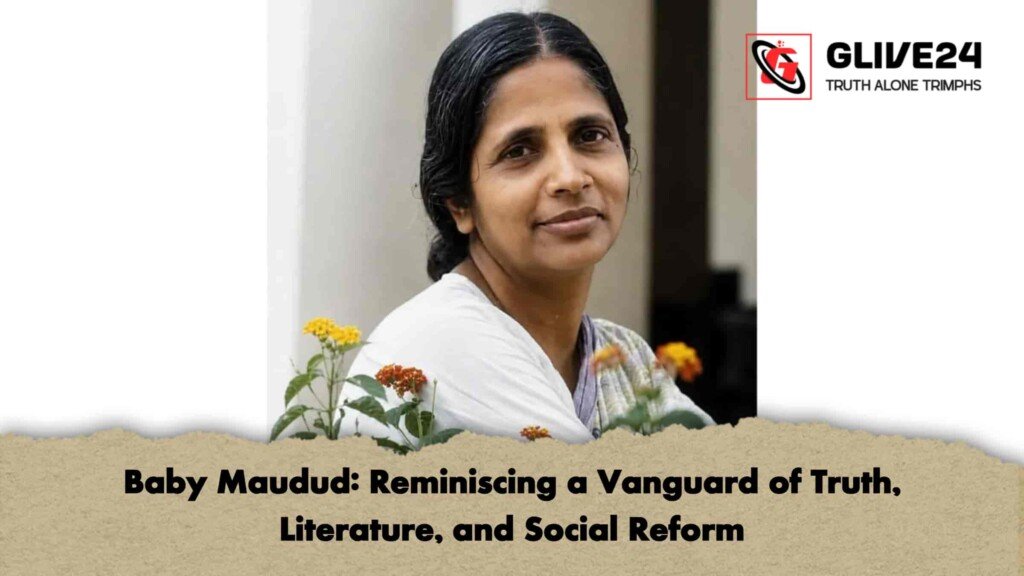
The annals of Bangladeshi journalism, literature, and female empowerment are enriched by the indelible imprint of A.N. Mahfuza Khatun, revered nationally as Baby Maudud. A multifaceted personality who excelled as an investigative journalist, author, editor, legislator, and children’s writer, Maudud represented an unyielding commitment to intellectual honesty, secular values, and democratic progress. Her lifelong dedication to social equity and freedom of expression established her as a pivotal figure in the cultural and political history of contemporary Bangladesh.
Formative Roots and Intellectual Awakening
Baby Maudud was born on 23 June 1948 in the Bardhaman district of West Bengal, India. Raised in a household that deeply valued education, public ethics, and cultural awareness, she was the third of nine children born to Justice Abdul Maudud and Hedayetun Nesa. The family held a long-standing tradition of legal and judicial distinction; her eldest brother, Marzi-ul Huq, subsequently rose to become a judge of the Supreme Court of Bangladesh.
Her academic trajectory took root at the University of Dhaka, where she completed both her undergraduate and postgraduate degrees in Bengali Language and Literature. During her university days prior to the independence of Bangladesh, Maudud actively participated in progressive student politics and nationalistic cultural movements. It was during this formative era that she formed a close, lifelong bond with her peer and classmate, Sheikh Hasina, who would eventually serve as the Prime Minister of Bangladesh. Anchored in the ideals of the 1971 Liberation War, Maudud embraced non-communalism, freedom of speech, and egalitarianism as non-negotiable principles.
Trailblazing Contributions to Media and Letters
Upon entering the press corps—a field historically sparse in female representation—Maudud established herself as a formidable voice in broadcasting and print journalism. She served in key roles across Bangladesh Betar, the BBC Bangla service, and several prominent national dailies and periodicals. Most notably, as the acting editor of the esteemed periodical Saptahik Bichitra, she directed editorial policies toward exposing societal inequalities, advancing women’s rights, and safeguarding secular nationalist narratives.
Alongside her journalism, Maudud earned widespread acclaim as an author of juvenile literature. She penned numerous biographies, essays, and stories tailored for children and adolescents, writing in a clear, engaging, and instructive style. She firmly maintained that the intellectual foundation of a progressive society rests entirely upon the moral and creative education provided to its youth.
Resilience, Parliamentary Service, and Enduring Legacy
Maudud’s private life demonstrated remarkable resilience. Following the early passing of her husband, Advocate Md. Hasan Ali—whose family hailed from the northern district of Thakurgaon—she took on the sole responsibility of raising their two children while sustaining an arduous career in public life. Neither personal bereavement nor external hardships hindered her steadfast dedication to her craft.
In addition to her editorial work, Maudud entered public service as a Member of Parliament representing a reserved seat for women, using the legislative platform to advocate for civil liberties, gender equity, and national heritage preservation. Her contributions to literature and public discourse earned her widespread respect both nationally and internationally.
Baby Maudud breathed her last on 25 July 2014. Though more than a decade has passed since her departure, her written work, moral integrity, and pioneering spirit remain an enduring source of guidance for those navigating the realms of literature, journalism, and public service in Bangladesh.