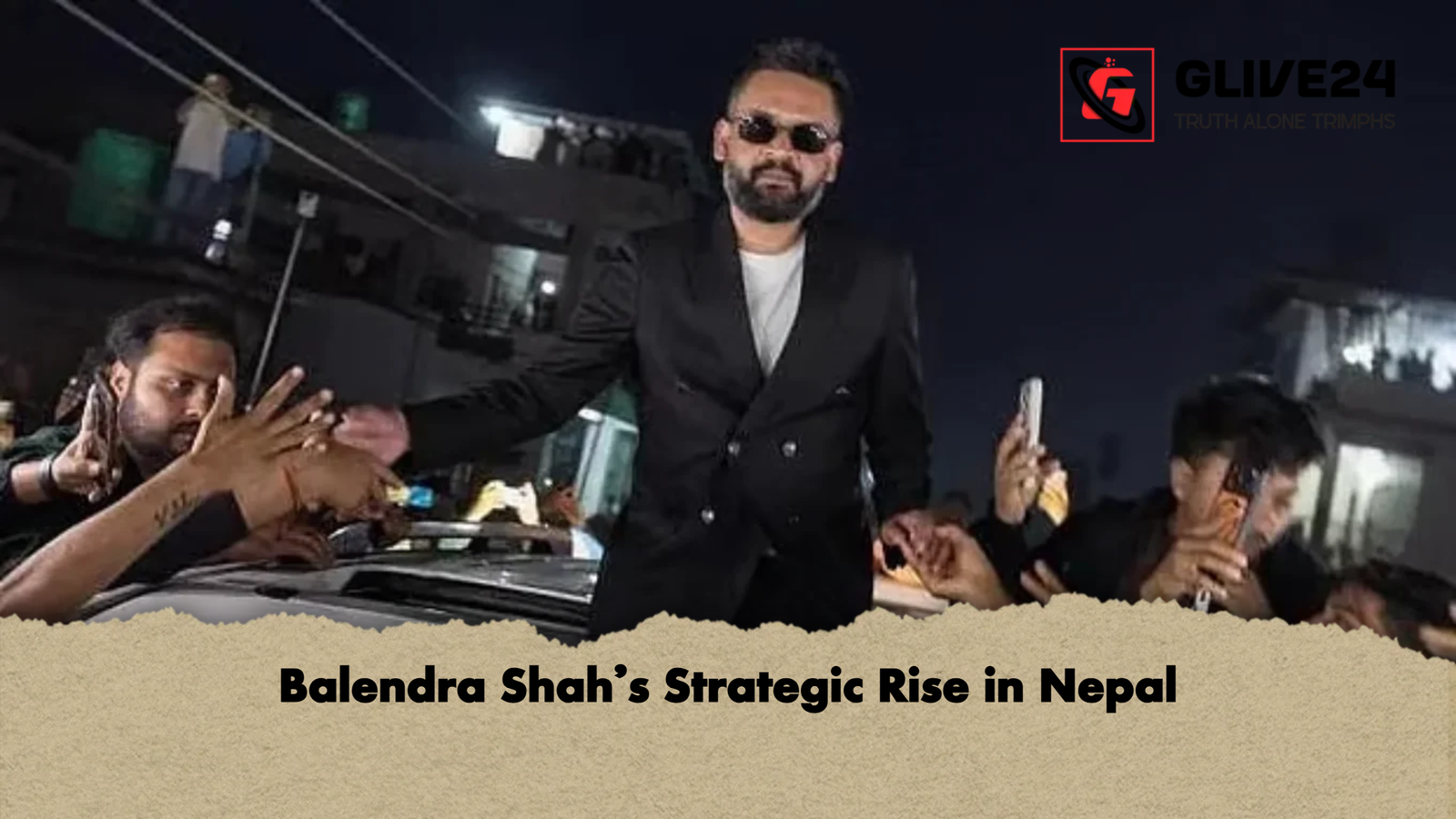
Nepal’s latest general election has delivered a striking political shift, signalling a dramatic rejection of traditional parties and the emergence of a new generation of leadership. At the centre of this transformation stands Balendra Shah, leader of the Rastriya Swatantra Party (RSP), who is poised to become the country’s next prime minister following a decisive electoral performance.
The outcome had been widely anticipated in the weeks leading up to the vote. Yet the scale of the shift has still surprised many observers. Preliminary results from Thursday’s election suggest that voters across Nepal have turned away from long-established political elites, instead placing their trust in Shah’s reform-oriented movement.
The victory is widely interpreted as a triumph for Generation Z and younger voters, whose political mobilisation has increasingly shaped South Asian politics. In Nepal, this demographic wave appears to have translated into electoral success, contrasting sharply with developments in neighbouring Bangladesh where youthful political movements have struggled to convert popular energy into electoral gains.
Nepal’s parliament consists of 275 seats, elected through a mixed electoral system combining direct constituency contests and proportional representation. Final results are expected within days, though early indications suggest the RSP will command a comfortable majority.
| Electoral Method | Number of Seats |
|---|---|
| First-Past-the-Post (Direct Constituencies) | 165 |
| Proportional Representation | 110 |
| Total Parliamentary Seats | 275 |
A carefully designed campaign
The political campaign that propelled the 35-year-old Shah to the forefront of national politics was orchestrated from an unlikely setting: a six-storey building in western Kathmandu. According to senior party officials, the upper three floors of the RSP headquarters in the Balaju area served as the central hub for strategy, research and campaign coordination.
Reuters interviews with several party leaders revealed that the campaign’s organisational backbone was a Research, Strategy and Documentation unit. Nearly 300 party workers operated under the supervision of an 11-member board, dividing themselves into specialised teams responsible for policy research, event organisation, digital communication and nationwide data collection on voter sentiment.
The RSP also adopted a highly disciplined media strategy. Rather than delivering frequent speeches, Shah addressed large public gatherings only once every eight days. Each speech was designed to generate a concentrated wave of media coverage, amplified by a social-media network comprising approximately 660 volunteers who disseminated the messages online.
Alongside these major speeches, the party conducted daily roadshows in five to seven districts, ensuring a visible presence across the country. On most campaign days, Shah travelled to one of Nepal’s seven provinces to meet voters directly.
A senior party leader, speaking on condition of anonymity, explained the reasoning behind the approach: delivering too many speeches risks confusing voters. Instead, the RSP preferred to respond selectively to opponents’ criticisms, allowing its message to remain clear and focused.
Financial support for the national campaign reportedly came largely from Nepal’s diaspora communities, particularly donors based in the United States. However, individual parliamentary candidates were expected to organise and fund their own local campaigns, according to party treasurer Lima Adhikari.
From rapper to political figure
Before joining the RSP in December ahead of the election, Balendra Shah had already gained national prominence as the mayor of Kathmandu, a position he won in 2022. Earlier in his career, he had built a large following as one of Nepal’s most popular rap artists, amassing millions of followers on social media—an advantage he later leveraged in politics.
One moment that proved particularly influential occurred during a rally on 19 January in the capital of Madhesh Province. Standing beside RSP founder and former television presenter Rabi Lamichhane, Shah declared before a crowd of thousands that “a Madheshi son is going to become prime minister.”
The statement resonated strongly in the Terai plains, Nepal’s most populous region. Historically, national politics has been dominated by elites from Kathmandu and surrounding hill regions, leaving many in the plains feeling marginalised. Shah’s message rapidly went viral online, reinforcing the perception that he could become the first prime minister emerging from the region’s communities.
Grassroots engagement
Shah himself contested the Jhapa-5 constituency, an area in the Terai long regarded as a political stronghold of former prime minister K. P. Sharma Oli, leader of the Communist Party of Nepal. By challenging a powerful political bastion, Shah’s candidacy symbolised the broader shift away from entrenched political dominance.
His campaign style in the constituency remained unconventional. Instead of prioritising television interviews or studio appearances, Shah often stopped spontaneously while travelling to speak directly with voters. A network of young volunteers was established throughout the constituency to mobilise supporters and gather feedback.
Meanwhile, campaign teams in Kathmandu systematically collected voters’ complaints and policy suggestions, particularly regarding development projects and governance reforms.
According to RSP vice-chairman D. P. Aryal, the party’s governing philosophy centres on making citizens feel that the state truly represents them. He added that a future Shah administration would likely recruit external experts to strengthen administrative capacity.
The party has also pledged to prioritise youth participation and technological innovation in governance. As Aryal put it, greater involvement of young citizens and the expanded use of digital tools will be among the government’s defining priorities.
Taken together, these strategies—combining grassroots engagement, disciplined messaging and digital mobilisation—have propelled Balendra Shah from cultural celebrity to a central figure in Nepal’s political transformation. His ascent reflects a broader regional trend: the growing political power of younger generations demanding transparency, reform and a departure from the entrenched politics of the past.