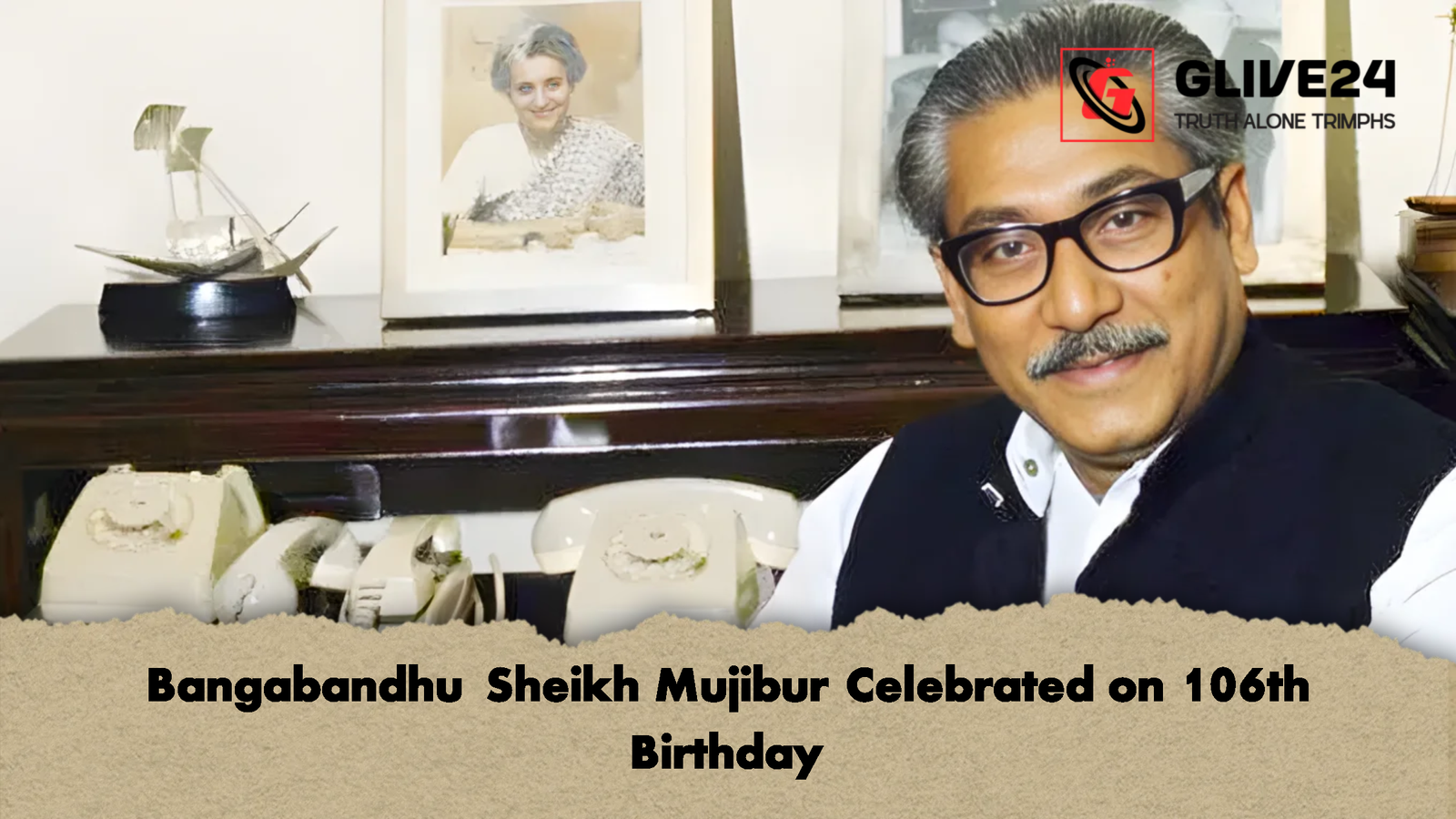
Today, 17 March 2026, marks the 106th birth anniversary of Sheikh Mujibur Rahman, the founding father of Bangladesh and a towering figure in South Asian political history. Born on 17 March 1920 in Tungipara, Gopalganj, Sheikh Mujibur Rahman, widely revered as Bangabandhu – the Friend of Bengal, would become the driving force behind Bangladesh’s struggle for independence and the architect of its nationhood. His visionary leadership, steadfast dedication to democracy, and unyielding commitment to social justice have left an indelible mark on the country’s political and cultural landscape.
A Life of Struggle and Leadership
Sheikh Mujibur Rahman’s life was characterised by resilience and unwavering devotion to the Bengali people. He played a central role in all major movements against political repression, including the Bengali Language Movement of 1952, the anti-Ayub Khan military regime protests of 1958, and the autonomy and education reforms movements of the 1960s. His activism frequently led to imprisonment under successive Pakistani military regimes, yet his determination never faltered.
Key milestones in his political career are summarised below:
| Year | Movement/Action | Significance |
|---|---|---|
| 1952 | Bengali Language Movement | Advocated for Bangla as a state language, establishing cultural identity |
| 1958 | Anti-Ayub Khan Protests | Challenged military dictatorship in Pakistan |
| 1962–69 | Education & Autonomy Movements | Led campaigns for regional autonomy and educational reforms |
| 1970 | Pakistan General Election | Secured a historic majority for the Awami League, highlighting Bengali political will |
| 1971 | Bangladesh Liberation Movement | Guided the nation to independence, becoming its founding leader |
Commemoration in Contemporary Context
Traditionally, the Awami League organises grand public ceremonies, rallies, and cultural programmes to celebrate Sheikh Mujibur Rahman’s birthday. This year, however, the observance has taken a more subdued form, with the party issuing a formal statement via official e-mail communications, outlining commemorative activities and encouraging citizens to reflect on the legacy of Bangabandhu.
Despite the scaled-back format, the significance of the day remains undiminished. Citizens, educators, and political leaders are urged to consider Sheikh Mujibur Rahman’s lifelong advocacy for democracy, human rights, and national unity, and to draw inspiration from his dedication to the Bengali people.
Enduring Legacy
Even decades after his tragic assassination in 1975, Sheikh Mujibur Rahman’s principles continue to resonate across generations. His vision for a sovereign, equitable, and democratic Bangladesh serves as a guiding framework for the nation’s political and social development.
As the country marks his 106th birthday, his leadership, courage, and enduring commitment to the people of Bangladesh are celebrated and remembered. His legacy remains a beacon of hope and a testament to the sacrifices made for the nation’s freedom and dignity.
Sheikh Mujibur Rahman’s life stands as a reminder that vision, perseverance, and dedication to the public good can transform a nation. His ideals continue to inspire Bangladeshis to uphold democracy, justice, and unity in building the country’s future.