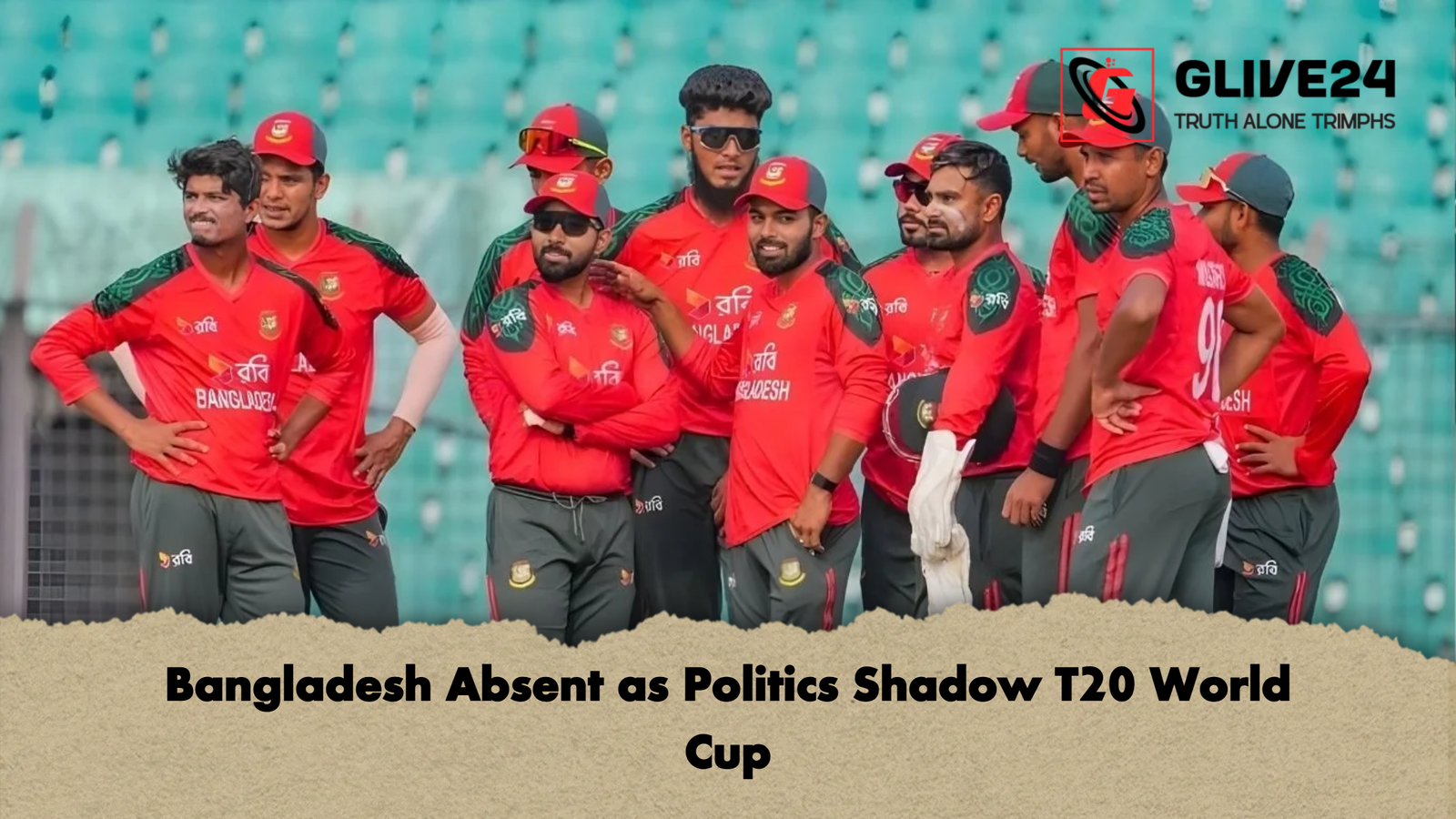
The T20 World Cup opens today with the start of what many are calling one of the most unusual and controversial chapters in the tournament’s short history. For the first time since the competition was inaugurated in 2007, Bangladesh—ever-present in every edition up to 2024—will not take part. As the tenth edition gets under way in India and Sri Lanka, Bangladesh’s absence has left supporters dismayed and has cast an unflattering light on the politics that increasingly shape global cricket.
Across the tournament’s 19-year history, on-field rivalries have rarely been eclipsed by off-field manoeuvring to this extent. This time, allegations of political pressure, disproportionate influence and strategic bargaining have taken centre stage, pushing bat-and-ball contests into the background. Critics argue that the International Cricket Council (ICC) has struggled to maintain its neutrality, particularly amid claims of excessive influence wielded by the Board of Control for Cricket in India (BCCI). In that context, Bangladesh’s exclusion is being viewed by many not as a sporting outcome, but as a political one.
The dispute can be traced back to the withdrawal of Mustafizur Rahman from the Indian Premier League, followed by escalating concerns over security and extremist threats. Citing player safety, the Bangladesh Cricket Board (BCB) declined to play World Cup fixtures in India and formally requested that all of Bangladesh’s matches be staged in Sri Lanka instead. That request, however, was rejected. Instead, the ICC opted to remove Bangladesh from the competition altogether, replacing them with Scotland—a decision that sparked fierce debate across the cricketing world.
The fallout has been swift. In protest at Bangladesh’s treatment, Pakistan announced it would boycott the highly anticipated India–Pakistan match scheduled for 15 February. The prospect of that fixture being cancelled has alarmed broadcasters and sponsors alike. Industry estimates suggest that the absence of cricket’s most marketable rivalry could result in financial losses of approximately Tk 6,112 crore through diminished broadcast rights, advertising revenue and ticket sales. Avoiding such losses has reportedly become a priority for the ICC, which is now under intense pressure to persuade Pakistan to reconsider.
For Bangladesh, the decision to stand firm has been framed as a matter of national dignity. Many observers believe such resolve was long overdue if the balance of power in world cricket is to be challenged. Although the national team will not take the field, Bangladesh’s presence has not vanished entirely. Umpires Sharfuddoula Ibn Shahid and Gazi Sohel will officiate at the tournament, while former captain Athar Ali Khan will feature in the commentary box.
At home, the BCB has sought to soften the disappointment by launching the ‘Indomitable Bangladesh T20 Cup’, featuring the Dhūmketu, Durbār and Duronto teams. Officials hope the competition will inject fresh energy into the domestic game and provide players with meaningful opportunities.
The World Cup itself begins in Colombo with Pakistan facing the Netherlands. Twenty teams will contest 55 matches across eight venues in India and Sri Lanka, progressing from four groups through the Super Eight stage to the semi-finals and final. Pakistan will play all their matches in Sri Lanka; should they reach the final, it will be staged in Colombo, otherwise Ahmedabad will host the decider. India, England, Australia, South Africa and Pakistan are regarded as the principal contenders, though Australia appear weakened by the absence of Pat Cummins and Josh Hazlewood. Adding a novel twist, Italy will make their World Cup debut, becoming the first nation primarily associated with football to feature in a global cricket tournament.
For Bangladesh, this World Cup will be a sombre one—and the tournament, too, may feel the absence of the Tigers. Yet through protest, principle and presence beyond the boundary, Bangladesh has ensured its voice is heard in world cricket.
T20 World Cup 2026: Key Facts
| Item | Details |
|---|---|
| Total teams | 20 |
| Host nations | India and Sri Lanka |
| Total matches | 55 |
| Number of groups | 4 |
| Prize money | Tk 160 crore |
| Possible final venue | Colombo or Ahmedabad |
| Bangladesh representation | 2 umpires, 1 commentator |