
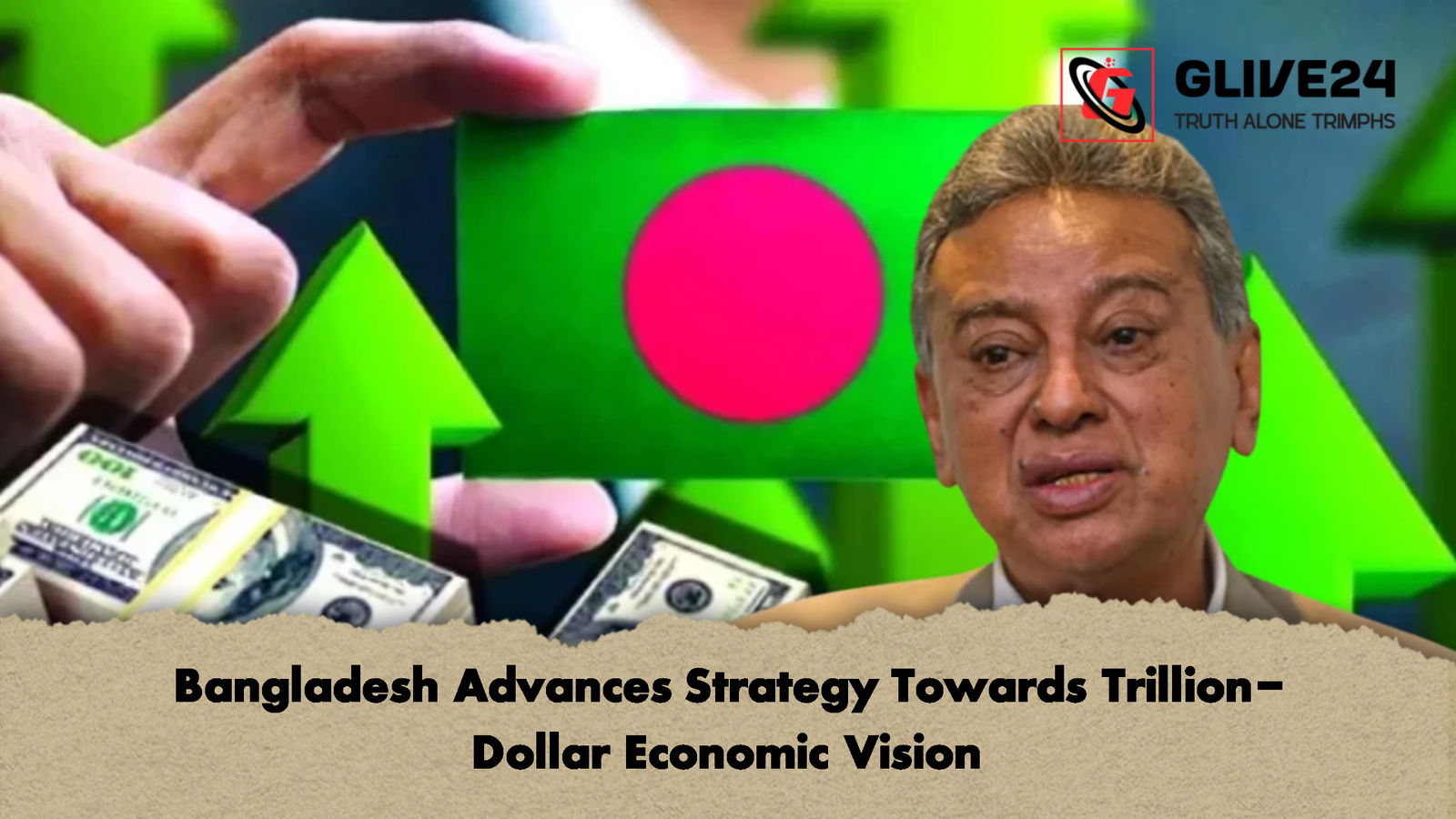
The Government of Bangladesh has unveiled an ambitious and forward-looking strategy to transform the national economy into a trillion-dollar powerhouse by 2034. The announcement, made by Finance Minister Amir Khasru Mahmud Chowdhury, signals a decisive shift towards long-term, inclusive growth designed to enhance economic resilience, generate employment, and raise the overall standard of living.
Drawing on the latest data from the Bangladesh Bureau of Statistics, the Finance Minister confirmed that per capita income has risen to US$2,769 in the 2024–25 fiscal year. This figure highlights the country’s steady economic progression, even as it navigates a complex global environment marked by inflationary pressures, geopolitical uncertainty, and evolving trade dynamics.
The statement was delivered in Parliament in response to a written query from SM Jahangir Hossain. Emphasising the scale of the ambition, the Minister noted that achieving a trillion-dollar economy would require a diversified, multi-sectoral strategy rather than dependence on a single growth engine.
Table of Contents
Key Economic Indicators and Strategic Targets
| Indicator | Current Status (2024–25) | Target by 2034 |
|---|---|---|
| Per Capita Income | US$2,769 | Sustained and significant growth |
| Economic Size | Emerging economy | Trillion-dollar economy |
| Employment | Expanding sectors | Near full employment |
| Investment | Gradually increasing | Strong and accelerated inflows |
| Export Base | Moderately diversified | Broad and competitive global presence |
A Holistic Development Framework
Central to the government’s vision is a comprehensive development framework that prioritises investment expansion, job creation, and economic democratisation. In addition to traditional sectors such as manufacturing and agriculture, new emphasis is being placed on the creative economy and the sports economy—areas increasingly recognised as drivers of innovation, youth engagement, and value addition.
The Finance Minister underscored that improving per capita income demands coordinated progress across multiple domains. These include employment generation, industrial productivity, export expansion, remittance growth, human capital development, social protection systems, and macroeconomic stability. Such an integrated approach is intended to ensure that economic gains are equitably distributed and resilient over time.
Employment Generation and Sectoral Expansion
Efforts to reduce unemployment and create sustainable livelihoods are being intensified across key sectors, including manufacturing, construction, services, information technology, agro-processing, and small-scale entrepreneurship. By broadening employment opportunities, the government aims to increase household incomes and stimulate domestic consumption, thereby reinforcing economic momentum.
Investment Climate and Industrial Growth
To accelerate industrialisation, the government is pursuing reforms aimed at simplifying business start-up processes, enhancing regulatory efficiency, and fostering a more investor-friendly climate. Greater financial flows into productive sectors are expected to support the establishment of new industries and enterprises, ultimately creating jobs and boosting output.
Small and medium-sized enterprises (SMEs) remain a cornerstone of this strategy. Targeted measures—such as improved access to finance, incentives for women and youth entrepreneurs, and expanded market linkages—are being implemented to strengthen this vital segment of the economy.
Export Diversification and Remittance Flows
The external sector continues to be a focal point of policy. Export-oriented industries are receiving incentives to diversify products and penetrate new international markets, reducing reliance on a narrow export base. Simultaneously, the government is working to increase remittance inflows by enhancing the skills of overseas workers, facilitating new employment opportunities abroad, and encouraging the use of formal remittance channels.
Revitalising Agriculture and Rural Economy
Recognising the enduring importance of agriculture, the government is prioritising increased productivity, improved rural infrastructure, and the expansion of agro-based enterprises. These initiatives are designed to uplift rural incomes, reduce regional disparities, and stimulate broader economic development.
Implementation Roadmap and Outlook
According to the Finance Minister, several initiatives are already underway in the 2025–26 fiscal year, with additional measures scheduled for phased implementation over the short, medium, and long term. He expressed confidence that these coordinated policies would lead to sustained income growth, reduced unemployment, enhanced investment, and stronger purchasing power.
In conclusion, the government believes that this integrated and forward-thinking strategy will position Bangladesh firmly on the path to achieving its trillion-dollar economic ambition by 2034—ushering in a new era of prosperity and structural transformation.