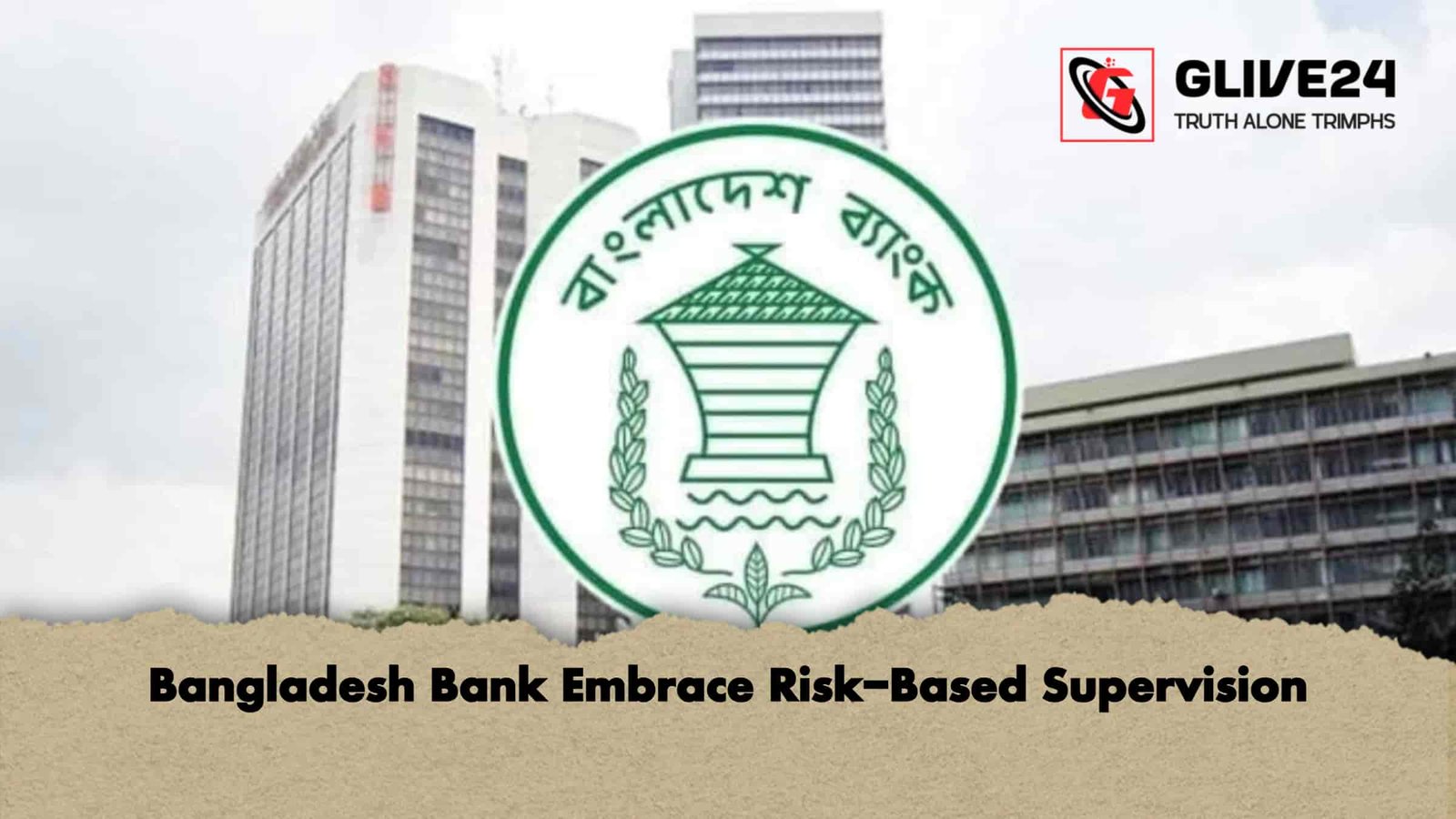
Bangladesh is entering a new era of banking oversight as the central bank, Bangladesh Bank, formally shifts from traditional supervision methods to a Risk-Based Supervision (RBS) framework. Under this approach, the intensity of oversight for each bank and financial institution will be tailored to its risk profile, rather than applying uniform monitoring across the sector.
Originally scheduled to take effect on 1 January 2026, the launch of the RBS framework was postponed by one week following the national mourning period after the passing of former Prime Minister Khaleda Zia. The new system will now be implemented starting Sunday.
As part of the reform, Bangladesh Bank has expanded the structure of its supervision division. The total number of departments has increased from 13 to 17, with 12 departments focusing on general bank supervision and five specialised units addressing emerging risks. The specialised departments are: Technology and Digital Banking, Information Management and Analytics, Policy Formulation, Payment Systems Supervision, and Anti-Money Laundering and Combating the Financing of Terrorism (AML/CFT). The AML/CFT unit will operate in accordance with the Bangladesh Financial Intelligence Unit (BFIU) model.
Banking officials emphasise that the new framework will allow dynamic risk assessment. While traditional oversight primarily focused on compliance with laws and regulations, the RBS model evaluates business models, governance structures, and future risk-handling capacity. This proactive approach will enable early identification and remediation of vulnerabilities, reducing the likelihood of systemic crises.
The new supervisory structure is outlined in the table below:
| Department | Supervisory Focus | Number of Units |
|---|---|---|
| Bank Supervision | General bank oversight | 12 |
| Technology & Digital Banking | Technology and digital services | 1 |
| Information Management & Analytics | Data collection and analysis | 1 |
| Policy Formulation | Rules and policy development | 1 |
| Payment Systems Supervision | Transactions and payment networks | 1 |
| AML/CFT | Prevention of financial crimes | 1 |
The primary objectives of the RBS framework are to prevent financial instability, safeguard depositors, and strengthen overall sector resilience. Bangladesh Bank also plans to implement the International Financial Reporting Standard IFRS 9 by 2028, aligning the country’s banks with global reporting standards.
Officials anticipate that the risk-based approach will reinforce governance and accountability within the sector. By allocating resources and attention where risks are highest, Bangladesh hopes to build a resilient, transparent banking system capable of withstanding adverse economic conditions.