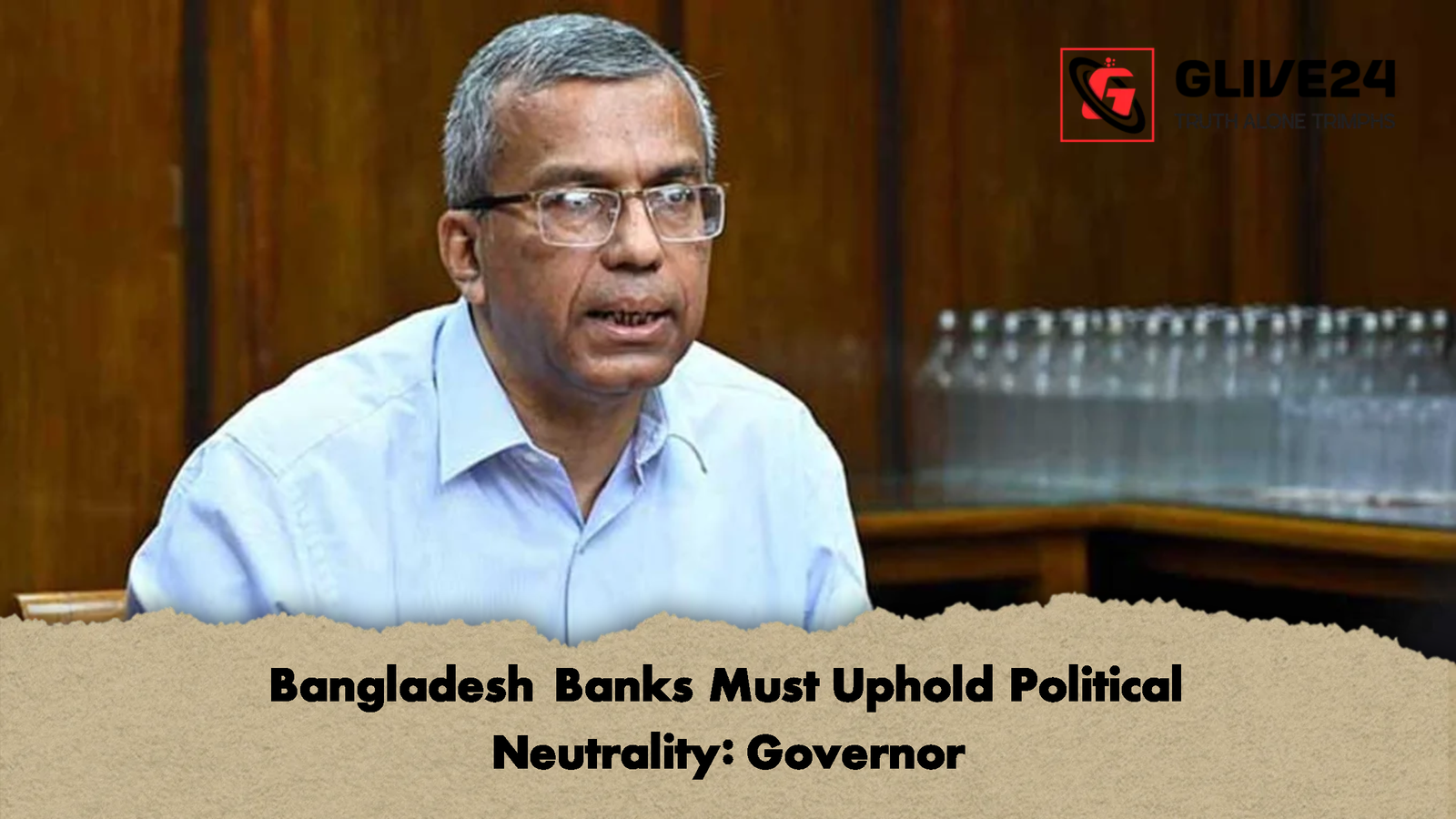
Bangladesh Bank Governor Mostaqueur Rahman has issued a decisive warning that no bank in the country should operate in allegiance to any political party, group, or family. Speaking at a high-level meeting with the Board of Directors and senior executives of Islami Bank Bangladesh Limited (IBBL) on Monday, the governor stressed that professionalism, transparency, and political neutrality must guide the operations of all financial institutions in Bangladesh.
Table of Contents
Historical Governance Concerns
Governor Rahman criticised IBBL’s operations during the tenure of the Awami League government, alleging that the bank had prioritised the interests of a specific political faction. This, he noted, had created significant opportunities for financial mismanagement and irregularities. He emphasised that such practices are no longer acceptable and must be permanently eradicated across the banking sector.
“No bank will work for any party, group, or family. Every institution must operate free from political influence, with full professionalism,” the governor declared.
This session marked Governor Rahman’s first formal engagement with IBBL since assuming office. During the discussions, bank officials acknowledged past lapses in governance while outlining initiatives taken to stabilise the bank and restore credibility. They also requested policy guidance and support from Bangladesh Bank to further strengthen operational efficiency.
Bolstering Remittance and Foreign Exchange
Officials highlighted IBBL’s historical leadership in remittance collection, particularly from expatriate Bangladeshis in the Middle East, utilising a wide-reaching international network. This capability has historically strengthened the bank’s foreign currency reserves and expanded its depositor base.
Governor Rahman stressed that remittance mobilisation is strategically crucial, particularly amid the ongoing Middle East conflicts, which have elevated domestic demand for US dollars. He urged the bank to intensify its efforts to secure higher foreign currency inflows to meet the country’s economic requirements.
| Focus Area | Governor’s Directive | Expected Impact |
|---|---|---|
| Remittance Mobilisation | Increase collection from expatriates, especially Middle East | Strengthen foreign currency reserves |
| Political Neutrality | No bank to serve any party, group, or family | Improved governance and transparency |
| Recovery of Defaulters | Revive closed or defaulted investment projects | Stimulate industrial activity and employment |
| Policy Support | Central bank to provide guidance and assistance | Enable bank stability and sustainable growth |
Recovery of Non-Performing Loans
Governor Rahman highlighted the need to revive investment projects that have become non-performing or defunct. He instructed IBBL to actively engage with entrepreneurs and consider renewing defaulted loans under special policy measures. This approach is intended to reopen factories, stimulate industrial output, and protect both depositor interests and employment opportunities.
Commitment to Professionalism and Oversight
The governor reiterated that IBBL, once one of Bangladesh’s most respected and strong financial institutions, must continue its revival through disciplined management, robust oversight, and strict adherence to regulatory guidance. He assured the bank of full support from Bangladesh Bank to ensure governance standards are upheld while facilitating sustainable growth.
“The central bank will continue to support Islami Bank in every possible way to maintain its strength, enhance foreign currency inflows, and safeguard depositor trust,” Governor Rahman affirmed.
The meeting underscores Bangladesh Bank’s broader effort to fortify the financial sector, eliminate political interference, and reinforce the role of banks as professional, accountable, and socially responsible institutions. Analysts note that these measures, if fully implemented, could restore public confidence, strengthen industrial financing, and enhance Bangladesh’s overall economic stability.