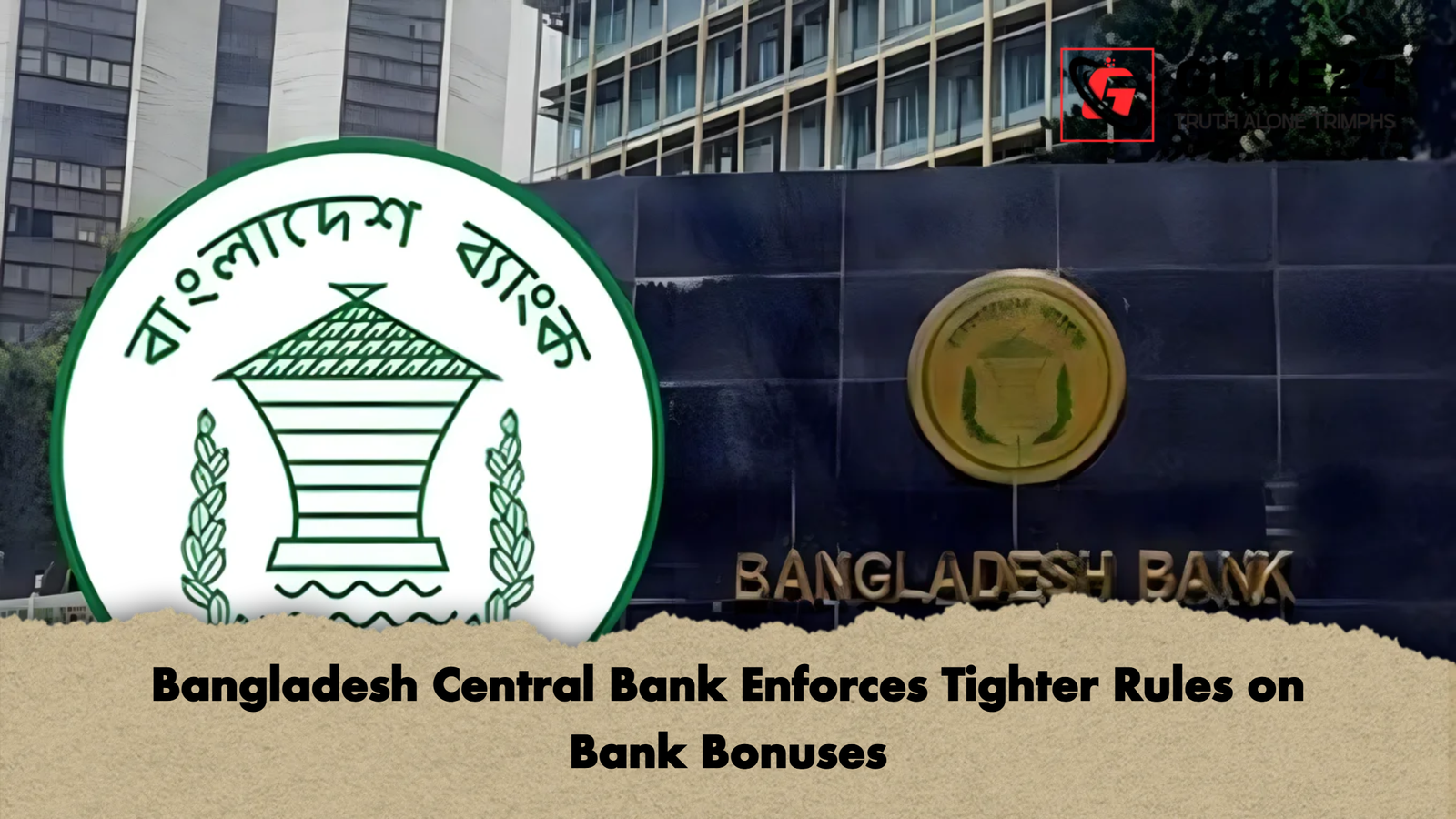
The central bank of Bangladesh has introduced a set of stringent rules regulating the payment of incentive bonuses for bank officers and employees. According to the latest directive, staff members will no longer be eligible to receive bonuses if there is insufficient progress in the recovery of non-performing loans. This step has been taken to ensure greater discipline, transparency, and accountability in the distribution of bonuses across the banking sector.
The directive was issued on Tuesday (9 December) under the authority of the Companies Act and has been formally communicated to the managing directors and chief executives of all scheduled banks in the country. It clearly lays out the rules and conditions that must be observed for the lawful allocation of incentive bonuses.
As per the central bank, bonuses may only be awarded based on the profit realised from actual income and expenditure during the relevant financial year. Bonuses cannot, under any circumstances, be drawn from accumulated profits. Moreover, banks are required to maintain their regulatory capital without any shortfall, and any deficiency in provisions or reserves is considered unacceptable. Should a bank have offered any deferral facility, it cannot be factored into profit calculations. The directive further highlights that improvements in key banking indicators, alongside adequate progress in recovering classified or written-off loans, will be essential considerations in approving bonuses.
For state-owned banks, a separate and mandatory guideline must be adhered to. These institutions are required to follow the “Guidelines for Payment of Incentive Bonuses to Employees of State-Owned Commercial Banks, Scheduled Specialised Banks, Non-Scheduled Specialised Banks and Financial Institutions-2025.” According to this framework, every stage of the bonus approval and disbursement process must be carefully reviewed, authorised, and executed in compliance with the rules.
Analysts suggest that the new regulations will significantly strengthen financial discipline throughout the banking sector. The central bank expects that strict compliance with these conditions will compel banks to focus more effectively on recovering non-performing loans, while enhancing transparency, governance, and overall operational accountability. Concurrently, banks that do not achieve genuine profits will be prevented from distributing bonuses arbitrarily, which will contribute to the long-term stability of the sector.
These measures are intended to reinforce accountability among bank employees and promote prudent financial management. By linking incentive payments directly to actual performance and regulatory compliance, the initiative aims to safeguard the banking sector’s long-term health and maintain public trust in financial institutions.
This directive marks a decisive step by the central bank to tighten oversight, encourage responsible banking practices, and ensure that rewards are aligned with authentic operational and financial achievements.