
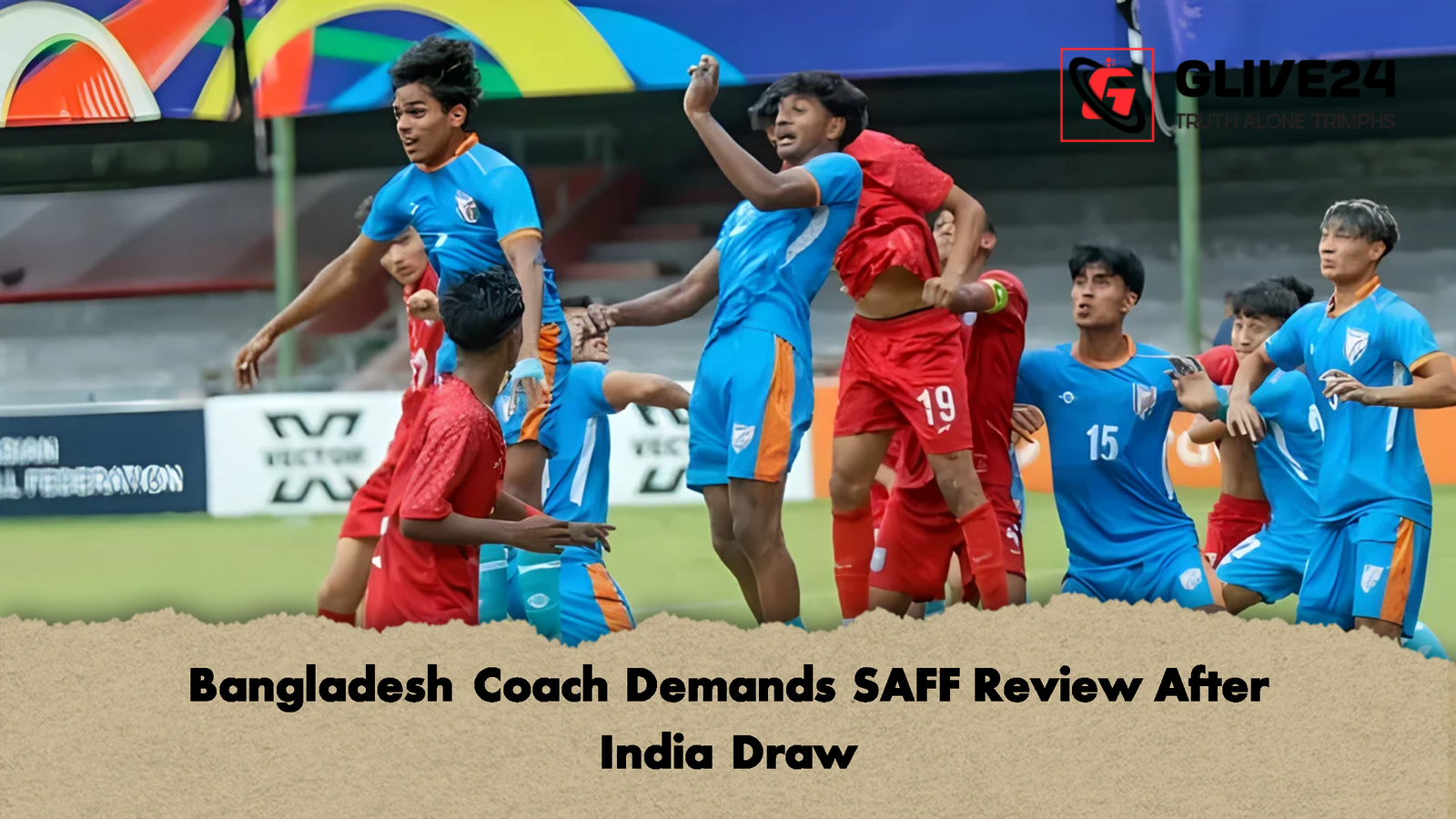
A heated 1–1 draw between Bangladesh and India in the SAFF Under-20 Championship has triggered renewed concerns over refereeing standards in South Asian football, after a fiercely contested match in the Maldives saw both coaching benches involved in disciplinary incidents.
The encounter, played with high intensity from start to finish, produced goals at both ends but was also overshadowed by controversy on the touchline. The situation escalated to the extent that Bangladesh head coach Mark Cox was shown a red card and subsequently ruled out of the post-match press conference.
In his absence, assistant coach Atiqur Rahman Mishu spoke to the media and called on the South Asian Football Federation (SAFF) to conduct a thorough review of refereeing standards in high-profile fixtures. He stressed that concerns over consistency and neutrality in Bangladesh–India matches are widely discussed and should be formally addressed at federation level rather than left to speculation.
While stopping short of direct accusations, Mishu suggested that perceptions of bias in such fixtures continue to undermine confidence in officiating, particularly in matches involving traditional regional rivals.
Despite the controversy, Bangladesh also had positives to highlight, particularly the performance of midfielder Ronan Sullivan. The American-born player, who scored twice against Pakistan earlier in the tournament, once again played a decisive role by delivering the corner that led to Bangladesh’s equalising goal against India. His creativity and set-piece accuracy were praised as key tactical assets within the squad.
From a match perspective, Bangladesh endured a difficult opening phase, conceding first after struggling to contain India’s aggressive pressing. However, according to the coaching staff, the team gradually improved after the first 20–25 minutes, stabilising possession and regaining tactical structure.
Mishu noted that Bangladesh showed significantly improved organisation in the second half, with better midfield control and defensive discipline helping to limit India’s attacking opportunities. This adjustment allowed Bangladesh to finish the match strongly and secure a valuable point.
The result meant both sides advanced from the group stage, with Bangladesh finishing second on goal difference and setting up a semi-final clash against Nepal. India, as group winners, will face Bhutan in the other semi-final.
Group Stage Summary
| Team | Result vs India | Points | Position | Semi-final Opponent |
|---|---|---|---|---|
| India | 1–1 | 4 | Group winners | Bhutan |
| Bangladesh | 1–1 | 4 | Runners-up | Nepal |
Looking ahead, the Bangladesh camp has adopted a cautious and structured approach. The coaching staff confirmed they will analyse Nepal’s previous three matches in detail, alongside their own performance against India, as part of a step-by-step preparation strategy for the semi-final.
However, some selection decisions have also drawn quiet attention within the squad. The continued absence of defender Declan Sullivan has not been formally explained, leaving questions over squad rotation and tactical preference.
Overall, while Bangladesh’s progress to the semi-finals reflects clear development at youth level, the match also highlighted broader concerns over officiating consistency and sideline discipline. Attention now turns to their knockout fixture, where composure, tactical clarity, and emotional control will be crucial in determining whether they can reach the final.