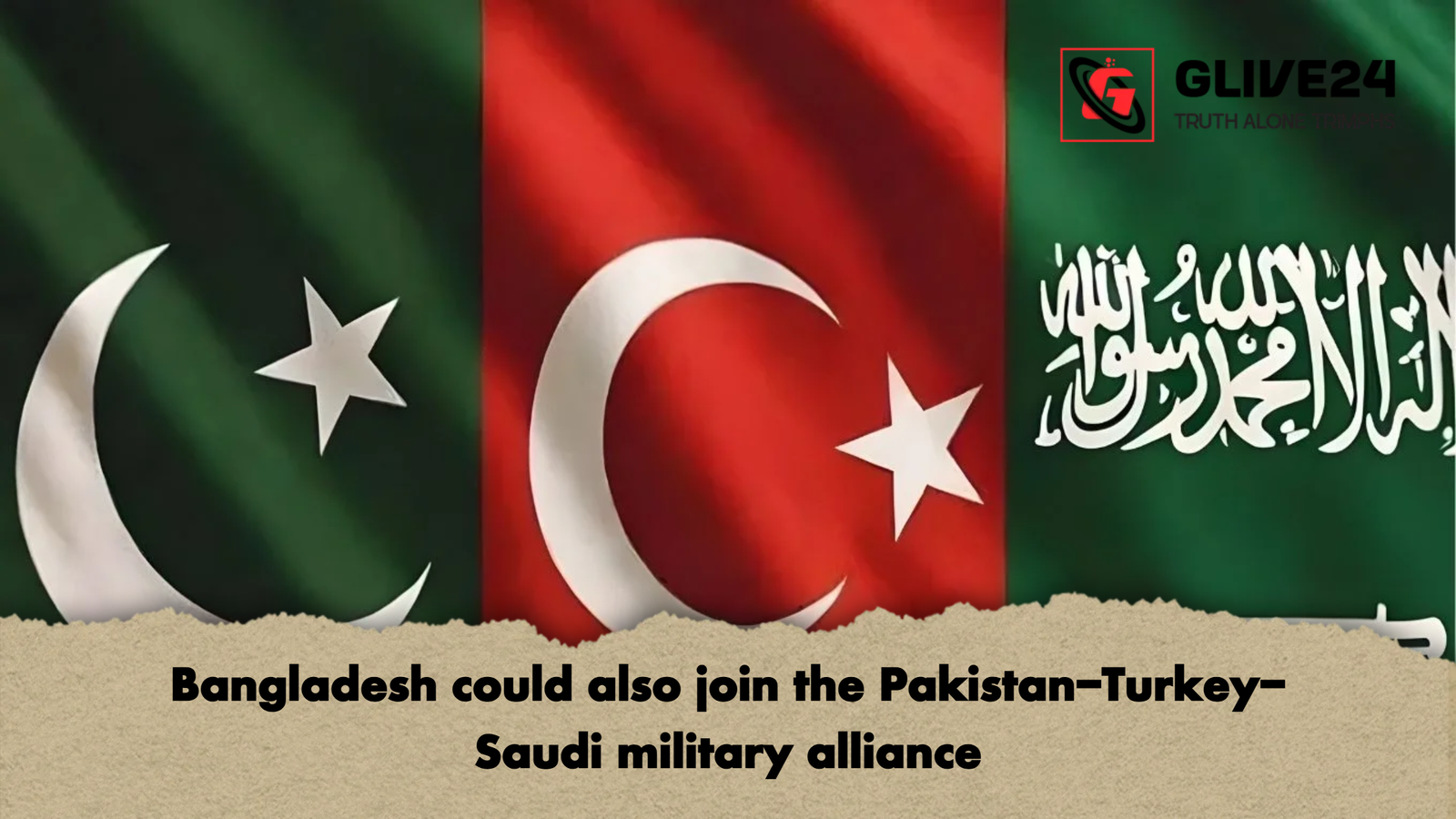
Speculation is mounting internationally over the potential inclusion of Bangladesh in a burgeoning military alliance comprising Pakistan, Turkey, and Saudi Arabia, particularly in the aftermath of the upcoming national elections.
In recent months, high-level defence meetings between Dhaka and Islamabad, alongside Pakistan’s existing strategic mutual defence agreements with Saudi Arabia, have added momentum to discussions of a broader quadrilateral partnership. Analysts suggest that if the newly elected government formalises Bangladesh’s participation, it could significantly reshape South Asia’s security landscape.
The foundation of this prospective alliance was laid in September 2025, when Pakistan and Saudi Arabia signed a defence treaty stipulating that an attack on one nation would be regarded as an attack on both—a principle reminiscent of NATO’s collective defence model. As of January 2026, Turkey is reportedly in advanced talks to join the pact, potentially forming a strategic triangle combining Pakistan’s nuclear capabilities, Turkey’s status as NATO’s second-largest army, and Saudi Arabia’s financial resources.
For Bangladesh, participation would primarily focus on military training, counter-terrorism operations, and joint production of defence equipment. The Bangladesh Armed Forces have already shown keen interest in drafting a framework aligned with Pakistan’s Saudi-model defence agreement. Over the past year, official visits by Pakistani military officials to Dhaka have increased significantly.
In January 2026, the Chief of the Bangladesh Air Force visited Pakistan to discuss the potential acquisition of JF-17 Thunder fighter jets, a move seen as central to achieving Bangladesh’s ‘Forces Goal 2030’. Pakistan has also pledged rapid delivery of Super Mushshak training aircraft, signalling that cooperation would extend beyond procurement to intelligence sharing and joint military exercises.
However, Bangladesh’s formal entry into the alliance is largely contingent upon the foreign policy direction of the government formed post-12 February elections. While the interim administration has advanced the draft agreement, its official approval will rest with the next elected parliament.
Security analysts view the pact as a strategic opportunity for modernising Bangladesh’s defence capabilities while maintaining a balance of power with neighbouring states. Nonetheless, given historical sensitivities and internal political dynamics, any decision will require careful deliberation.
Should Bangladesh join the alliance, it would represent an unprecedented security coordination among leading Muslim-majority nations, potentially redefining regional defence cooperation for decades to come.
Prospective Military Alliance Overview
| Member Country | Key Strengths | Role in Alliance | Status (Jan 2026) |
|---|---|---|---|
| Pakistan | Nuclear arsenal | Core military power | Confirmed member |
| Saudi Arabia | Financial resources | Funding & logistics | Confirmed member |
| Turkey | NATO’s 2nd largest army | Regional strategic force | In advanced talks |
| Bangladesh | Modernising armed forces | Training, counter-terrorism, joint production | Possible post-election participation |