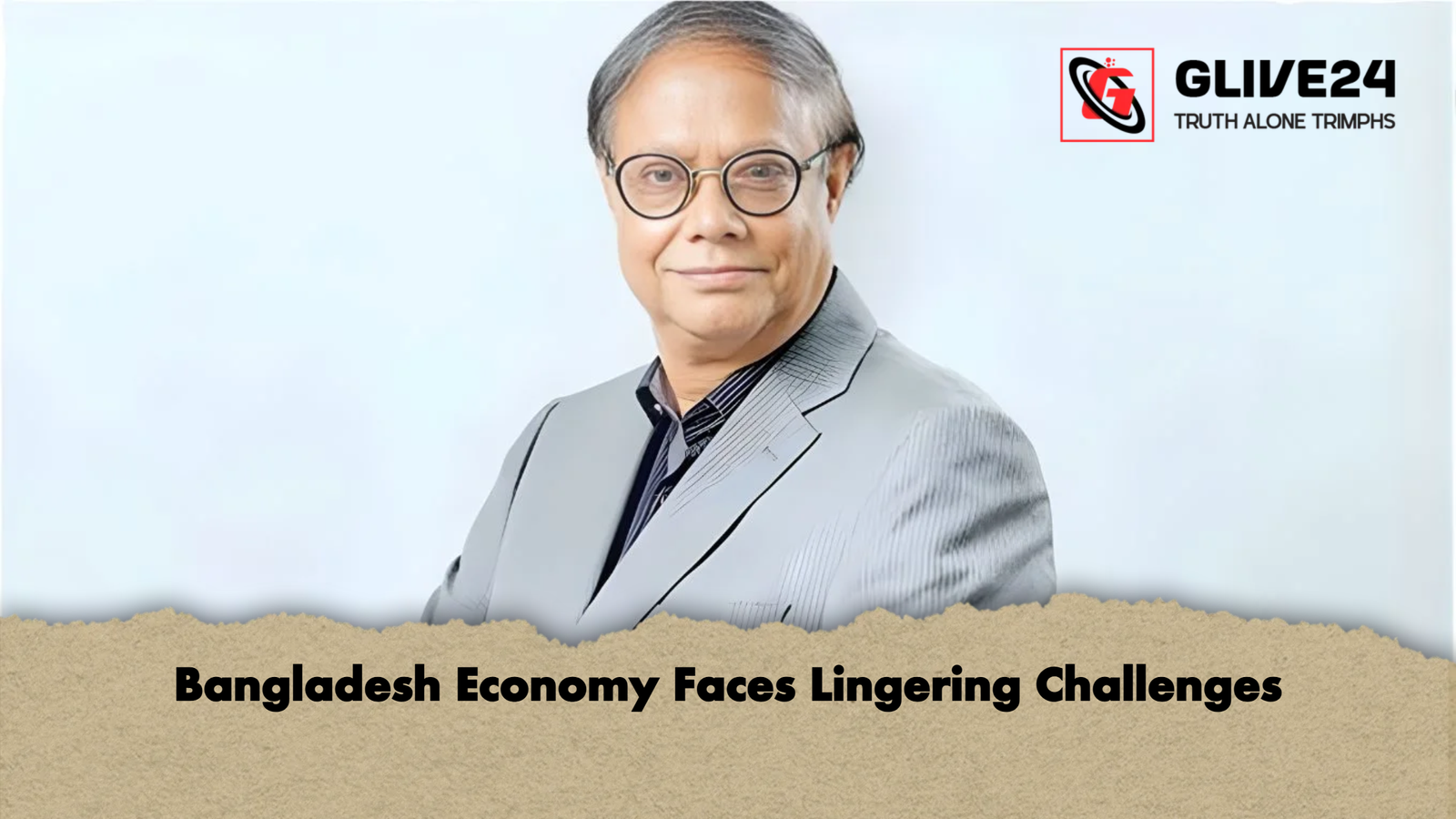
Bangladesh appointed the eminent economist and former Dhaka University faculty member, as well as a full-time IMF official, Ahsan H. Mansur, as Governor of Bangladesh Bank in the wake of the July popular uprising, with high hopes that he would steer the nation’s economy toward stability and growth. At the time, members of civil society expressed optimism that his expertise would elevate Bangladesh’s economic performance. However, these expectations have gradually waned.
Table of Contents
Economic Contraction
Since assuming office, the economy has faced persistent challenges. Inflation has escalated, businesses have struggled, numerous factories have shut down, and the level of non-performing loans has risen sharply. Despite 18 months of stringent contractionary monetary policies, economic stability has not been restored.
Governor Mansur initially prioritised repatriating illicitly transferred funds abroad, promising in December 2024 that partial recovery could be achieved within six months. He travelled extensively to countries including the United States, the United Kingdom, and Switzerland. Yet, a year later, he revised the timeline, suggesting that the process might realistically take four to five years.
Progress on Repatriating Funds
| Year | Announced Timeline | Actual Progress | Estimated Cost (BDT crore) |
|---|---|---|---|
| 2024 | 6 months | 0% | Significant |
| 2025 | 4–5 years | 0% | Increasing |
Meanwhile, joint investigation committees formed to prevent financial irregularities, loan fraud, and money laundering within the capital market and banking sector have failed to produce meaningful results. Investor confidence has declined, stalling both new investments and industrial expansion.
Monetary Policy and Economic Stability
Governor Mansur’s monetary policy has struggled to control inflation. With the policy interest rate increased in three stages to 10%, lending rates surged to 16–17%, discouraging productive investment and effectively stalling job creation.
Key Economic Challenges
| Challenge | Impact |
|---|---|
| High policy interest rates | Increased borrowing costs, reduced investment |
| Inflation | Declining purchasing power |
| Currency stability | Exports fell by 14.25% |
| Inadequate regulatory control | Continued irregularities in industry and banks |
Criticism and Recommendations
Private-sector researchers, including Dr. Debapriya Bhattacharya, and Tashkeen Ahmed, Chairman of Dhaka Chamber of Commerce and Industry, argue that Mansur’s policies failed to deliver investment, employment, or macroeconomic stability. They emphasise that the incoming government must urgently stabilise four critical areas:
Controlling inflation
Reducing interest rates
Maintaining currency value
Managing public debt
According to CPD, Mansur’s tenure saw little progress in these areas. Observers note that adherence to IMF directives, rather than national priorities, has compromised the economy and left citizens with limited protection against adverse effects. Officials within Bangladesh Bank suggest that Mansur’s policies primarily served IMF interests, potentially causing long-term structural damage to the nation’s economic framework.
As a result, the combination of unrealistic assurances and ineffective policies has left Bangladesh facing a deep economic crisis, the repercussions of which may unfold over the coming years.