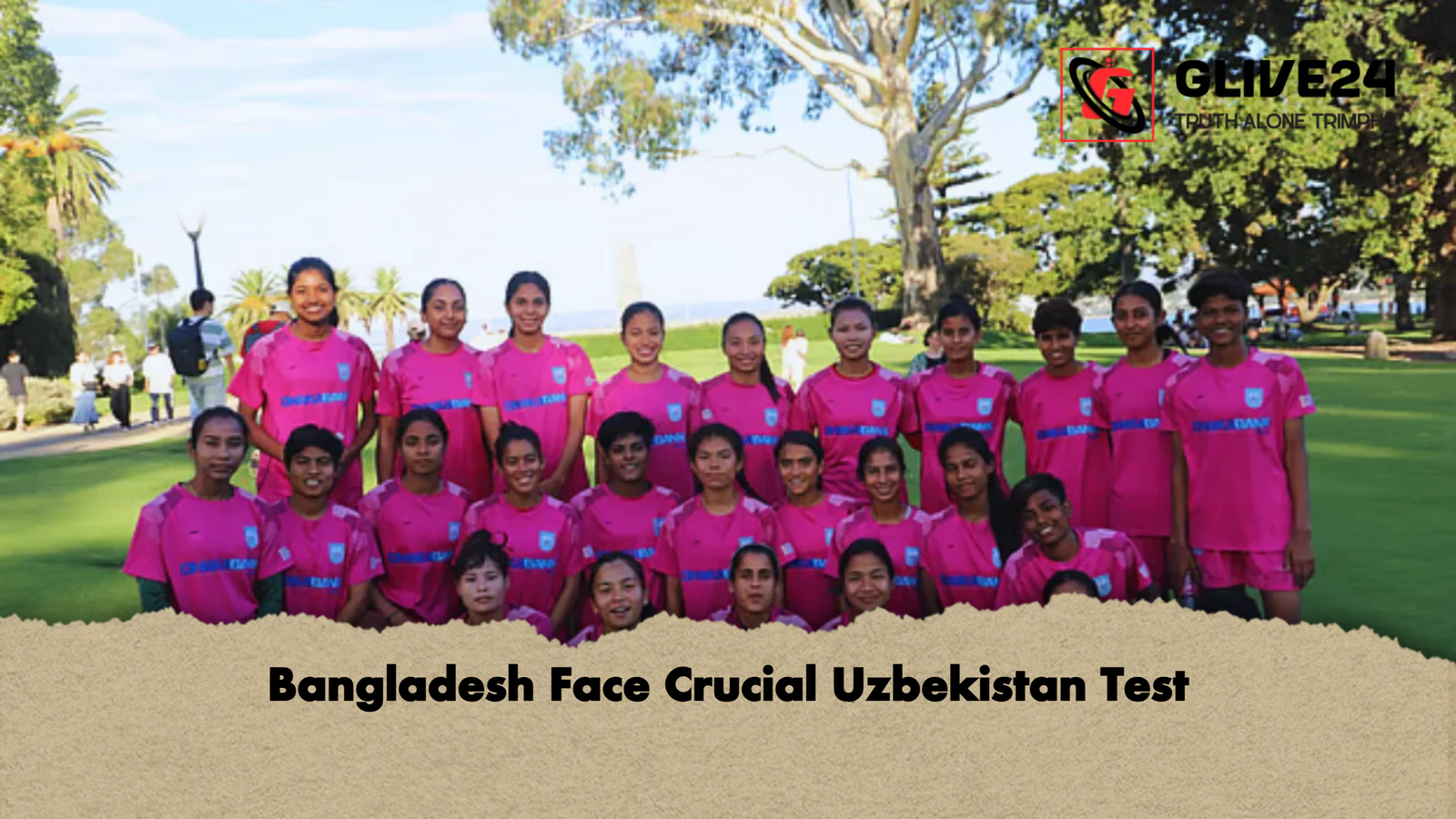
The Bangladesh women’s national football team stand at a delicate crossroads between hope and disappointment as they prepare for a decisive encounter against Uzbekistan in the AFC Women’s Asian Cup group stage. Following a bruising defeat to North Korea in their previous outing, the team led by Afida Khandakar now seeks redemption and a historic place in the quarter-finals.
After playing their earlier matches in Sydney, the Bangladeshi squad travelled across Australia to Perth, where their final Group B match will be held. The match is scheduled to kick off at 3:00 pm Bangladesh time. For Bangladesh, the equation is straightforward yet daunting: they must defeat Uzbekistan to keep their hopes of advancing to the last eight alive.
The journey from Sydney to Perth took nearly five hours by air. While Sydney operates five hours ahead of Bangladesh, Perth’s time difference is only two hours. Upon arrival, the players engaged in light stretching exercises at Kings Park near their hotel to ease the fatigue of travel and prepare physically for the decisive fixture.
Team physiotherapist Ishnad Zaman provided an encouraging update on the players’ condition after the squad reached Perth. According to him, despite the demanding physical nature of the previous match against China, the players are largely in good shape.
He noted that while some footballers are experiencing minor aches and fatigue, there are no serious injuries within the squad. These minor issues, he added, are manageable with proper recovery sessions and treatment. Notably, the Bangladesh team initially travelled to Australia without a physiotherapist; Ishnad Zaman, a Bangladeshi professional based abroad, joined the squad after their arrival in Sydney to assist with fitness and recovery.
The tournament features 12 teams divided into three groups. The winners and runners-up from each group automatically qualify for the quarter-finals, while the remaining two places are reserved for the two best third-placed teams across the groups.
In Group B, China and North Korea have already secured their quarter-final spots by winning both of their opening matches. That leaves Uzbekistan and Bangladesh battling for third place, both yet to earn a point.
Group B Standings
| Team | Matches | Wins | Losses | Points | Goal Difference |
|---|---|---|---|---|---|
| China | 2 | 2 | 0 | 6 | +9 |
| North Korea | 2 | 2 | 0 | 6 | +7 |
| Uzbekistan | 2 | 0 | 2 | 0 | -6 |
| Bangladesh | 2 | 0 | 2 | 0 | -7 |
Bangladesh currently trail Uzbekistan on goal difference, making victory in the final match even more critical.
The broader tournament scenario also offers Bangladesh a faint but realistic opportunity. In Group A, hosts Australia and South Korea have already progressed to the quarter-finals, leaving the Philippines and Iran without points. If the Philippines–Iran match in Gold Coast ends in a draw and Bangladesh defeat Uzbekistan, the South Asian side could advance as one of the best third-placed teams.
Group C has also produced dramatic results. Japan lead the group comfortably, while India suffered a crushing 11–0 defeat to Japan that has severely damaged their chances of progression. Even if India defeat Chinese Taipei in their final match, their poor goal difference may eliminate them, potentially leaving only one strong third-placed team from that group.
On paper, Uzbekistan appear the stronger side. They are ranked 49th in the FIFA women’s rankings, significantly higher than Bangladesh, who are placed 112th. Uzbekistan’s players are generally considered physically stronger and more robust. However, Bangladesh possess advantages in speed, agility and technical ability, which could prove decisive in an evenly contested match.
Uzbekistan are also set to host the 2029 AFC Women’s Asian Cup and have won the Central Asian Football Association (CAFA) women’s championship twice. They have participated in the Asian Cup five times but have never progressed beyond the group stage.
For Bangladesh, this tournament marks their debut appearance in the AFC Women’s Asian Cup. Their qualification itself was a remarkable achievement. Last year, Afida Khandakar and her teammates stunned observers by defeating Myanmar—a side ranked 55 places above them—to secure their historic place in the competition.
That memorable victory, combined with the experience gained from competing against Asia’s elite teams such as China, has given the Bangladeshi players valuable confidence. As they prepare for the decisive clash against Uzbekistan in Perth, the team carries both the weight of expectation and the belief that another upset could propel them into uncharted territory in Asian women’s football.