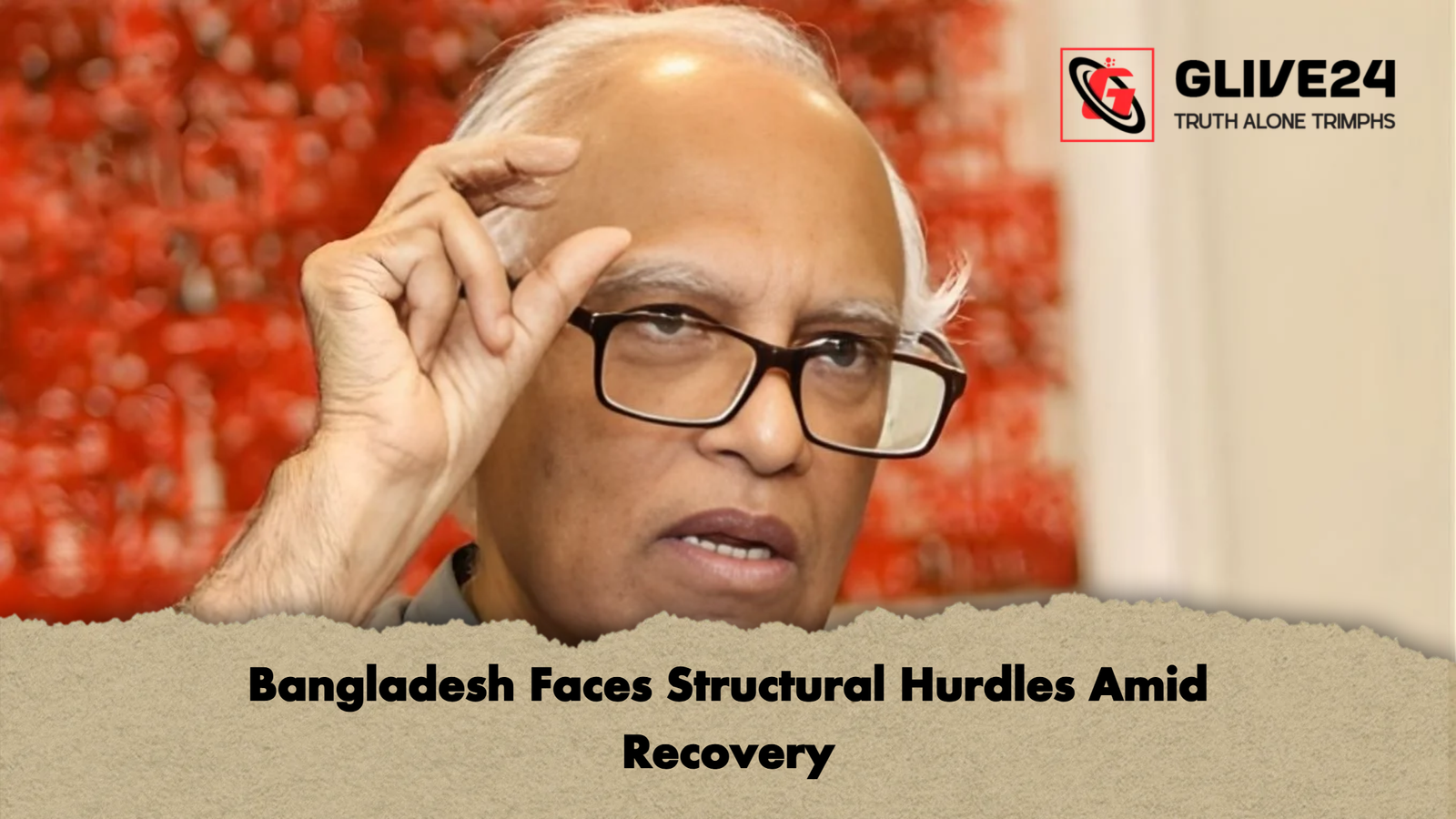
While Bangladesh’s economy is gradually on a path to recovery, significant structural and sectoral challenges remain, according to Dr Wahiduddin Mahmud, Adviser to the Planning Commission. Speaking on Wednesday, he highlighted the need for continued reforms and strategic planning to sustain economic stability.
Dr Mahmud delivered these remarks as the chief guest at a seminar titled “Economic Stability and Challenges for the Next Government”, organised by the Economic Reporters’ Forum (ERF) in Dhaka. The event also featured the presentation of the ERF Scholarship-2026.
Reflecting on past economic difficulties, Dr Mahmud noted, “During the previous government, financial sector discipline had completely eroded. Rampant money laundering, excessive lending, and mismanagement had created a precarious situation. However, recent government policies and measures have successfully introduced positive changes in the economy.”
He highlighted several encouraging trends, including an increase in raw material imports for industry, sustained export growth, and a stabilisation of foreign exchange reserves. Moreover, the country’s GDP growth is expected to approach 5 per cent this year, signalling cautious optimism for the broader economy.
On inflation, Dr Mahmud remarked, “The Governor aimed to reduce it rapidly, but progress has been gradual. Point-to-point inflation has declined from 11 per cent to below 8 per cent.” He also observed that credit flows to the private sector have significantly decreased, suggesting the need to reconsider prolonged high interest rates in favour of supporting small and medium-sized enterprises.
Looking ahead, Dr Mahmud identified the energy sector as a major challenge. “Gas shortages have left substantial portions of electricity generation and industrial production idle. While solar energy holds great potential, some past projects failed due to inadequate planning,” he said.
To secure long-term economic stability, he recommended coordinated policies for industry and agriculture, development of the energy sector, and restructuring of the banking system.
The table below summarises key economic indicators and targets:
| Indicator | Current Status | Target / Proposal |
|---|---|---|
| GDP Growth | ~5% | Exceed 5% |
| Inflation | 8% | Reduce to 6–7% |
| Foreign Exchange Reserves | Gradually increasing | Ensure strong stability |
| Private Sector Credit Flow | Significantly reduced | Adjust interest rates as needed |
| Energy Sector | Gas shortages | Expand solar and alternative energy sources |
Dr Mahmud’s observations underscore that while recovery is underway, well-structured policies, targeted investment, and fundamental reforms will be essential to sustain growth and address emerging challenges.