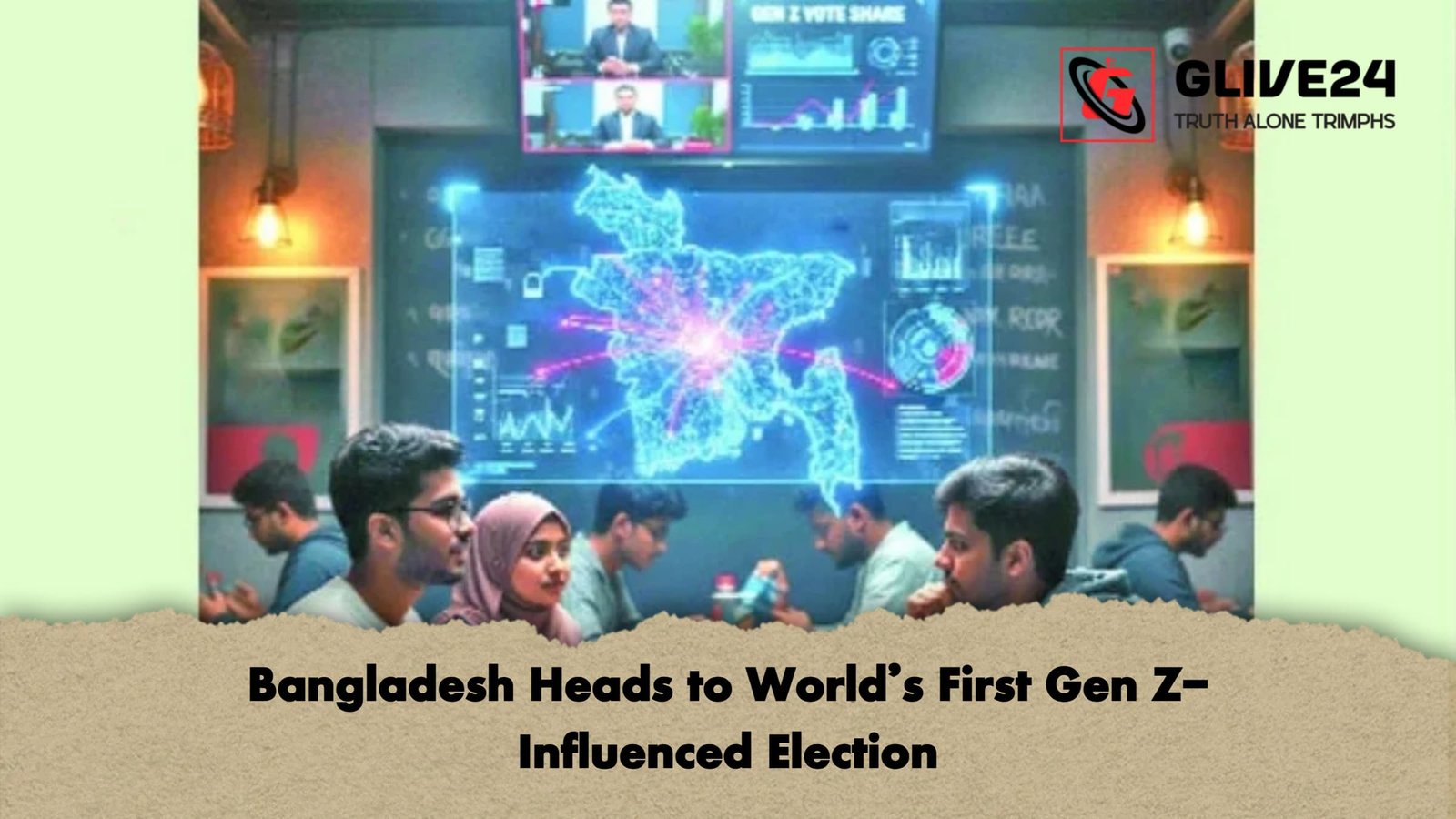
The political landscape of Bangladesh is undergoing a seismic shift as the nation prepares for its 13th General Election tomorrow, 12 February 2026. For Generation Z—those born between the late 1990s and early 2010s—this represents a historic milestone. Having grown up in an era where competitive elections were largely absent, this demographic has transitioned from the frontline of the 2024 mass uprising to become the pivotal force in the voting booth. International news agencies, including Reuters, have officially branded this contest as the world’s first “Gen Z-influenced election.”
Table of Contents
A Demographic Powerhouse
Following the fall of the previous regime in August 2024, young voters now view this as the first genuinely competitive election since 2008. The sheer scale of this demographic is staggering; voters under the age of 30, along with those in the broader 18–37 age bracket, constitute approximately 44% of the electorate. Their influence is not merely numerical but ideological, driven by a desire for accountability, meritocracy, and a clean break from dynastic politics.
Key Electoral Statistics: The 2026 Vote
| Category | Statistical Data |
| Total Registered Voters | Approximately 127.7 million |
| Youth Voters (Aged 18–37) | ~56 million (44% of total) |
| First-Time Voters | ~5 million |
| Participating Political Parties | 51 |
| Total Candidates | 2,028 (including 273 Independents) |
| Polling Centres | 42,779 across 299 constituencies |
The Social Media Battlefield
For Gen Z, the primary arena for political discourse has shifted from the street to the screen. Platforms like Facebook, TikTok, and YouTube have become the dominant sources of information. Wasek Hossain, a student at North South University and a first-time voter, noted that “Gen Z is heavily influenced by short-form videos and data-driven content appearing on our feeds.”
However, this digital reliance is a double-edged sword. While it allows for a “merit-based” evaluation of candidates—as medical graduate Dr Ziaul Hasan observes—it also leaves voters susceptible to AI-generated misinformation and sophisticated digital propaganda. Interestingly, many young voters are breaking away from the traditional “family voting” blocks, choosing candidates based on personal research rather than their parents’ historical party loyalties.
Alliances and Ideological Friction
The political realignment has produced unexpected results. The National Citizen Party (NCP), formed by the student leaders of the 2024 revolution, initially carried the hopes of the Gen Z movement. However, a “pragmatic” decision to join an 11-party electoral alliance led by Jamaat-e-Islami has created a schism. Nishat Tasneem, an MBA student, explained that while many supported the NCP’s reformist agenda, its coalition with a traditionalist Islamist party has left a significant portion of the youth vote “divided and hesitant.”
As polling begins, the stakes extend beyond the borders of Bangladesh. Regional powers, specifically India and China, are watching closely as the outcome will recalibrate the geopolitical balance in South Asia. Regardless of the winner, the true victory lies in the restoration of the franchise to a generation that once felt voiceless.