
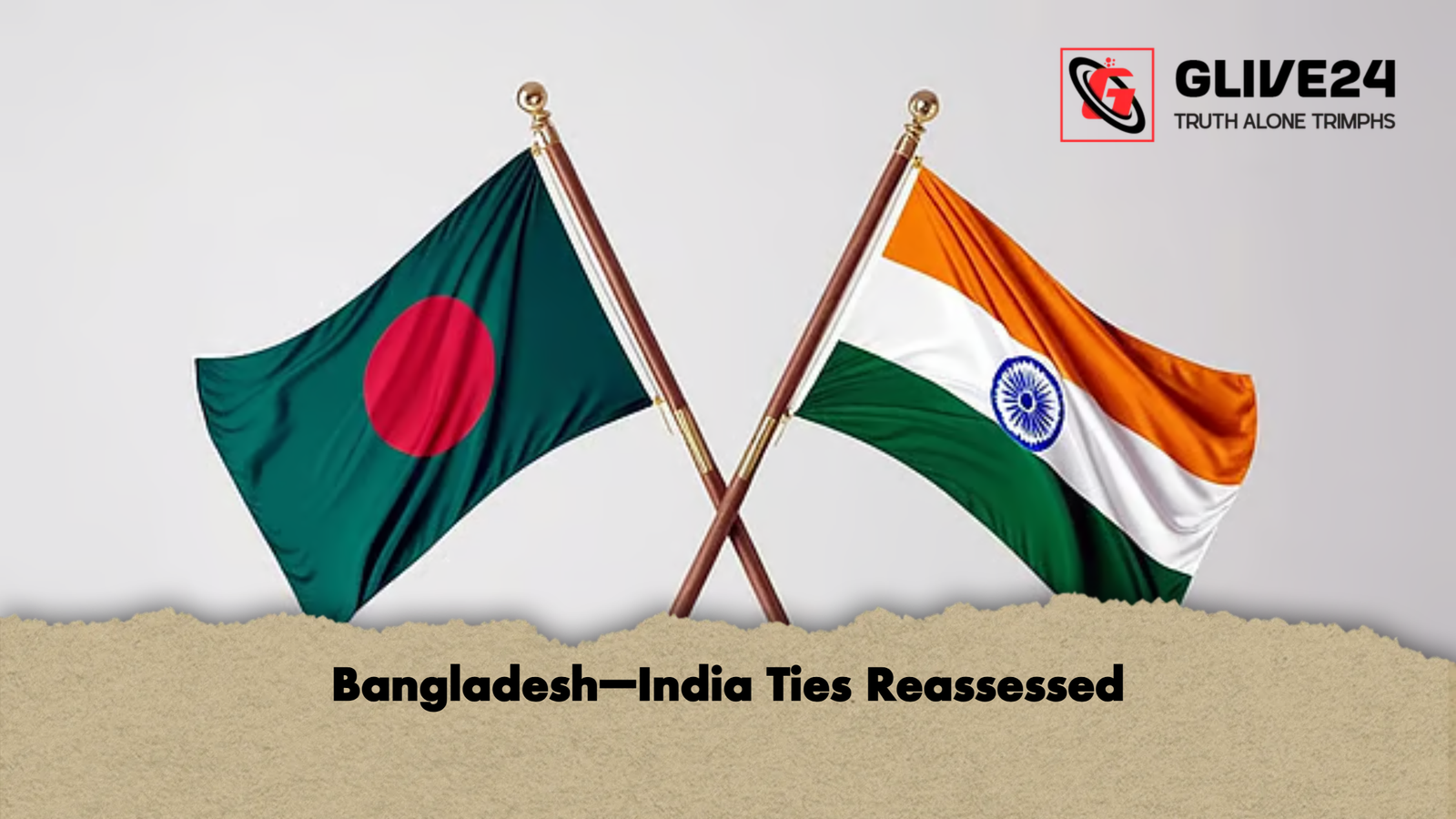
The newly elected government in Bangladesh enters office amid a complex and rapidly shifting international environment. Among its most pressing diplomatic challenges is the recalibration of relations with its largest neighbour, India, on the basis of equality, fairness and mutual respect. Establishing a dignified and balanced partnership has become both urgent and difficult in the context of evolving regional and global tensions.
At the same time, Bangladesh is attempting to formulate a coherent foreign policy framework against a backdrop of heightened geopolitical uncertainty. Recent conflicts involving major global powers in the Middle East have intensified concerns over global energy and food security, while also exposing new fractures in the post–Second World War international order. Concurrently, political transitions and social unrest in parts of South Asia have further complicated regional stability.
Within this volatile environment, Bangladesh must carefully balance its relations with India, China and the United States, each of which exerts varying degrees of economic, political and strategic influence. The central diplomatic challenge lies in safeguarding national interests without compromising sovereignty or public confidence at home.
Table of Contents
Evolving dynamics in Bangladesh–India relations
Over the past decade, public sentiment in Bangladesh regarding India has become increasingly mixed. Early achievements in bilateral relations—such as the Land Boundary Agreement, the exchange of enclaves, and the resolution of maritime boundary disputes through international arbitration—created a foundation of goodwill. Cooperation in energy trade and connectivity also expanded during this period.
However, this progress has been tempered by growing perceptions of imbalance. Issues such as unresolved water-sharing disputes, particularly over the Teesta River, and concerns surrounding certain transit and energy agreements have contributed to public unease. Political developments in both countries, including India’s perceived alignment with successive Bangladeshi governments, have further influenced trust levels.
Key areas of tension and cooperation
| Issue Area | Positive Developments | Sources of Concern |
|---|---|---|
| Border and Territory | Land Boundary Agreement, enclave exchange | Cross-border incidents and enforcement concerns |
| Water Sharing | Ganges Water Treaty framework | Teesta and other unresolved river agreements |
| Energy Cooperation | Electricity import agreements | Perceptions of unequal contract terms |
| Trade and Connectivity | Growing bilateral trade volume | Non-tariff barriers and transit sensitivities |
| People-to-people relations | Education, medical travel, tourism | Sporadic social media and localised tensions |
Regional and domestic influences
The relationship is also affected by broader regional dynamics, including political developments in neighbouring South Asian states and ongoing security tensions in the wider region. Additionally, domestic political discourse in both countries often shapes public perceptions, sometimes amplifying mistrust through media narratives and social commentary.
Incidents involving border security, migration concerns, and identity politics in border states of India have periodically generated resentment in Bangladesh. Conversely, concerns in India regarding regional security and migration have similarly influenced policy approaches, creating cycles of mutual suspicion.
The need for recalibration
Sustainable bilateral relations require a renewed commitment to fairness, reciprocity and restraint in political rhetoric. Confidence-building measures in areas such as water management, trade facilitation, healthcare access and visa simplification could significantly reduce friction. Agricultural cooperation and energy security collaboration remain particularly promising areas for mutual benefit.
Equally important is the need to depoliticise sensitive issues and avoid allowing domestic political considerations to disproportionately influence bilateral diplomacy. Public perception on both sides plays a critical role in shaping long-term stability.
Conclusion
Bangladesh and India remain economically interdependent and geographically inseparable partners. However, the durability of their relationship will depend on their ability to address outstanding disputes while respecting each other’s sovereignty and public sentiment. The current moment offers an opportunity to reset relations on the basis of dignity, balance and strategic realism. Only through sustained dialogue and mutual accommodation can the two countries build a stable, forward-looking partnership that reflects the aspirations of their peoples for peace, prosperity and regional stability.