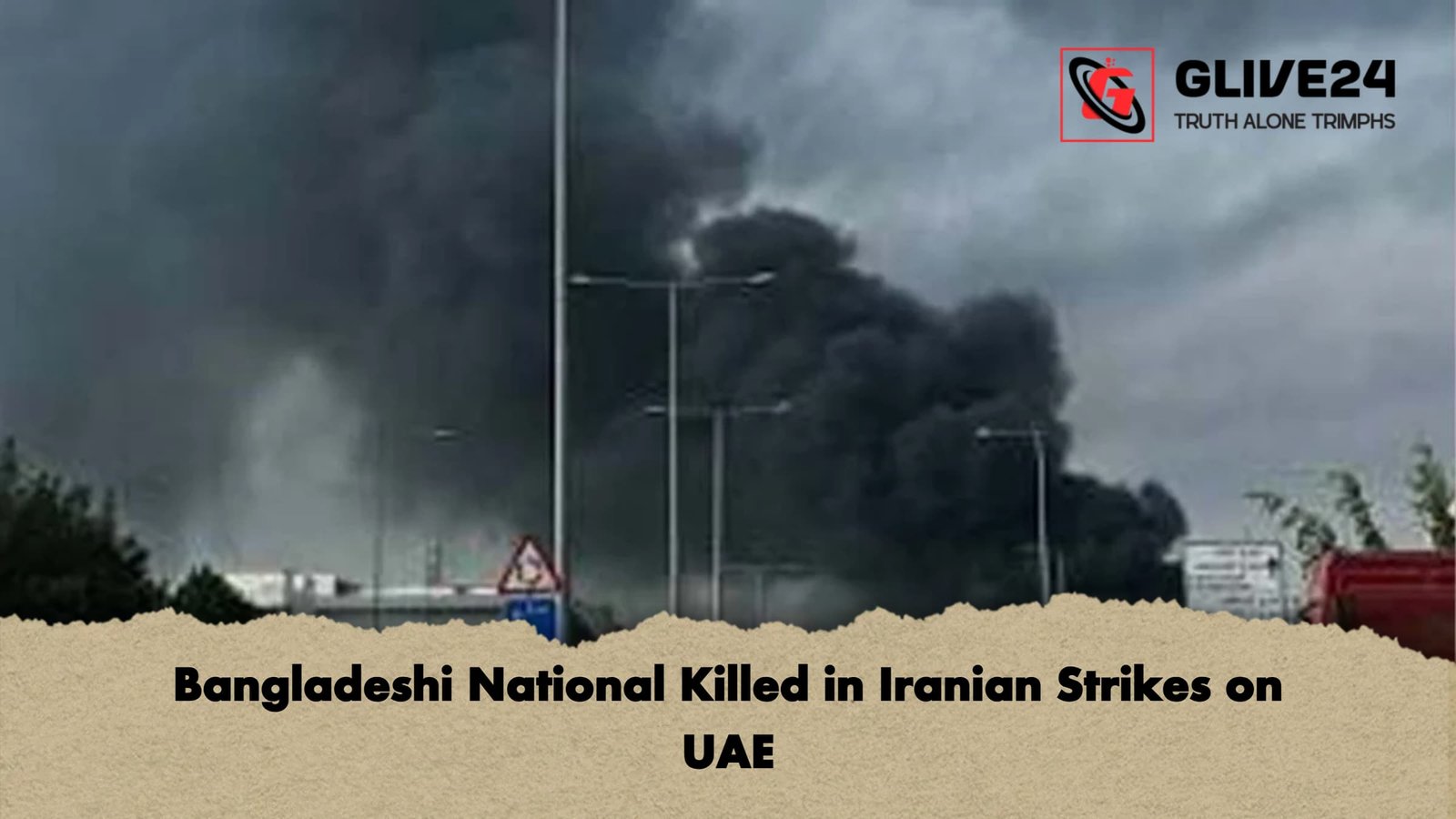
The escalating military confrontation in the Middle East has claimed its first civilian casualties on Emirati soil, including a Bangladeshi expatriate. Following a massive joint aerial offensive by the United States and Israel against Iranian targets on Saturday, 28 February, Tehran launched a fierce retaliatory barrage across the region, targeting American military installations and strategic hubs within the United Arab Emirates.
Fatalities and Casualties Reported
While initial reports on Saturday suggested a single fatality, local media outlets confirmed on Sunday, 1 March, that the death toll has risen to three. Among the deceased is a Bangladeshi national, alongside citizens from Pakistan and Nepal. This tragic loss highlights the vulnerability of the vast migrant workforce currently residing in the Gulf as regional stability collapses.
In addition to the fatalities, at least 58 individuals have sustained injuries of varying severity. Emergency services in the UAE remain on high alert as hospitals manage the influx of casualties resulting from shrapnel and structural damage caused by intercepted ordnance.
Scale of the Aerial Assault
The UAE Ministry of Defence has released comprehensive data regarding the sheer volume of the Iranian offensive. The Emirati integrated air defence systems were pushed to their operational limits as hundreds of projectiles entered their airspace.
Table: Iranian Munitions Detected and Intercepted (UAE Airspace)
| Weapon Category | Total Detected | Successfully Intercepted | Interception Rate |
| Ballistic Missiles | 165 | 152 | 92.1% |
| Cruise Missiles | 2 | 2 | 100% |
| Attack Drones (UAVs) | 541 | 506 | 93.5% |
| Total Projectiles | 708 | 660 | 93.2% |
Strategic Implications and Retaliation
The strikes represent a significant escalation in the “shadow war” between the US-Israeli alliance and Iran’s “Axis of Resistance.” While the UAE has invested heavily in advanced missile defence technology—including the American-made THAAD and Patriot systems—the sheer volume of the 541 drones and 165 ballistic missiles suggests a deliberate attempt by Tehran to “saturate” and overwhelm regional defences.
The Iranian Revolutionary Guard Corps (IRGC) has maintained that these strikes were a direct response to the “unprovoked aggression” by Washington and Tel Aviv. However, the collateral damage involving neutral expatriate workers has sparked international concern. The Bangladeshi government is expected to coordinate with Emirati authorities to facilitate the repatriation of the deceased and ensure the safety of its sizeable diaspora in the region.
As the conflict enters its second week of high-intensity kinetic operations, the threat to commercial aviation and civilian infrastructure in the Gulf remains at an all-time high.