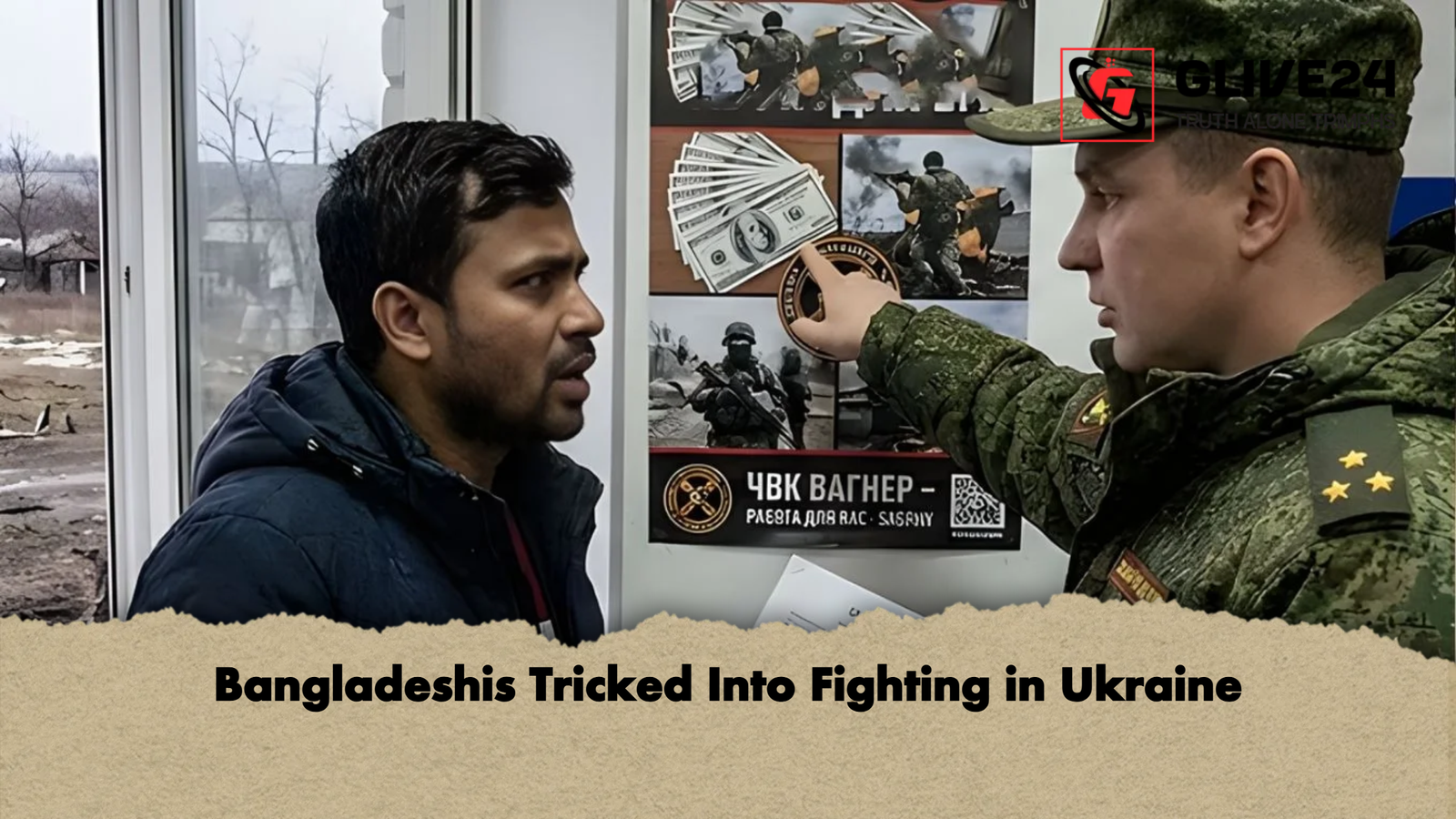
An investigative report by the Associated Press (AP) has revealed that Russia has been luring Bangladeshi migrant workers to the frontlines of the Ukraine conflict under the guise of civilian employment. The report highlights the harrowing experiences of three Bangladeshis who were ensnared by fraudulent recruitment schemes and coerced into participating in the war.
Maksudur Rahman, one of the victims, explained that he agreed to travel to Russia through a labour broker in Bangladesh, who promised him work as a janitor. However, within weeks of arriving in Moscow, he found himself on the frontline in Ukraine.
All three migrants told the AP that upon arrival in Russia, they were asked to sign documents in Russian. Unbeknownst to them, these papers constituted military contracts. They were subsequently sent to training camps, where they received instruction in drone operations, evacuation of the wounded, and basic handling of heavy weaponry.
Maksudur recounted a chilling encounter: “When I refused to work, a Russian commander told me via a translation app, ‘Your agent sent you here. We bought you.’” The migrants were then forced into dangerous frontline duties, including transporting supplies, rescuing injured soldiers, and recovering the bodies of the dead.
The table below summarises their experiences:
| Name | Forced Tasks | Threats & Punishment | Duration in Captivity |
|---|---|---|---|
| Maksudur Rahman | Frontline combat, supply transport | 10-year prison sentence, physical abuse | 7 months |
| Unknown 2nd Individual | Evacuating wounded, body recovery | Physical threats and beatings | Unknown |
| Unknown 3rd Individual | Drone operations, weapons training | Physical abuse and detention | Unknown |
AP reviewed extensive documentation, including travel papers, military contracts, medical and police reports, and photographs of injuries sustained during the war. These records confirm that the individuals were compelled into active participation against their will.
The total number of Bangladeshis affected remains unclear, though AP reports indicate that hundreds have been observed alongside Russian forces in Ukraine. Neither the Russian Defence and Foreign Ministries nor the Bangladeshi government have commented on the matter.
Human rights organisations warn that Russia is employing similar tactics to target citizens from India, Nepal, and various African nations. This has raised international concerns over the exploitation and coercion of migrant workers in conflict zones, highlighting a disturbing new dimension of forced labour in modern warfare.