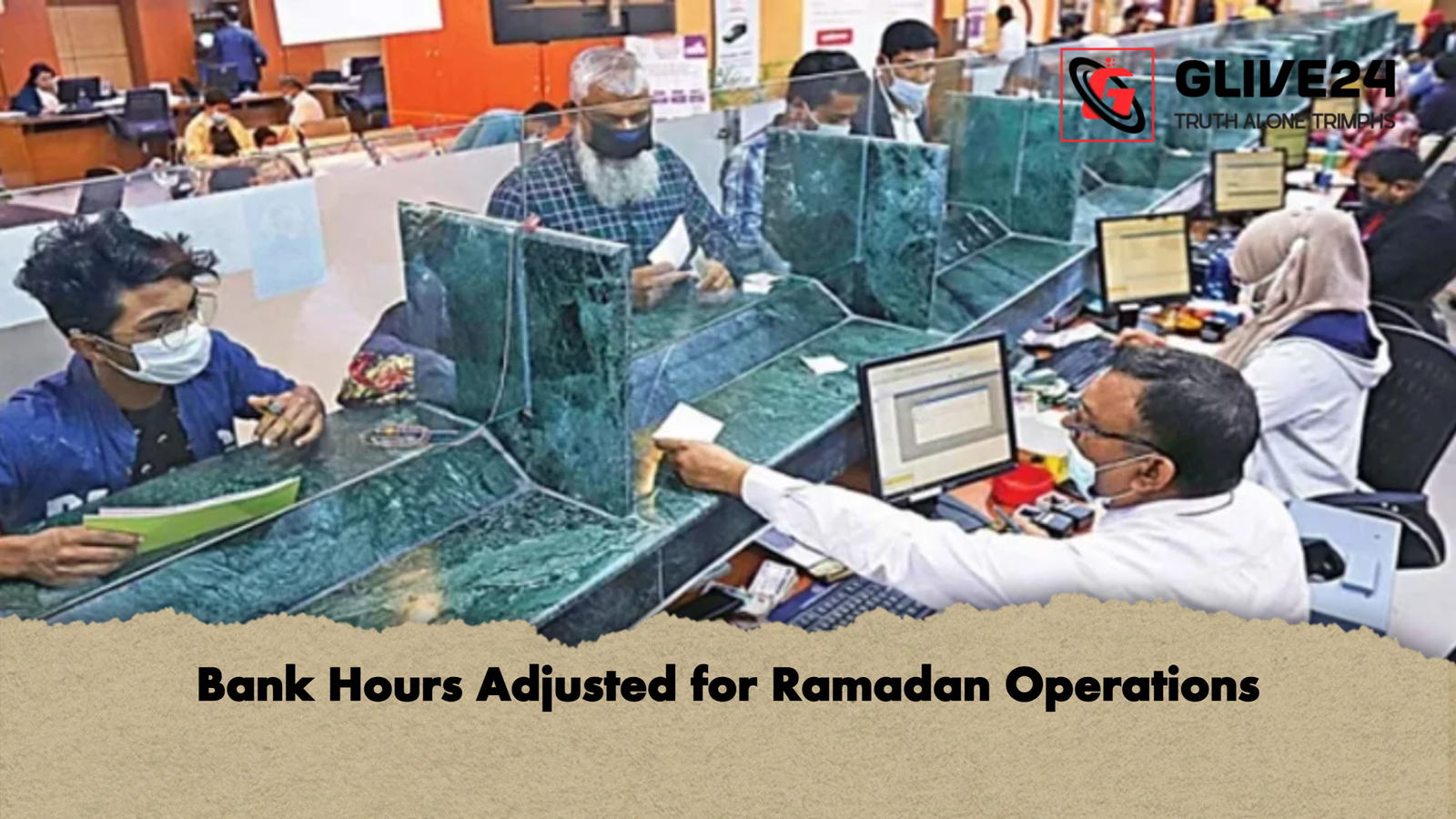
In anticipation of the holy month of Ramadan, Bangladesh Bank has announced adjustments to the operating hours of banks across the country, affecting both office functions and customer transactions.
Under the revised schedule, banking transactions will be conducted from 9:30 a.m. to 2:30 p.m., while office operations will continue from 9:30 a.m. to 4:00 p.m. This temporary arrangement has been issued in a circular dated Tuesday, 10 February, by the Supervisory Data Management and Analytics Department of Bangladesh Bank.
The circular specifies that all scheduled banks in the country are required to operate during these hours throughout the month of Ramadan. Additionally, a brief pause will be observed from 1:15 p.m. to 1:30 p.m. to allow for Dhuhr prayers, though banks are expected to maintain alternative arrangements to ensure uninterrupted customer service and transactional facilities during this period.
For context, under regular circumstances, banks conduct transactions between 10:00 a.m. and 4:00 p.m., with office hours extending from 10:00 a.m. to 6:00 p.m. The central bank customarily modifies operating schedules during Ramadan each year to accommodate the needs of fasting customers and employees.
The timing adjustment has been introduced ahead of the anticipated start of Ramadan next week, enabling banks to prepare and ensure smooth operations. According to the circular, banking hours will revert to their usual schedule at the conclusion of Ramadan.
A comparative overview of banking operations during normal and Ramadan periods is provided below:
| Activity | Regular Hours | Ramadan Hours |
|---|---|---|
| Customer Transactions | 10:00 a.m. – 4:00 p.m. | 9:30 a.m. – 2:30 p.m. |
| Office Operations | 10:00 a.m. – 6:00 p.m. | 9:30 a.m. – 4:00 p.m. |
| Dhuhr Prayer Break | – | 1:15 p.m. – 1:30 p.m. |
Bank officials have emphasised that alternative arrangements should be in place during the prayer break to prevent disruption of services, including online and counter-based transactions. This initiative aims to balance the spiritual practices of staff and customers with the essential provision of banking services.
The adjustments are expected to have a significant impact on customers planning to conduct transactions during Ramadan, particularly in urban areas with higher banking traffic. Experts advise clients to plan their visits accordingly, taking into account the shortened transaction hours and midday pause for prayers.