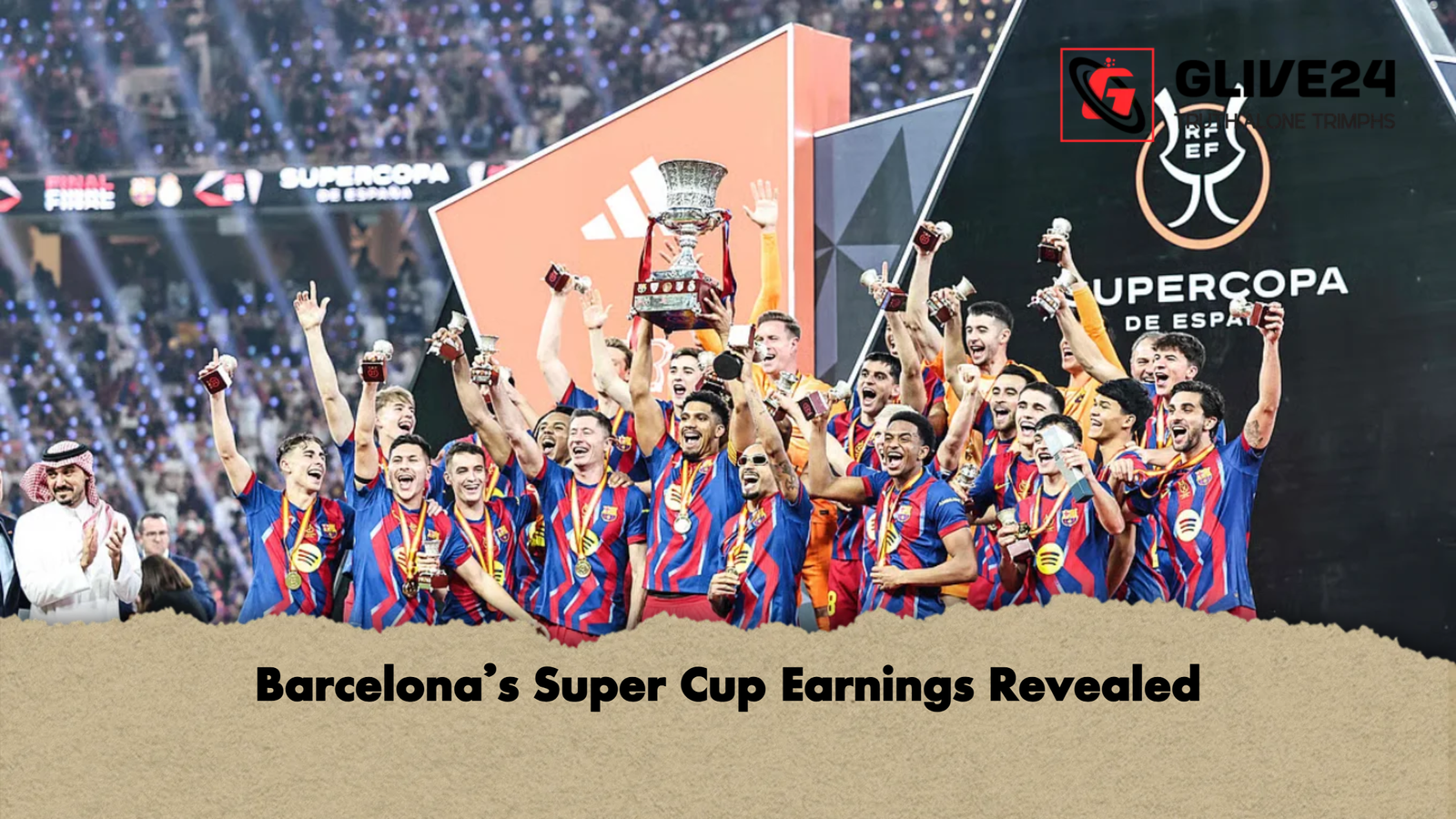
Barcelona’s triumph over Real Madrid in the Spanish Super Cup final in Saudi Arabia delivered far more than silverware. With a dramatic 3–2 victory over their fiercest rivals, the Catalan club secured a record-extending 16th Super Cup title and underlined their recent dominance by defeating Real Madrid in the final for the second consecutive year. The win also marked Barcelona’s first trophy of the new season, giving both sporting momentum and a significant financial boost.
Beyond the on-pitch drama, the Super Cup has become an increasingly lucrative competition. According to reports from the Spanish sports press, the Royal Spanish Football Federation (RFEF) substantially increased the overall prize pool for this season’s tournament. Last season, total prize money stood at approximately €19 million. This year, that figure rose to €21.3 million, reflecting the growing commercial value of the competition, particularly since its relocation to Saudi Arabia.
Travel allowances: the first layer of income
The financial distribution begins with participation and travel allowances. In the initial phase, the four competing clubs shared a combined €16.3 million as travel and appearance fees. This represented a clear increase from last season’s €14.95 million. While the RFEF has aimed for a more balanced allocation, the largest shares once again went to Barcelona and Real Madrid, owing to their global appeal, historical success, and commercial draw.
Performance-based rewards
In addition to appearance fees, €5 million was set aside specifically for performance-related prizes, up from €4 million last season. In previous editions, only the finalists benefited, with champions receiving €20 million in total prize-related payments across stages, while losing semi-finalists earned nothing. This year, however, the RFEF introduced a more inclusive model, ensuring that all participating clubs received some reward for their performance.
As champions, Barcelona collected €2 million in prize money. Real Madrid, finishing as runners-up, earned €1.4 million, while Atlético Madrid and Athletic Club, both eliminated in the semi-finals, received €800,000 each.
Prize distribution by team
| Team | Stage Reached | Prize Money (€) |
|---|---|---|
| Barcelona | Champions | 2,000,000 |
| Real Madrid | Runners-up | 1,400,000 |
| Atlético Madrid | Semi-finalists | 800,000 |
| Athletic Club | Semi-finalists | 800,000 |
A highly profitable tournament
The prize money paid to clubs represents only part of the broader financial picture. Overall, the Spanish Super Cup generated around €51 million in revenue for the RFEF. This income comes primarily from three sources: sponsorship deals, broadcasting rights, and a lucrative agreement with Saudi Arabia reportedly worth around €40 million.
Crucially, the federation has stated that a substantial portion of this income will be reinvested into Spanish football. Approximately €26 million has been earmarked for development programmes, with a strong emphasis on grassroots football, youth academies, and infrastructure projects.
In summary, Barcelona’s Super Cup victory not only reinforced their supremacy over Real Madrid but also delivered a valuable financial windfall. As the competition continues to grow commercially, success in the Super Cup is proving to be as rewarding off the pitch as it is prestigious on it.