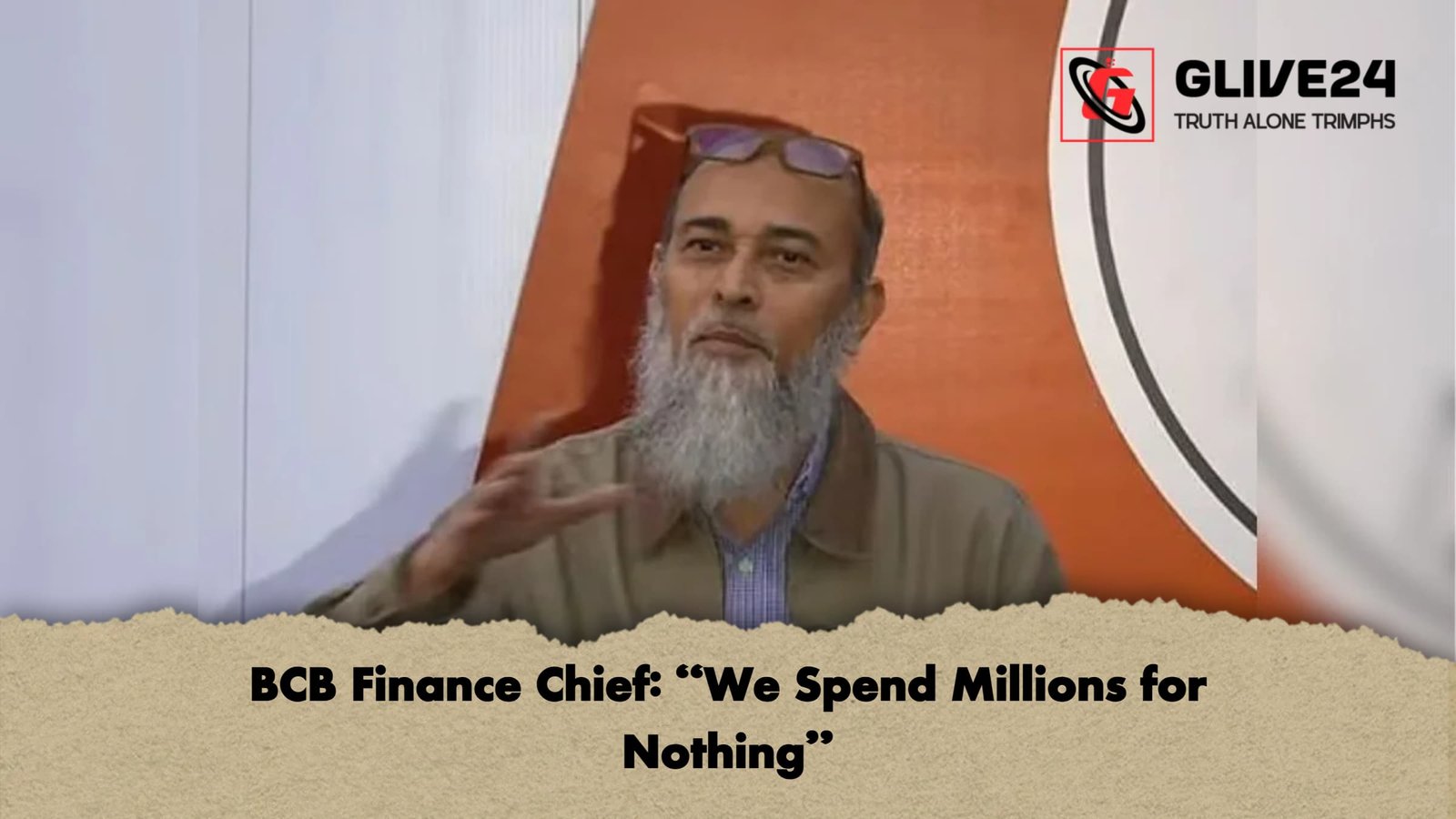
The Bangladesh Cricket Board (BCB) has sparked a firestorm of debate following blunt remarks regarding the financial implications of a potential T20 World Cup boycott. As tensions remain high over the prospect of playing in India, the BCB’s finance committee has clarified that while the board’s treasury is secure, the players face significant financial and professional losses—a fact met with little sympathy from high-ranking officials.
Fiscal Stability Amidst Geopolitical Tension
M. Nazmul Islam, the head of the BCB’s finance committee, recently addressed the media to dispel rumours of a looming financial crisis should the national team withdraw from the tournament. He confirmed that the BCB’s revenue model is largely independent of a single tournament’s participation. The board has already banked a preparation grant from the ICC, and its long-term revenue share remains unaffected.
According to the board’s financial projections, the BCB remains one of the more stable sporting bodies in the region:
| Revenue Component | Estimated Value | Status |
| Annual ICC Revenue | $20.4 Million | Guaranteed until 2027 |
| ICC Preparation Fee | $500,000 (60m BDT) | Already Received |
| Quadrennial Reserve | $4 Million | Scheduled Payout |
| Projected Prize Money | $720,000+ | At Risk (Player Loss) |
“Millions Spent, Nothing Won”
The most controversial aspect of the briefing involved the board’s stance on player compensation. When questioned about whether the BCB would offset the loss of match fees and prize money for the squad, Islam took an aggressive stance, highlighting a perceived lack of “Return on Investment” regarding the players’ international performance.
“We are spending millions of pounds on these cricketers,” Islam stated. “If they fail to deliver results, are we asking them to return that money? We have yet to secure a major global trophy. One could argue that every time they underperform, we should ask them to pay back what we have invested in their development.”
The “Body vs Limb” Metaphor
Despite the harsh rhetoric, Islam maintained that the board and the players are inextricably linked, though his analogy suggested a clear hierarchy. He described the board as the “body” and the players as the “hands,” arguing that neither can function without the other, but the survival of the body (the board) is paramount to the existence of the limbs (the players).
This administrative perspective has been met with astonishment by fans and pundits alike. While the decision to skip the World Cup is rooted in valid security concerns and national interest, the decision to publicly “invoice” the players for their performance has created a palpable rift between the board’s executive suite and the athletes who represent the nation on the pitch.