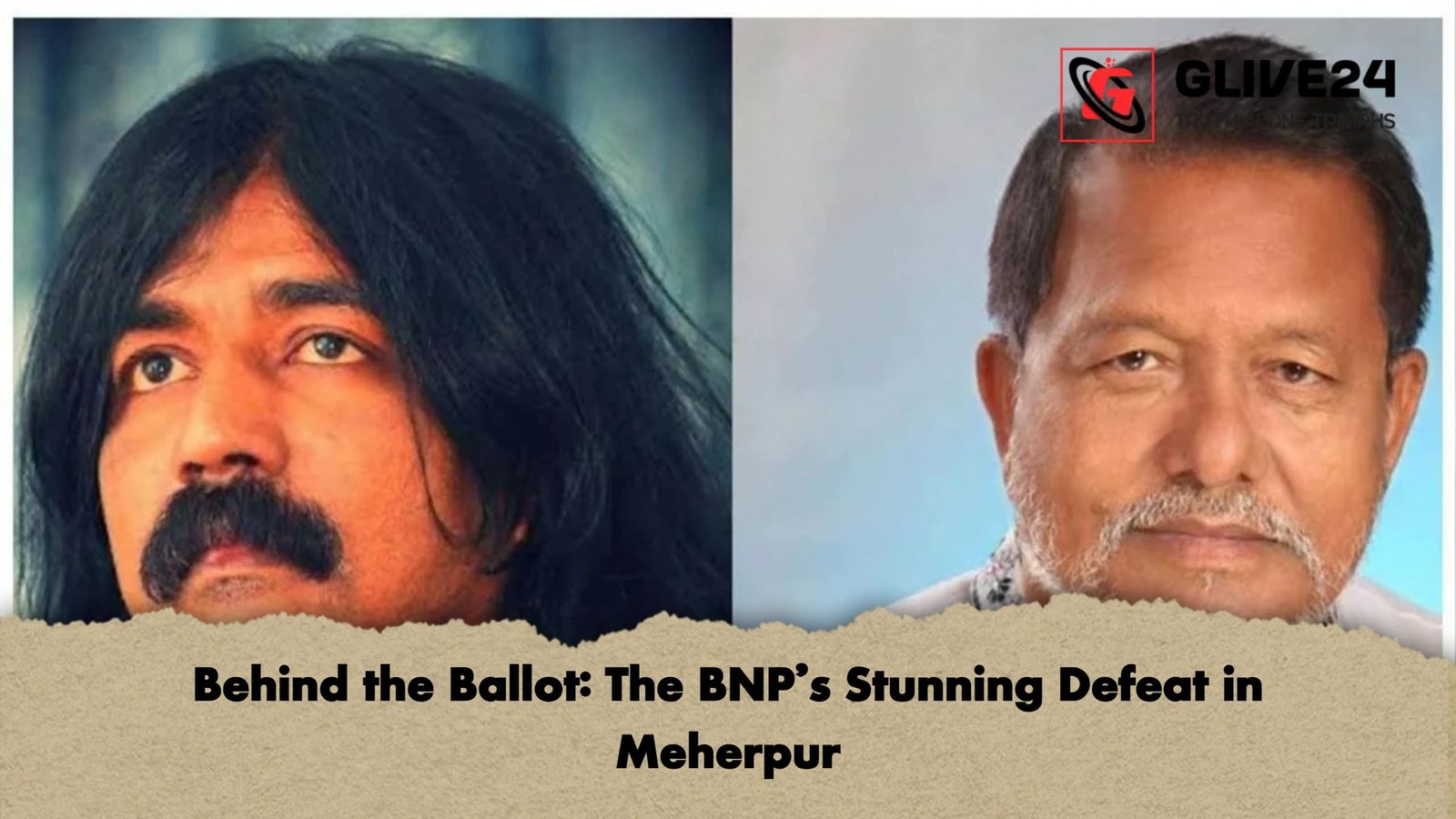
The results of the Thirteenth National Parliament Election in Meherpur-1 and Meherpur-2 represent far more than a simple legislative reshuffle; they signal a profound socio-psychological shift in the local electorate. In a region traditionally viewed as a stronghold for the Bangladesh Nationalist Party (BNP), the 2026 polls saw a stunning upset. The voters of Meherpur have, in no uncertain terms, rejected long-standing political giants in favour of Bangladesh Jamaat-e-Islami, delivering a stinging rebuke to the BNP’s local leadership.
The Mathematics of a Political Realignment
The sheer scale of the shift is evidenced by the data. In Meherpur-1, the BNP’s veteran candidate, Masud Arun, who secured a commanding victory in 2001 with over 100,000 votes, found himself outpaced by a surging Jamaat-e-Islami. Similarly, in Meherpur-2 (Gangni), the BNP’s Amzad Hossain fell short against a disciplined opponent.
| Constituency | Candidate | Party | Votes Received | Result |
| Meherpur-1 | Md. Tajuddin Khan | Jamaat-e-Islami | 123,271 | Winner |
| Masud Arun | BNP | 104,787 | Runner-up | |
| Meherpur-2 | Md. Nazmul Huda | Jamaat-e-Islami | 96,306 | Winner |
| Amzad Hossain | BNP | 85,988 | Runner-up |
Internal Strife and Public Disillusionment
Analysis from the field suggests that the BNP’s defeat was largely self-inflicted. Following the political transition in August 2024, the local BNP became mired in internal factionalism and accusations of high-handedness. Reports of “extortionist behaviour” and disputes over the control of local markets and water bodies (beels) alienated the general public.
In Meherpur-1, a public rift between the supporters of Masud Arun and District General Secretary Kamrul Hassan severely undermined the campaign. A leaked audio recording allegedly featured Mr Hassan encouraging followers to vote for the “Scales” (the Jamaat symbol) rather than his own party’s candidate. Meanwhile, in Gangni, the exclusion of popular district president Javed Masud Milton from the nomination list led to a visible lack of enthusiasm among his loyalists.
The Rise of the “Silent Voter”
While the BNP was distracted by internal power struggles, Jamaat-e-Islami focused on a “quiet revolution.” Eschewing grand rallies, their cadres conducted door-to-door campaigns, providing social services such as medical aid and educational materials. This approach resonated particularly well with female voters and those who prioritised personal security over political rhetoric.
In the end, the 2026 result in Meherpur serves as a cautionary tale. It proves that even in a landslide year for the BNP nationally, local voters will not hesitate to punish candidates who fail to provide a sense of order and communal safety.