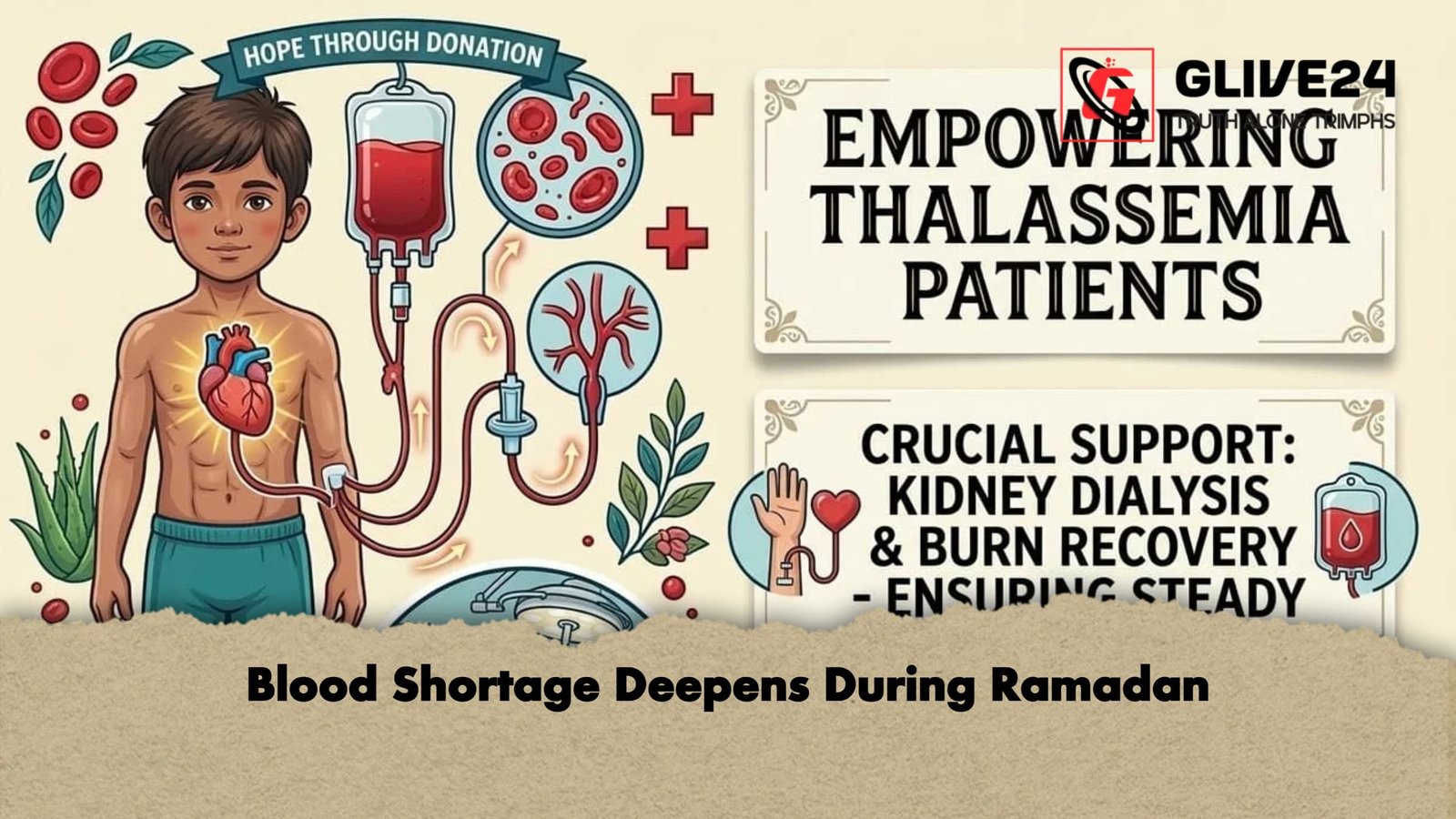
Two-and-a-half-year-old Naznin Raisa lies asleep in her father’s arms at a specialised hospital, battling thalassaemia, a lifelong genetic blood disorder. For her father, Ahmad Ali, the journey from Bagerhat to the capital has become a monthly necessity. Each visit brings the same pressing challenge: securing enough blood to keep his daughter alive. While donors are usually found during other months, Ramadan has made the task significantly more difficult.
Across the country, a seasonal decline in blood donations during Ramadan is placing critically ill patients at serious risk. Hospitals are reporting shortages that affect not only thalassaemia patients but also those requiring emergency surgeries, burn treatment, kidney care, and maternal health services. The closure of educational institutions, a primary source of voluntary blood donors, has further compounded the crisis.
Medical experts explain that thalassaemia is an inherited condition requiring lifelong blood transfusions. In Bangladesh, more than 80,000 people are currently living with the disease, while an estimated 13,000 to 14,000 children are born with it each year. Approximately 11.45 per cent of the population are carriers, meaning millions unknowingly pass the condition to future generations.
The scale of the challenge is reflected in the following data:
| Category | Estimated Figures |
|---|---|
| Total thalassaemia patients | Over 80,000 |
| New cases annually | 13,000–14,000 |
| Carrier rate in population | 11.45% |
| Blood required per patient monthly | 1–3 units |
| Daily requirement at specialised hospital | 30–50 units |
| National annual blood demand | 800,000–1,000,000 units |
| Voluntary donation share | 35–40% |
Doctors emphasise that safe blood is the cornerstone of survival for thalassaemia patients. A leading specialist noted that around 40 per cent of daily blood supplies in specialised facilities typically come from young voluntary donors. However, during Ramadan, this supply declines sharply as many regular donors, particularly students, are unavailable.
Contrary to a common misconception, the demand for blood does not decrease during Ramadan. On the contrary, hospitals continue to handle road accidents, cancer treatments, childbirth complications, and other emergencies that require immediate transfusions. Yet, in the absence of structured donor networks within most hospitals, families are often left to arrange blood on their own.
This reliance becomes particularly burdensome during fasting hours. Many donors prefer to give blood after breaking their fast, but heavy evening traffic in major cities frequently prevents timely access to hospitals. As a result, even willing donors struggle to contribute when it is most needed.
Healthcare professionals also highlight the absence of a coordinated national donor database, which could streamline access to safe blood. Without such a system, patients’ relatives often face distress, delays, and even exploitation while searching for donors.
Beyond thalassaemia, the need for blood spans a wide range of medical conditions, including dialysis, major surgeries, and trauma care. Voluntary donors remain the backbone of the system, with organisations and humanitarian groups playing a vital role. However, the current shortfall underscores the urgent need for sustained awareness campaigns and institutional support, particularly during Ramadan, to ensure that no life is lost due to a preventable lack of blood.