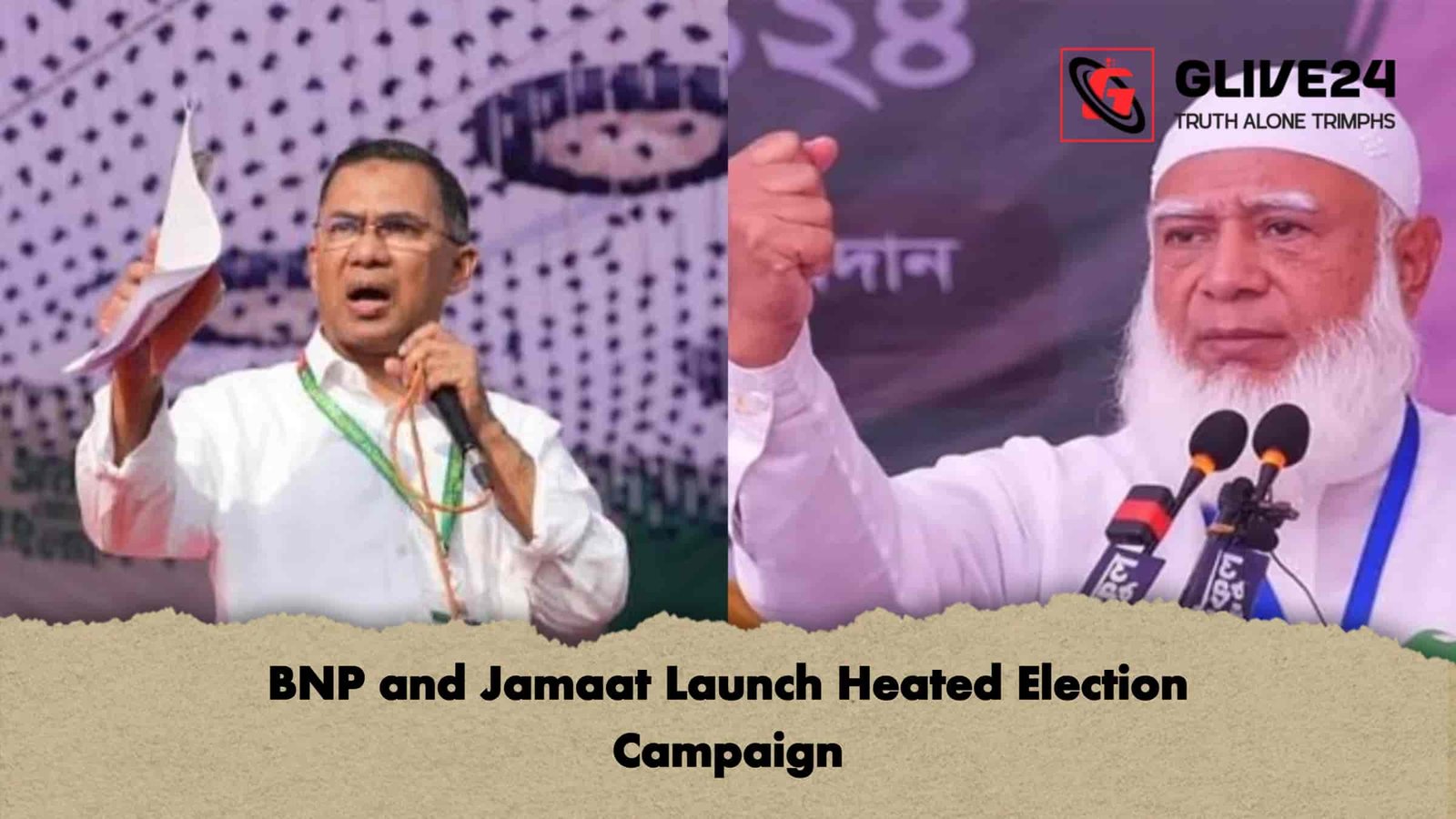
Formal election campaigning commenced across various regions of Bangladesh on Thursday, 22 January, marking the beginning of a politically charged period ahead of the upcoming polls. Traditionally conducted in a largely peaceful environment, this year’s campaign has been notably defined by the absence of the ruling Awami League under the caretaker framework, focusing the principal political rivalry squarely between the Bangladesh Nationalist Party (BNP) and the Jamaat-e-Islami-led 10-party alliance.
From the outset, campaign events have been characterised by sharp exchanges and mutual accusations, creating a tense political atmosphere. Analysis of activities over the first two days, Thursday and Friday, indicates that party leaders have directed pointed criticisms at one another, emphasising historical grievances, governance failures, and concerns about potential electoral malpractice.
The BNP has accused Jamaat of opposing the 1971 Liberation War, misusing religious sentiment for political ends, and attempting electoral fraud. Conversely, Jamaat leaders have condemned BNP’s long-standing record of corruption, coercive financial practices, and what they describe as “neo-fascist” tendencies undermining social development.
Summary of Key Campaign Rallies and Statements
| Leader | Locations | Number of Rallies | Main Accusations/Comments |
|---|---|---|---|
| Tariq Rahman (BNP) | Dhaka (Bashantek), Sylhet, Moulvibazar, Habiganj, Brahmanbaria, Kishoreganj, Bhairab, Narsingdi, Narayanganj | 8 | Criticised Jamaat’s anti-Liberation stance, religious misuse, and potential electoral fraud |
| Shafiqur Rahman (Jamaat) | Dhaka (Mirpur), Panchagarh, Thakurgaon, Dinajpur, Rangpur | 5 | Condemned BNP’s corruption, authoritarianism, and questioned their development pledges |
Although Tariq Rahman refrained from directly naming Jamaat, he highlighted their opposition to independence and condemned attempts to use religion to sell “tickets to heaven,” describing such strategies as shirk (idolatry) and kufr (disbelief). He also warned of potential misuse of voter IDs and mobile numbers to influence polling outcomes.
Jamaat’s Amir Shafiqur Rahman, in turn, criticised BNP’s reliance on “family cards” and symbolic development promises. He stressed the importance of maintaining security and dignity by engaging directly with local communities.
Political analyst Professor Mahbub Ullah observed, “Criticism between parties during elections is natural. However, national priorities demand the conduct of a peaceful election. Political debate is expected, but it must remain within acceptable limits.”
Currently, foreign influence, the legacy of the Liberation War, religious rhetoric, corruption, coercive financial practices, and alleged neo-fascist activities have dominated campaign discourse. With Awami League absent, the election has effectively become a direct contest between BNP and Jamaat, drawing heightened attention to their strategies and public support dynamics.