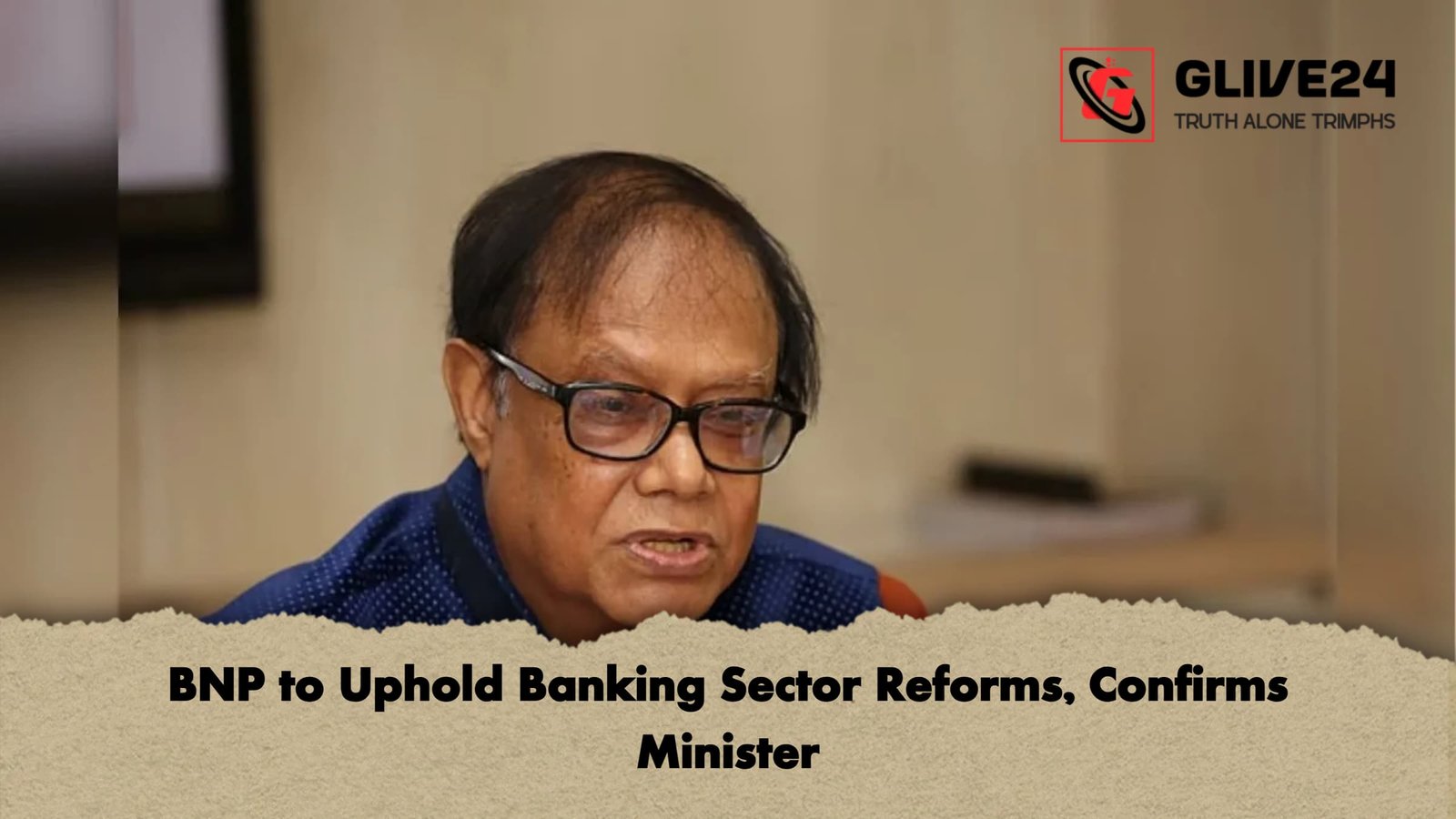
In a pivotal meeting held at the Secretariat on Monday afternoon, the Minister of Finance and Planning, Amir Khosru Mahmud Chowdhury, provided a firm assurance to the Governor of Bangladesh Bank, Dr. Ahsan H. Mansur, that the BNP-led government remains steadfastly committed to the ongoing restructuring of the nation’s financial landscape. The high-level dialogue focused on the continuity of stringent reform measures designed to restore stability and public confidence in the banking sector.
A Roadmap for Financial Recovery
During the private session, Governor Mansur presented a comprehensive progress report detailing the strategic initiatives implemented over recent months. Speaking to members of the press following the meeting, the Governor noted the Minister’s positive reception of these measures. “I have provided a succinct overview of the current reforms to the Minister. He underscored the vital importance of maintaining this momentum and expressed his full endorsement of our trajectory,” Mansur remarked.
A primary pillar of the discussion was the urgent containment of inflation, which remains a top priority for the incumbent administration. Both leaders reached a consensus on the necessity of aggressive monetary interventions to alleviate the cost-of-living crisis.
Tackling Non-Performing Loans (NPLs)
The meeting also addressed the systemic issue of defaulted loans. The Governor outlined a multi-pronged strategy to purge the sector of “wilful defaulters” and enhance transparency. Key measures discussed include:
Legal Recourse: Strengthening judicial proceedings against major loan defaulters.
Policy Tightening: Implementing more rigorous loan restructuring guidelines.
Transparency: Revamping the classification process of banks to reflect their true financial health.
| Reform Category | Key Strategic Action | Expected Outcome |
| Monetary Policy | Inflation Control Measures | Price stability and reduced living costs |
| Loan Management | Legal action against wilful defaulters | Reduction in Non-Performing Loans (NPLs) |
| Institutional Governance | Transparent bank classification | Enhanced investor and depositor trust |
| Consolidation | Formation of United Islamic Bank | Stabilisation of fragile Shariah-based banks |
The Emergence of United Islamic Bank
A significant portion of the briefing concerned the recent merger of five struggling entities—Exim, Social Islami, First Security Islami, Global Islami, and Union Bank—into the newly formed United Islamic Bank. With an authorised capital of Taka 40,000 crore and a paid-up capital of Taka 35,000 crore (including a Taka 20,000 crore government injection), the bank represents a critical test for the reform agenda.
The Governor reassured depositors that the institution is stabilising, with legacy account holders gradually regaining access to their funds while new deposits begin to flow in. However, leadership remains a challenge; while Nabil Mustafizur Rahman topped the merit list for the Managing Director (MD) position, his appointment has been stalled due to ill health.
“Until a permanent Managing Director is secured, the Administrator and the Board of Directors will spearhead the reform process,” Mansur clarified. He added that the authorities are considering expanding the board’s tenure and membership to ensure robust oversight during this transitionary period.