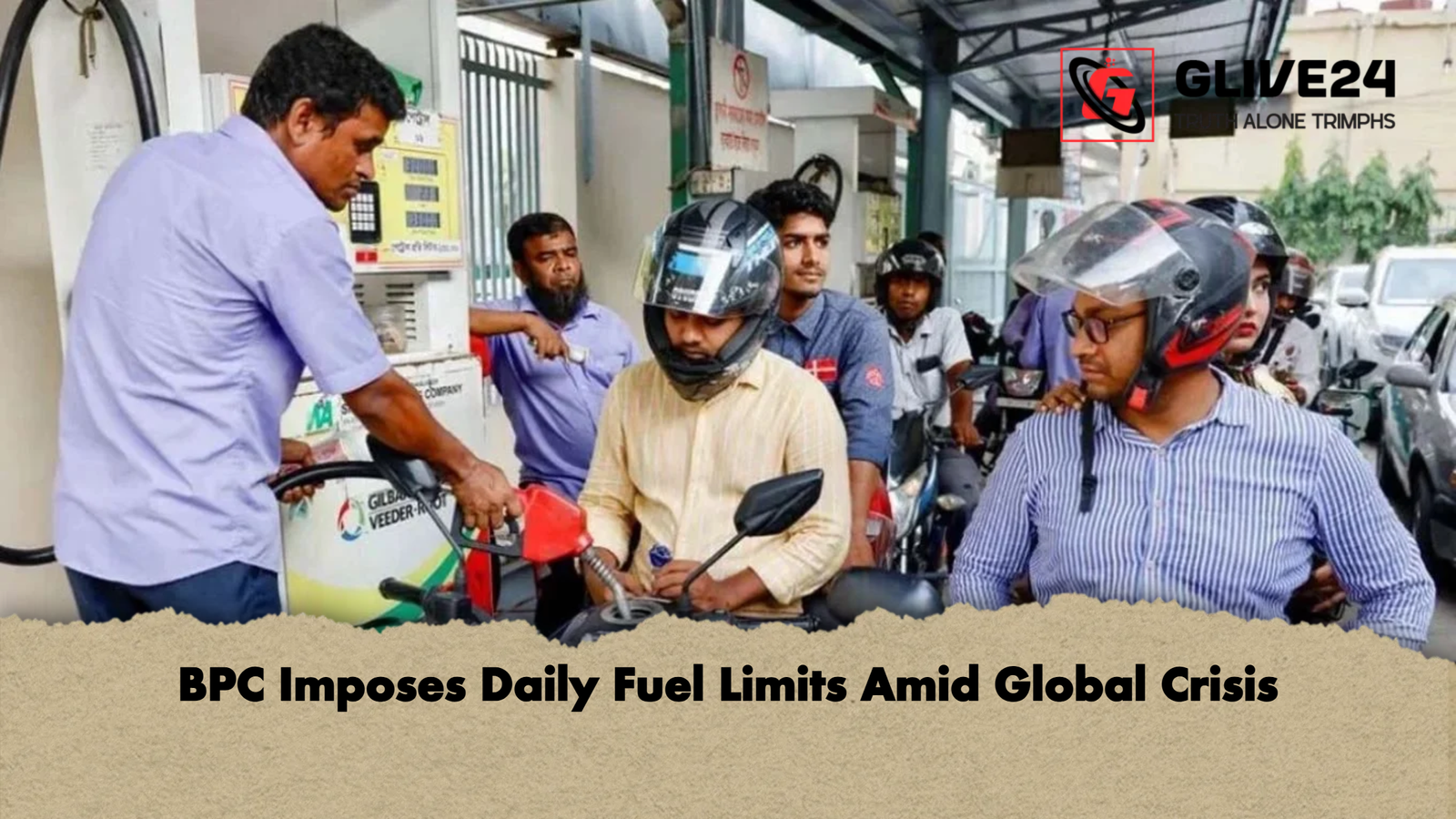
Rising global fuel prices, driven by ongoing conflicts in the Middle East, have sparked concerns over domestic fuel availability in Bangladesh. In a proactive move to safeguard regular supply and prevent panic buying, the Bangladesh Petroleum Corporation (BPC) has introduced daily fuel purchase limits at all filling stations across the country.
In a directive issued on Friday, 6 March, BPC outlined specific allocations for different vehicle types. Motorcyclists are permitted to purchase a maximum of 2 litres of petrol or octane per day, while private cars are limited to 10 litres. Larger vehicles, including SUVs, jeeps, and microbuses, can collect 20–25 litres daily. Heavy-duty vehicles such as pick-up trucks and local buses are allowed 70–80 litres of diesel per day, whereas long-distance buses, trucks, covered vans, and container trucks may obtain 200–220 litres daily.
Daily Fuel Allocation by Vehicle Type
| Vehicle Type | Daily Allocation (litres) |
|---|---|
| Motorcycle | 2 |
| Private Car | 10 |
| SUV / Jeep / Microbus | 20–25 |
| Pick-up / Local Bus | 70–80 |
| Long-distance Bus / Truck / Covered Van / Container Truck | 200–220 |
According to BPC, approximately 95% of the country’s fuel is imported. Rising international oil prices, combined with the rapid spread of unverified information on social media regarding fuel shortages, have prompted panic buying. Some consumers and dealers have attempted to hoard fuel beyond authorised limits. The Department of Energy and Mineral Resources and BPC are actively monitoring the situation to curb such practices.
To enforce the new measures, every customer must present a valid receipt showing the type, quantity, and price of previously purchased fuel. New allocations will only be issued upon verification, ensuring strict adherence to the daily limits.
Despite these measures, long queues have been reported at numerous filling stations in Dhaka, even on holidays. Motorcyclists in particular have faced extended waiting times, with reports of disputes and scuffles. One ride-sharing driver stated that he had waited nearly 50 minutes to refuel.
The international situation remains tense due to confrontations between Iran and the United States–Israel coalition, disrupting oil transport through the Strait of Hormuz and affecting global supply. Nevertheless, authorities have reassured the public that domestic fuel reserves are sufficient, and there is no need for alarm. Imported fuel is regularly delivered to depots and transported to filling stations via rail and tanker trucks, helping to maintain adequate buffer stocks in the short term.