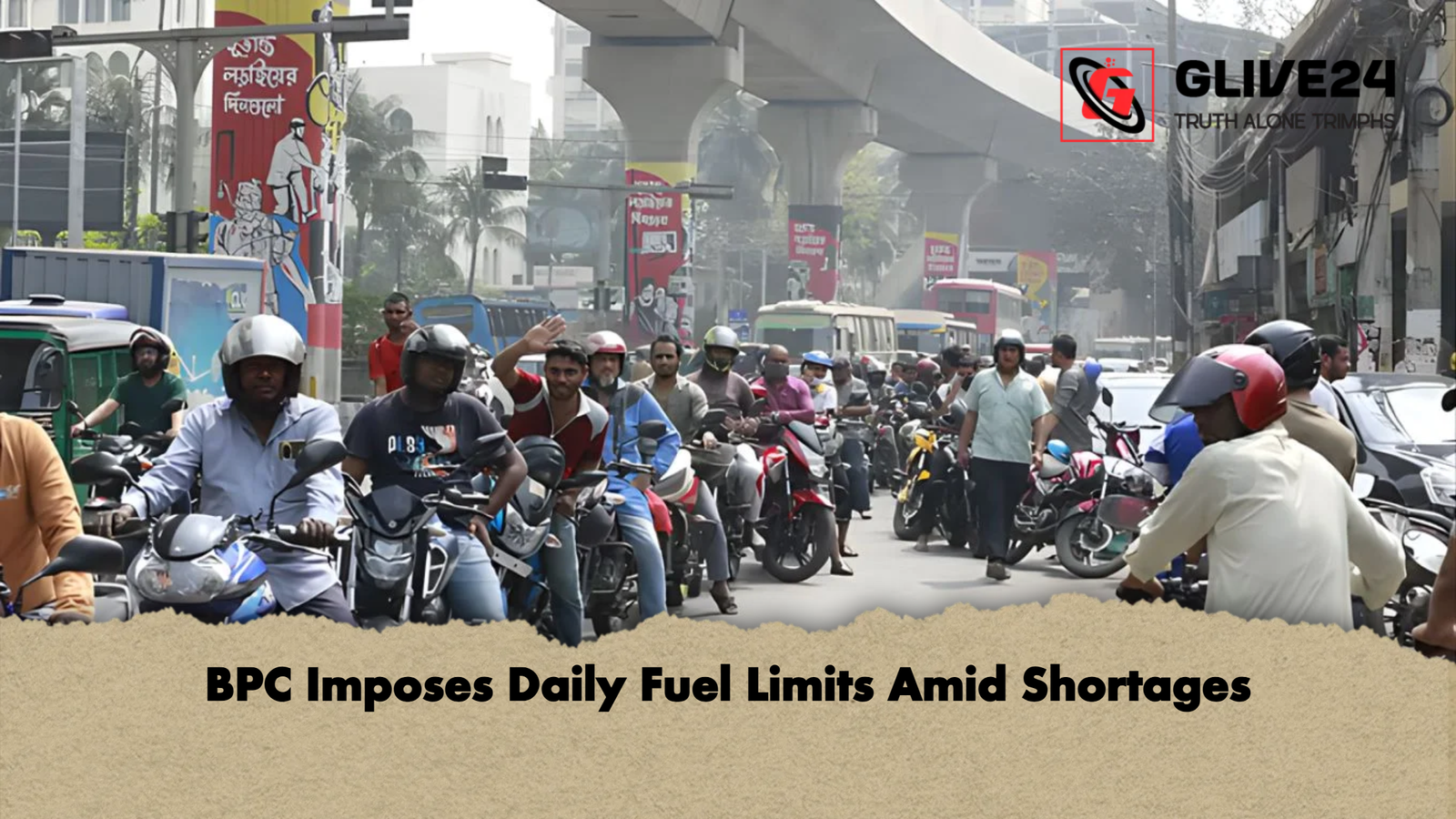
Amid escalating instability in the Middle East, global crude oil supplies have tightened, sparking concerns of a potential fuel shortage in Bangladesh. Panic among the general public has led to long queues at filling stations, with many attempting to purchase fuel in unusually large quantities. In response, the Bangladesh Petroleum Corporation (BPC) has issued new directives to regulate fuel distribution and ensure equitable access for all consumers.
Under the new guidelines, daily fuel allocations have been established for different types of vehicles. The allocation limits are summarised in the table below:
| Vehicle Type | Daily Fuel Allocation | Fuel Type |
|---|---|---|
| Motorcycle | 2 litres | Petrol / Octane |
| Private Car | 10 litres | Petrol / Octane |
| SUV / Minibus | 20–25 litres | Petrol / Octane |
| Pickup / Local Bus | 70–80 litres | Diesel |
| Long-Distance Bus / Truck / Covered Van / Container Truck | 200–220 litres | Diesel |
BPC officials emphasised that Bangladesh imports approximately 95% of its fuel demand. The ongoing global crisis has caused delays in these imports, creating concern among consumers. Social and print media reports highlighting limited fuel availability have further exacerbated public anxiety, prompting some dealers to attempt hoarding.
To allay fears, the directive stresses that import operations continue without interruption, and fuel is being delivered to depots via rail wagons and tankers. Adequate buffer stocks are expected to be established within a short timeframe.
Consumers must present purchase receipts at filling stations and show previous receipts when buying fuel to verify allocations. Dealers are instructed to strictly adhere to the allocation limits, and no customer may exceed their daily quota under any circumstances.
In Dhaka, even on holidays, filling stations have witnessed significant crowds. For instance, at the Meghna Model Service Centre in Paribag, motorcycles and private cars lined up from the station entrance to the Hotel Intercontinental, with occasional disputes among drivers reported due to long waiting times.
Uber driver Nazmul Hasan said he waited approximately 50 minutes to refuel. “My daily fuel expense ranges from 400–500 taka, without which driving is impossible,” he noted.
The global fuel supply disruption has been exacerbated by conflicts in the Middle East, particularly tensions involving Iran, the United States, and Israel, as well as blockages in the Strait of Hormuz. Nonetheless, the Department of Energy and Mineral Resources has confirmed that domestic fuel reserves are sufficient and that there is no reason for public panic.
In summary, BPC’s new allocation measures aim to maintain a stable fuel supply, prevent hoarding, and ensure fair distribution among all consumers throughout Bangladesh.